
'Political spin...': Former Citigroup strategist slams hype around Pakistan’s oil findings
Citing US Energy Information Administration (EIA) data, the executive highlighted that Pakistan’s proven reserves — just 0.2 billion barrels of oil and 18.7 trillion cubic feet of gas — fall well short of national demand. The country continues to import over 80% of its oil.
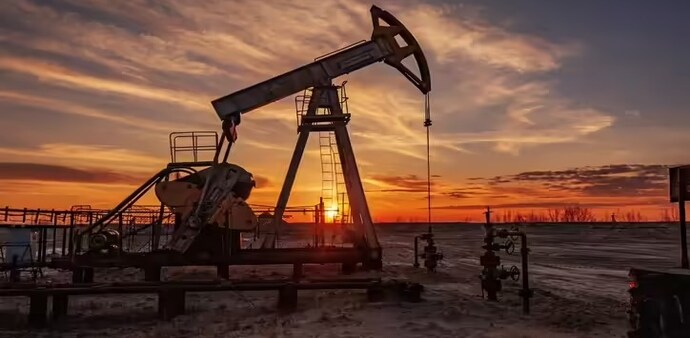
- Aug 2, 2025,
- Updated Aug 2, 2025 12:27 AM IST
Yousuf Nazar, former Head of Emerging Markets Investments at Citigroup and Chief Macro Strategist for Emerging Markets, has delivered a pointed critique of Pakistan’s decades-long pursuit of domestic oil and gas. In a post on X (formerly Twitter), Nazar called out the country’s exploration history as largely unproductive and steeped in “theoretical estimates and political spin.”
“Pakistan has been chasing oil and gas for over a hundred years,” Nazar wrote, tracing efforts back to 1915’s Khaur discovery in Punjab. He noted that the only major success remains the Sui gas field, found in 1952. “More than seven decades later, Sui is still the country’s most important energy asset. That alone tells you how little progress has been made,” he said.
Citing US Energy Information Administration (EIA) data, Nazar highlighted that Pakistan’s proven reserves — just 0.2 billion barrels of oil and 18.7 trillion cubic feet of gas — fall well short of national demand. The country continues to import over 80% of its oil.
He cautioned against inflated expectations tied to unproven shale resources. A 2015 EIA and ARI study projected 9.1 billion barrels of technically recoverable shale oil and 105 trillion cubic feet of gas. “These figures sound big,” Nazar noted, “but they’re based on surface-level data, not drilling… It’s like saying there’s gold under the mountains without ever picking up a shovel.”
On offshore exploration, he cited a long history of setbacks — from a failed well in 1961 to ExxonMobil’s $100 million dry hole at Kekra-1 in 2019. More recently, a widely publicised 2024 announcement of a breakthrough has yet to yield results. “We are in mid-2025 — and not a single well has been drilled,” he said, casting doubt on a $5 billion plan that has seen no execution.
Nazar was equally skeptical about the 2025 Turkish bid for 40 offshore blocks, dismissing it as “posturing.” He noted the lack of enthusiasm from major Western firms during a 2023 auction as telling.
Infrastructure, governance, and investor confidence, he stressed, are the real roadblocks. Shale development, especially in Sindh and Balochistan, needs water, access, and security — “none of which exist.” Add in “poor governance, outdated infrastructure, and investor mistrust,” and the stagnation becomes clearer.
He also dismissed US President Donald Trump’s July comments about a deal with Pakistan to tap “massive oil reserves,” calling it “political signaling” without substance.
“Pakistan’s energy story is not one of hidden treasure,” Nazar concluded. “It’s a story of missed chances, weak institutions, and inflated expectations.” He called for “serious, sustained, and technically competent exploration — backed by transparency and real investment.”
Yousuf Nazar, former Head of Emerging Markets Investments at Citigroup and Chief Macro Strategist for Emerging Markets, has delivered a pointed critique of Pakistan’s decades-long pursuit of domestic oil and gas. In a post on X (formerly Twitter), Nazar called out the country’s exploration history as largely unproductive and steeped in “theoretical estimates and political spin.”
“Pakistan has been chasing oil and gas for over a hundred years,” Nazar wrote, tracing efforts back to 1915’s Khaur discovery in Punjab. He noted that the only major success remains the Sui gas field, found in 1952. “More than seven decades later, Sui is still the country’s most important energy asset. That alone tells you how little progress has been made,” he said.
Citing US Energy Information Administration (EIA) data, Nazar highlighted that Pakistan’s proven reserves — just 0.2 billion barrels of oil and 18.7 trillion cubic feet of gas — fall well short of national demand. The country continues to import over 80% of its oil.
He cautioned against inflated expectations tied to unproven shale resources. A 2015 EIA and ARI study projected 9.1 billion barrels of technically recoverable shale oil and 105 trillion cubic feet of gas. “These figures sound big,” Nazar noted, “but they’re based on surface-level data, not drilling… It’s like saying there’s gold under the mountains without ever picking up a shovel.”
On offshore exploration, he cited a long history of setbacks — from a failed well in 1961 to ExxonMobil’s $100 million dry hole at Kekra-1 in 2019. More recently, a widely publicised 2024 announcement of a breakthrough has yet to yield results. “We are in mid-2025 — and not a single well has been drilled,” he said, casting doubt on a $5 billion plan that has seen no execution.
Nazar was equally skeptical about the 2025 Turkish bid for 40 offshore blocks, dismissing it as “posturing.” He noted the lack of enthusiasm from major Western firms during a 2023 auction as telling.
Infrastructure, governance, and investor confidence, he stressed, are the real roadblocks. Shale development, especially in Sindh and Balochistan, needs water, access, and security — “none of which exist.” Add in “poor governance, outdated infrastructure, and investor mistrust,” and the stagnation becomes clearer.
He also dismissed US President Donald Trump’s July comments about a deal with Pakistan to tap “massive oil reserves,” calling it “political signaling” without substance.
“Pakistan’s energy story is not one of hidden treasure,” Nazar concluded. “It’s a story of missed chances, weak institutions, and inflated expectations.” He called for “serious, sustained, and technically competent exploration — backed by transparency and real investment.”