
'Prepared for 2-front war...': Khawaja Asif claims 'India influence' in tensions with Afghanistan
The remarks come as a temporary ceasefire has been reached between Pakistan and Afghanistan following a period of intense border clashes. However, Asif expressed doubts about the durability of this ceasefire, citing concerns over Afghanistan’s Taliban-led government.
- Oct 17, 2025,
- Updated Oct 17, 2025 3:45 PM IST
Pakistan's Defence Minister, Khawaja Asif, has raised alarms about the increasing likelihood of a two-front war, expressing concerns over the intensifying border clashes with Afghanistan and the possibility of heightened tensions with India. In a candid interview that has since been widely shared on social media, Asif emphasized Pakistan’s preparedness to confront potential escalations on both fronts.
“As tensions rise, we cannot rule out the possibility of India engaging in ‘dirty games,’” Asif stated, adding that “strong possibilities” exist for such actions. Although he refrained from disclosing specific military strategies, he reassured the public that Pakistan is prepared for any eventuality. “Strategies are in place, but I can’t discuss them publicly,” he said when asked if he had briefed Prime Minister Shehbaz Sharif on the developing situation.
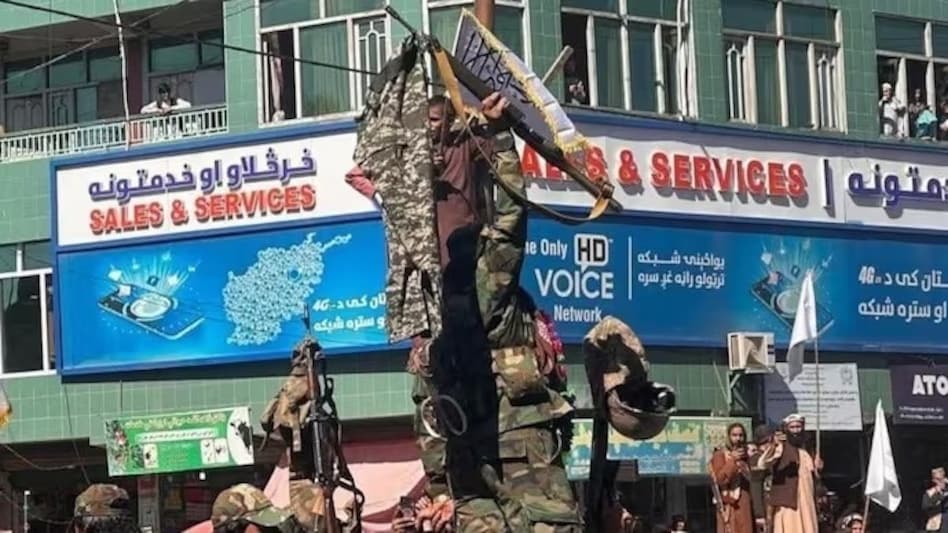
The remarks come as a temporary ceasefire has been reached between Pakistan and Afghanistan following a period of intense border clashes. However, Asif expressed doubts about the durability of this ceasefire, citing concerns over Afghanistan’s Taliban-led government. He specifically accused Kabul of being aligned with New Delhi, claiming, "Right now, Kabul is fighting a proxy war for Delhi."
Pakistan has long accused the Taliban of sheltering the Tehrik-i-Taliban Pakistan (TTP), a group responsible for numerous attacks on Pakistani soil. Afghanistan’s government has denied these allegations, asserting that it does not allow its territory to be used for actions against its neighbors.
The situation between the two countries further escalated after Kabul accused Islamabad of conducting airstrikes on Afghan soil, including in Kabul and a market in eastern Afghanistan. While Pakistan has not officially confirmed these attacks, it has acknowledged previous cross-border operations targeting TTP hideouts.
Asif's tirade against India is nothing new, During Operation Sindoor, he also declared that the 1972 Simla Agreement, which historically governed the Line of Control (LoC) in Kashmir, is now "a dead document." This marks a significant shift in Pakistan's stance on Kashmir, with Asif suggesting that Pakistan is reverting to its 1948 position as endorsed by the United Nations. “The Line of Control is no longer a recognized boundary; it is a ceasefire line,” he asserted.
Asif's comments have drawn widespread attention and concern, particularly his earlier inflammatory remarks on social media. In a post on X (formerly Twitter), he declared that Pakistan — “a state built in the name of Allah” — would see India “buried under the wreckage of its planes.” His provocative statement sparked outrage in India and raised concerns about the potential for further escalation in the region.
The Pakistani defence minister had also accused India of stoking border tensions to deflect from its own internal political crises. He also claimed that India’s efforts to regain its international standing had failed, citing what he called a “0-6” defeat in prior encounters between the two nations.
Pakistan's Defence Minister, Khawaja Asif, has raised alarms about the increasing likelihood of a two-front war, expressing concerns over the intensifying border clashes with Afghanistan and the possibility of heightened tensions with India. In a candid interview that has since been widely shared on social media, Asif emphasized Pakistan’s preparedness to confront potential escalations on both fronts.
“As tensions rise, we cannot rule out the possibility of India engaging in ‘dirty games,’” Asif stated, adding that “strong possibilities” exist for such actions. Although he refrained from disclosing specific military strategies, he reassured the public that Pakistan is prepared for any eventuality. “Strategies are in place, but I can’t discuss them publicly,” he said when asked if he had briefed Prime Minister Shehbaz Sharif on the developing situation.
The remarks come as a temporary ceasefire has been reached between Pakistan and Afghanistan following a period of intense border clashes. However, Asif expressed doubts about the durability of this ceasefire, citing concerns over Afghanistan’s Taliban-led government. He specifically accused Kabul of being aligned with New Delhi, claiming, "Right now, Kabul is fighting a proxy war for Delhi."
Pakistan has long accused the Taliban of sheltering the Tehrik-i-Taliban Pakistan (TTP), a group responsible for numerous attacks on Pakistani soil. Afghanistan’s government has denied these allegations, asserting that it does not allow its territory to be used for actions against its neighbors.
The situation between the two countries further escalated after Kabul accused Islamabad of conducting airstrikes on Afghan soil, including in Kabul and a market in eastern Afghanistan. While Pakistan has not officially confirmed these attacks, it has acknowledged previous cross-border operations targeting TTP hideouts.
Asif's tirade against India is nothing new, During Operation Sindoor, he also declared that the 1972 Simla Agreement, which historically governed the Line of Control (LoC) in Kashmir, is now "a dead document." This marks a significant shift in Pakistan's stance on Kashmir, with Asif suggesting that Pakistan is reverting to its 1948 position as endorsed by the United Nations. “The Line of Control is no longer a recognized boundary; it is a ceasefire line,” he asserted.
Asif's comments have drawn widespread attention and concern, particularly his earlier inflammatory remarks on social media. In a post on X (formerly Twitter), he declared that Pakistan — “a state built in the name of Allah” — would see India “buried under the wreckage of its planes.” His provocative statement sparked outrage in India and raised concerns about the potential for further escalation in the region.
The Pakistani defence minister had also accused India of stoking border tensions to deflect from its own internal political crises. He also claimed that India’s efforts to regain its international standing had failed, citing what he called a “0-6” defeat in prior encounters between the two nations.