
Russia-Ukraine war: US shuts embassy in Kyiv over potential air attack
Russia-Ukraine war: Moscow stated that the deployment of ATACMS, the longest-range missiles provided by Washington to Ukraine so far, indicates the West's intention to escalate the conflict.
- Nov 20, 2024,
- Updated Nov 20, 2024 12:48 PM IST
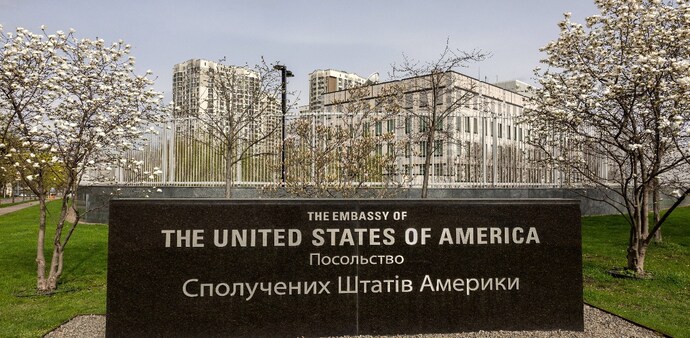
The US embassy in Kyiv will remain after it received information on November 20 about a potential significant air attack, according to a statement from the US Department of State Consular Affairs. The embassy has advised its employees to shelter in place as a precautionary measure. US citizens in Ukraine have also been recommended to be ready to seek immediate shelter if an air alert is announced.
This development follows Ukraine's use of US ATACMS missiles to strike Russian territory, a move permitted by the outgoing administration of US President Joe Biden, marking the 1,000th day of the ongoing conflict. Russia had previously cautioned Western nations that any involvement of US, British, and French missiles in attacks on its territory would be seen as those NATO members being directly involved in the Ukraine war.
Russian President Vladimir Putin had stated in October that Moscow would respond to Ukrainian strikes using US-made weapons within Russian borders. On Tuesday, Putin further adjusted Russia's stance on nuclear strikes, allowing for a response to a wider range of conventional attacks. This decision comes amid escalating tensions between Russia and the West, reaching levels not seen in over fifty years.
Moscow stated that the deployment of ATACMS, the longest-range missiles provided by Washington to Ukraine so far, indicates the West's intention to escalate the conflict. The war, initiated by Russia with a full-scale invasion in February 2022, has devastated hundreds of Ukrainian cities and villages, displaced millions, and resulted in the deaths of thousands of civilians, predominantly Ukrainians.
Ukrainian President Volodymyr Zelenskiy has persistently urged Washington and its NATO allies to permit the use of long-range weapons, asserting that they are essential for targeting military and transport infrastructure crucial to Russia's war efforts. Moscow, however, claims that such weapons cannot be launched without direct US operational support, and their use would render Washington a direct participant in the conflict, leading to potential Russian retaliation.
Russian diplomats have compared the current crisis between Moscow and Washington to the 1962 Cuban Missile Crisis, warning that the West is mistaken if it believes Russia will relent over Ukraine. The Kremlin has emphasised that Russia views nuclear weapons as a deterrent and that its updated nuclear doctrine clearly communicates the certainty of retaliation should Russia be attacked.
On Wednesday, Kremlin spokesperson Dmitry Peskov told RIA news agency that the West aims to deliver a strategic defeat to Russia by enabling Kyiv to strike deep into Russian territory using US-made weapons. "And, of course, they use Ukraine as a tool in their hands to achieve these goals," Peskov remarked.
The US embassy in Kyiv will remain after it received information on November 20 about a potential significant air attack, according to a statement from the US Department of State Consular Affairs. The embassy has advised its employees to shelter in place as a precautionary measure. US citizens in Ukraine have also been recommended to be ready to seek immediate shelter if an air alert is announced.
This development follows Ukraine's use of US ATACMS missiles to strike Russian territory, a move permitted by the outgoing administration of US President Joe Biden, marking the 1,000th day of the ongoing conflict. Russia had previously cautioned Western nations that any involvement of US, British, and French missiles in attacks on its territory would be seen as those NATO members being directly involved in the Ukraine war.
Russian President Vladimir Putin had stated in October that Moscow would respond to Ukrainian strikes using US-made weapons within Russian borders. On Tuesday, Putin further adjusted Russia's stance on nuclear strikes, allowing for a response to a wider range of conventional attacks. This decision comes amid escalating tensions between Russia and the West, reaching levels not seen in over fifty years.
Moscow stated that the deployment of ATACMS, the longest-range missiles provided by Washington to Ukraine so far, indicates the West's intention to escalate the conflict. The war, initiated by Russia with a full-scale invasion in February 2022, has devastated hundreds of Ukrainian cities and villages, displaced millions, and resulted in the deaths of thousands of civilians, predominantly Ukrainians.
Ukrainian President Volodymyr Zelenskiy has persistently urged Washington and its NATO allies to permit the use of long-range weapons, asserting that they are essential for targeting military and transport infrastructure crucial to Russia's war efforts. Moscow, however, claims that such weapons cannot be launched without direct US operational support, and their use would render Washington a direct participant in the conflict, leading to potential Russian retaliation.
Russian diplomats have compared the current crisis between Moscow and Washington to the 1962 Cuban Missile Crisis, warning that the West is mistaken if it believes Russia will relent over Ukraine. The Kremlin has emphasised that Russia views nuclear weapons as a deterrent and that its updated nuclear doctrine clearly communicates the certainty of retaliation should Russia be attacked.
On Wednesday, Kremlin spokesperson Dmitry Peskov told RIA news agency that the West aims to deliver a strategic defeat to Russia by enabling Kyiv to strike deep into Russian territory using US-made weapons. "And, of course, they use Ukraine as a tool in their hands to achieve these goals," Peskov remarked.