
Sanae Takaichi wins LDP leadership, set to become Japan’s first woman PM: Report
Takaichi defeated Shinjiro Koizumi, 44, in a run-off vote for the LDP presidency. Koizumi, the son of former premier Junichiro Koizumi, had represented the face of generational change within the party.
- Oct 4, 2025,
- Updated Oct 4, 2025 1:52 PM IST
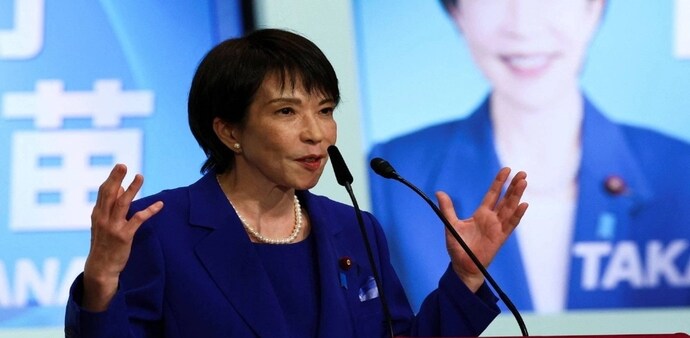
Sanae Takaichi, a staunch conservative and outspoken China hawk, won the leadership of Japan’s ruling Liberal Democratic Party (LDP) on Saturday, paving the way for her to become the country’s first female prime minister.
The 64-year-old, who has often cited former British prime minister Margaret Thatcher as her role model, faces the challenge of reviving the LDP at a time when public discontent is growing and new populist forces are gaining traction. Parliament is expected to confirm her as Japan’s fifth prime minister in as many years, with local media reporting that the handover could take place in the week of October 13, AFP reported on Saturday.
Takaichi defeated Shinjiro Koizumi, 44, in a run-off vote for the LDP presidency. Koizumi, the son of former premier Junichiro Koizumi, had represented the face of generational change within the party. Had he won, he would have become Japan’s youngest postwar prime minister. The two advanced to the final round after moderate contender Yoshimasa Hayashi and two other candidates were eliminated.
Takaichi now inherits a daunting list of challenges: an ageing population, rising geopolitical tensions, sluggish economic growth, and growing unease over immigration. At the same time, she must shore up support for the LDP, which has dominated Japanese politics almost continuously since 1955 but has recently faced sharp criticism.
Outgoing prime minister Shigeru Ishiba resigned after his coalition lost its majority in both chambers of parliament last year. The LDP has also been under pressure from Sanseito, an emerging right-wing party that has warned of a so-called immigration “invasion” and tapped into voter frustration over social and economic strains.
Both Takaichi and Koizumi echoed some of these concerns during the campaign. Takaichi said Japan should “reconsider policies that allow in people with completely different cultures and backgrounds,” while Koizumi linked immigration to “illegal employment” and rising anxiety over public safety. Such rhetoric marks a shift in mainstream Japanese politics, where foreigners make up only three percent of the population.
On the economic front, Takaichi has long supported aggressive monetary easing and heavy government spending, a stance aligned with her mentor, the late Shinzo Abe, architect of “Abenomics.” However, she struck a more moderate tone during the campaign, even softening her sharp criticism of China.
Despite breaking a historic barrier as Japan’s first woman leader, analysts warn her leadership is unlikely to advance gender equality. “She has no interest in women’s rights or gender policies,” said Yuki Tsuji, a politics and gender specialist at Tokai University.
While Takaichi projects experience and ideological clarity, her rival Koizumi—known for his charisma, surfing hobby, and decision to take paternity leave—faced doubts about his political depth. Analysts say the LDP ultimately chose stability over style as Japan enters another uncertain chapter.
Sanae Takaichi, a staunch conservative and outspoken China hawk, won the leadership of Japan’s ruling Liberal Democratic Party (LDP) on Saturday, paving the way for her to become the country’s first female prime minister.
The 64-year-old, who has often cited former British prime minister Margaret Thatcher as her role model, faces the challenge of reviving the LDP at a time when public discontent is growing and new populist forces are gaining traction. Parliament is expected to confirm her as Japan’s fifth prime minister in as many years, with local media reporting that the handover could take place in the week of October 13, AFP reported on Saturday.
Takaichi defeated Shinjiro Koizumi, 44, in a run-off vote for the LDP presidency. Koizumi, the son of former premier Junichiro Koizumi, had represented the face of generational change within the party. Had he won, he would have become Japan’s youngest postwar prime minister. The two advanced to the final round after moderate contender Yoshimasa Hayashi and two other candidates were eliminated.
Takaichi now inherits a daunting list of challenges: an ageing population, rising geopolitical tensions, sluggish economic growth, and growing unease over immigration. At the same time, she must shore up support for the LDP, which has dominated Japanese politics almost continuously since 1955 but has recently faced sharp criticism.
Outgoing prime minister Shigeru Ishiba resigned after his coalition lost its majority in both chambers of parliament last year. The LDP has also been under pressure from Sanseito, an emerging right-wing party that has warned of a so-called immigration “invasion” and tapped into voter frustration over social and economic strains.
Both Takaichi and Koizumi echoed some of these concerns during the campaign. Takaichi said Japan should “reconsider policies that allow in people with completely different cultures and backgrounds,” while Koizumi linked immigration to “illegal employment” and rising anxiety over public safety. Such rhetoric marks a shift in mainstream Japanese politics, where foreigners make up only three percent of the population.
On the economic front, Takaichi has long supported aggressive monetary easing and heavy government spending, a stance aligned with her mentor, the late Shinzo Abe, architect of “Abenomics.” However, she struck a more moderate tone during the campaign, even softening her sharp criticism of China.
Despite breaking a historic barrier as Japan’s first woman leader, analysts warn her leadership is unlikely to advance gender equality. “She has no interest in women’s rights or gender policies,” said Yuki Tsuji, a politics and gender specialist at Tokai University.
While Takaichi projects experience and ideological clarity, her rival Koizumi—known for his charisma, surfing hobby, and decision to take paternity leave—faced doubts about his political depth. Analysts say the LDP ultimately chose stability over style as Japan enters another uncertain chapter.