
Shut bases, lift sanctions or no deal: Iran sets tough terms for ceasefire, US talks
The demands come in response to US President Donald Trump’s push for renewed negotiations, with Tehran signalling that any return to the table will come with strict term
- Mar 25, 2026,
- Updated Mar 25, 2026 12:52 PM IST
Iran has raised the stakes ahead of any fresh talks with the United States, laying out a wide set of conditions that range from shutting down American military bases in the Gulf to lifting sanctions and asserting control over key shipping routes.
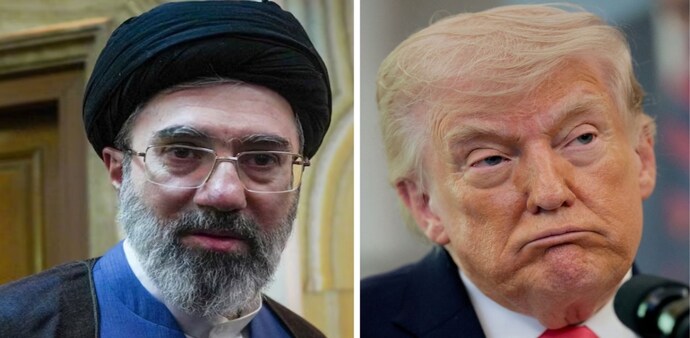
The demands come in response to US President Donald Trump’s push for renewed negotiations, with Tehran signalling that any return to the table will come with strict terms.
Reports indicate that while indirect engagement has begun, Iran is keeping the threshold for a ceasefire agreement deliberately high.
Key demands by Iran
Among its key demands, Iranian representatives have called for the closure of all US bases in the Gulf, compensation for wartime damage, and an end to Israel’s campaign against Hezbollah. Tehran has also sought a mechanism that would allow it to levy fees on vessels transiting the Strait of Hormuz, a critical artery for global oil supplies.
People familiar with the discussions told Channel 12, an Israeli TV channel, that the Islamic Revolutionary Guard Corps has consolidated its influence within Iran’s leadership and is shaping the country’s negotiating position.
Strait of Hormuz at the centre
Control of the Strait of Hormuz has emerged as a central issue. Iran is pushing for a new arrangement that would effectively place the waterway under its authority, along with guarantees that hostilities will not resume.
It has also insisted that any agreement must include the complete removal of sanctions.
Signals of limited flexibility
Despite the hardline public stance, there are signs of possible movement behind the scenes.
Reports suggest Iran could consider pausing its ballistic missile programme for five years and scaling down uranium enrichment. It may also open discussions on its stockpile of 60 per cent enriched uranium and allow inspections by the International Atomic Energy Agency of its remaining centrifuges.
Possible shift on regional proxies
There are also indications that Iran could agree to stop funding regional proxy groups, including Hezbollah, Hamas and Iraqi militias, as part of a broader deal. These potential concessions are being seen as early signals of flexibility, even as official positions remain firm.
‘Negotiating with yourself’
Iran’s public messaging, however, has remained sharply critical of Washington.
“The United States is negotiating with itself,” Iranian military spokesperson Ebrahim Zolfaqari said, according to state media.
“Has the level of your inner struggle reached the stage of you negotiating with yourself?” he asked, adding, “People like us can never get along with people like you.”
Zolfaqari also warned that US economic interests would continue to face pressure.
“US investments and pre-war energy prices would not return as long as Washington does not accept that regional stability is guaranteed by Iranian armed forces,” he said.
Iran has raised the stakes ahead of any fresh talks with the United States, laying out a wide set of conditions that range from shutting down American military bases in the Gulf to lifting sanctions and asserting control over key shipping routes.
The demands come in response to US President Donald Trump’s push for renewed negotiations, with Tehran signalling that any return to the table will come with strict terms.
Reports indicate that while indirect engagement has begun, Iran is keeping the threshold for a ceasefire agreement deliberately high.
Key demands by Iran
Among its key demands, Iranian representatives have called for the closure of all US bases in the Gulf, compensation for wartime damage, and an end to Israel’s campaign against Hezbollah. Tehran has also sought a mechanism that would allow it to levy fees on vessels transiting the Strait of Hormuz, a critical artery for global oil supplies.
People familiar with the discussions told Channel 12, an Israeli TV channel, that the Islamic Revolutionary Guard Corps has consolidated its influence within Iran’s leadership and is shaping the country’s negotiating position.
Strait of Hormuz at the centre
Control of the Strait of Hormuz has emerged as a central issue. Iran is pushing for a new arrangement that would effectively place the waterway under its authority, along with guarantees that hostilities will not resume.
It has also insisted that any agreement must include the complete removal of sanctions.
Signals of limited flexibility
Despite the hardline public stance, there are signs of possible movement behind the scenes.
Reports suggest Iran could consider pausing its ballistic missile programme for five years and scaling down uranium enrichment. It may also open discussions on its stockpile of 60 per cent enriched uranium and allow inspections by the International Atomic Energy Agency of its remaining centrifuges.
Possible shift on regional proxies
There are also indications that Iran could agree to stop funding regional proxy groups, including Hezbollah, Hamas and Iraqi militias, as part of a broader deal. These potential concessions are being seen as early signals of flexibility, even as official positions remain firm.
‘Negotiating with yourself’
Iran’s public messaging, however, has remained sharply critical of Washington.
“The United States is negotiating with itself,” Iranian military spokesperson Ebrahim Zolfaqari said, according to state media.
“Has the level of your inner struggle reached the stage of you negotiating with yourself?” he asked, adding, “People like us can never get along with people like you.”
Zolfaqari also warned that US economic interests would continue to face pressure.
“US investments and pre-war energy prices would not return as long as Washington does not accept that regional stability is guaranteed by Iranian armed forces,” he said.