
'Stop laying mines, missile strikes': Europe, Japan warn Iran, signal readiness to secure Hormuz
'We condemn in the strongest terms recent attacks by Iran on unarmed commercial vessels in the Gulf,' says a joint statement from the UK, France, Germany, and 3 other countries
- Mar 19, 2026,
- Updated Mar 19, 2026 9:12 PM IST
Leaders of the United Kingdom, France, Germany, Italy, the Netherlands, and Japan on Thursday condemned Iran's actions in the Strait of Hormuz, calling its disruption of shipping a threat to global energy supply and international security.
"We condemn in the strongest terms recent attacks by Iran on unarmed commercial vessels in the Gulf, attacks on civilian infrastructure, including oil and gas installations, and the de facto closure of the Strait of Hormuz by Iranian forces," the joint statement said.
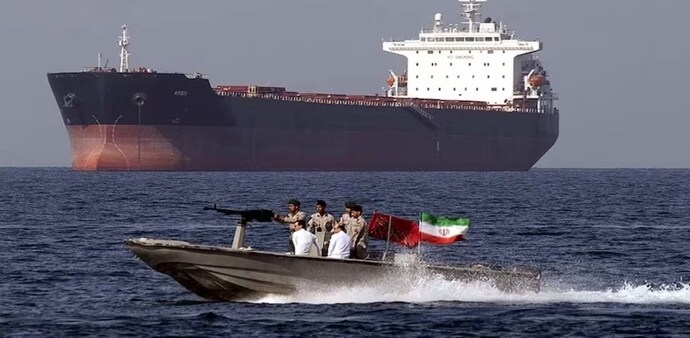
Iran has restricted movement through the Strait of Hormuz following attacks by the United States and Israel. Iran's forces have attacked several commercial vessels passing through the critical waterway, through which about one-fifth of the world's oil passes.
The leaders said the escalating conflict had raised global concerns and called on Tehran to halt its actions. "We call on Iran to cease immediately its threats, laying of mines, drone and missile attacks and other attempts to block the Strait to commercial shipping, and to comply with UN Security Council Resolution 2817."
They stressed that maritime access through the waterway is governed by international law. "Freedom of navigation is a fundamental principle of international law, including under the United Nations Convention on the Law of the Sea."
The statement warned that the impact of disruptions would be felt globally. "The effects of Iran’s actions will be felt by people in all parts of the world, especially the most vulnerable."
Citing international obligations, the leaders said interference with shipping amounted to a broader security risk. "Consistent with UNSC Resolution 2817, we emphasise that such interference with international shipping and the disruption of global energy supply chains constitute a threat to international peace and security."
They called for a halt to attacks on civilian infrastructure. "We call for an immediate comprehensive moratorium on attacks on civilian infrastructure, including oil and gas installations."
While signalling willingness to support maritime safety, the countries stopped short of committing forces. "We express our readiness to contribute to appropriate efforts to ensure safe passage through the Strait. We welcome the commitment of nations that are engaging in preparatory planning."
They also backed coordinated efforts to stabilise energy markets. "We welcome the International Energy Agency decision to authorise a coordinated release of strategic petroleum reserves. We will take other steps to stabilise energy markets, including working with certain producing nations to increase output."
US President Donald Trump has been pressing NATO allies to deploy warships to escort commercial shipping through the Strait, but has said they have declined to participate. Several European countries, including France, have indicated reluctance to join such operations.
"We are not a party to the conflict, and therefore France will never take part in operations to reopen or liberate the Strait of Hormuz," French President Emmanuel Macron said on Tuesday.
Leaders of the United Kingdom, France, Germany, Italy, the Netherlands, and Japan on Thursday condemned Iran's actions in the Strait of Hormuz, calling its disruption of shipping a threat to global energy supply and international security.
"We condemn in the strongest terms recent attacks by Iran on unarmed commercial vessels in the Gulf, attacks on civilian infrastructure, including oil and gas installations, and the de facto closure of the Strait of Hormuz by Iranian forces," the joint statement said.
Iran has restricted movement through the Strait of Hormuz following attacks by the United States and Israel. Iran's forces have attacked several commercial vessels passing through the critical waterway, through which about one-fifth of the world's oil passes.
The leaders said the escalating conflict had raised global concerns and called on Tehran to halt its actions. "We call on Iran to cease immediately its threats, laying of mines, drone and missile attacks and other attempts to block the Strait to commercial shipping, and to comply with UN Security Council Resolution 2817."
They stressed that maritime access through the waterway is governed by international law. "Freedom of navigation is a fundamental principle of international law, including under the United Nations Convention on the Law of the Sea."
The statement warned that the impact of disruptions would be felt globally. "The effects of Iran’s actions will be felt by people in all parts of the world, especially the most vulnerable."
Citing international obligations, the leaders said interference with shipping amounted to a broader security risk. "Consistent with UNSC Resolution 2817, we emphasise that such interference with international shipping and the disruption of global energy supply chains constitute a threat to international peace and security."
They called for a halt to attacks on civilian infrastructure. "We call for an immediate comprehensive moratorium on attacks on civilian infrastructure, including oil and gas installations."
While signalling willingness to support maritime safety, the countries stopped short of committing forces. "We express our readiness to contribute to appropriate efforts to ensure safe passage through the Strait. We welcome the commitment of nations that are engaging in preparatory planning."
They also backed coordinated efforts to stabilise energy markets. "We welcome the International Energy Agency decision to authorise a coordinated release of strategic petroleum reserves. We will take other steps to stabilise energy markets, including working with certain producing nations to increase output."
US President Donald Trump has been pressing NATO allies to deploy warships to escort commercial shipping through the Strait, but has said they have declined to participate. Several European countries, including France, have indicated reluctance to join such operations.
"We are not a party to the conflict, and therefore France will never take part in operations to reopen or liberate the Strait of Hormuz," French President Emmanuel Macron said on Tuesday.