
Strait of Hormuz disruption: Iranian oil continues to flow at a ‘near-normal’ pace
Iran war: Iran prepared for the possibility of military conflict by increasing its exports in February, reaching about 2.17 million barrels per day ahead of the strikes.
- Mar 12, 2026,
- Updated Mar 12, 2026 7:56 AM IST
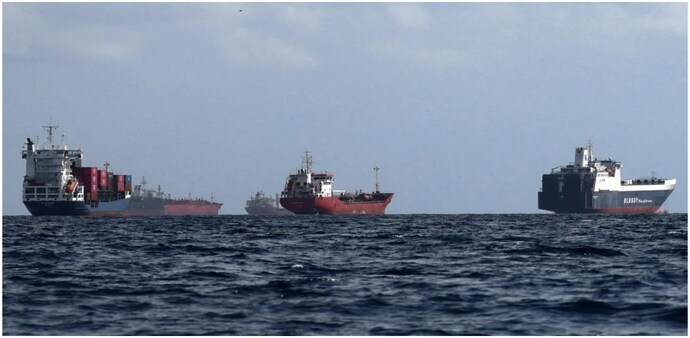
Iranian crude oil exports have continued to flow through the Strait of Hormuz at a ‘near-normal pace’ despite disruptions for other Middle Eastern oil producers. Data reviewed by Reuters and maritime analytics firms show that while non-Iranian vessel traffic has slowed sharply, Iranian tankers have maintained their shipments.
Since tensions escalated after Israeli and US strikes on February 28, Iran has exported approximately 13.7 million barrels of crude oil, according to analysis by TankerTrackers.com. Vessel tracking service Kpler reported even higher figures, estimating Iranian exports in the first 11 days of March at around 16.5 million barrels.
This contrasts with a near standstill for many non-Iranian vessels navigating the Strait.
Iran prepared for the possibility of military conflict by increasing its exports in February, reaching about 2.17 million barrels per day ahead of the strikes. Tanker movements tracked since February 28 show six crude oil tankers, including the US-sanctioned vessel Cuma, have departed Iran, with some cargoes reaching waters near Singapore.
Export data suggests that Iranian shipments since late February have averaged between 1.1 and 1.5 million barrels per day, compared to the country's 2023 average of 1.69 million barrels per day, according to Kpler. Multiple very large crude carriers are still loading at Kharg Island, indicating ongoing export momentum.
In contrast, non-Iranian producers have been forced to cut output as transits by their vessels have slowed sharply due to recent attacks and security risks in the Strait of Hormuz, the narrow waterway critical for global oil flows.
"So long as Iran is moving its vessels through the region, Iran has an incentive to keep the Strait of Hormuz open at least to some degree," said James Lightbourn, shipping financier and founder of Cavalier Shipping, a maritime investing and advisory business.
Shipping sources said this is seen as providing the vessels with a measure of protection by keeping them within Iran's waters.
Iranian crude oil exports have continued to flow through the Strait of Hormuz at a ‘near-normal pace’ despite disruptions for other Middle Eastern oil producers. Data reviewed by Reuters and maritime analytics firms show that while non-Iranian vessel traffic has slowed sharply, Iranian tankers have maintained their shipments.
Since tensions escalated after Israeli and US strikes on February 28, Iran has exported approximately 13.7 million barrels of crude oil, according to analysis by TankerTrackers.com. Vessel tracking service Kpler reported even higher figures, estimating Iranian exports in the first 11 days of March at around 16.5 million barrels.
This contrasts with a near standstill for many non-Iranian vessels navigating the Strait.
Iran prepared for the possibility of military conflict by increasing its exports in February, reaching about 2.17 million barrels per day ahead of the strikes. Tanker movements tracked since February 28 show six crude oil tankers, including the US-sanctioned vessel Cuma, have departed Iran, with some cargoes reaching waters near Singapore.
Export data suggests that Iranian shipments since late February have averaged between 1.1 and 1.5 million barrels per day, compared to the country's 2023 average of 1.69 million barrels per day, according to Kpler. Multiple very large crude carriers are still loading at Kharg Island, indicating ongoing export momentum.
In contrast, non-Iranian producers have been forced to cut output as transits by their vessels have slowed sharply due to recent attacks and security risks in the Strait of Hormuz, the narrow waterway critical for global oil flows.
"So long as Iran is moving its vessels through the region, Iran has an incentive to keep the Strait of Hormuz open at least to some degree," said James Lightbourn, shipping financier and founder of Cavalier Shipping, a maritime investing and advisory business.
Shipping sources said this is seen as providing the vessels with a measure of protection by keeping them within Iran's waters.