
Super Typhoon Bavi threatens US Pacific islands: What makes it a Category-5 beast?
Forecast models indicate that Bavi will track across the Mariana Islands. The greatest impacts are expected across Guam, Saipan, Tinian and Rota, while the northern islands of Alamagan, Pagan and Agrihan could also experience severe weather as the cyclone passes nearby.
- Jul 5, 2026,
- Updated Jul 5, 2026 5:14 PM IST
Emergency shelters are opening, coastal communities are preparing to evacuate and residents are racing to secure homes as Super Typhoon Bavi charges towards the Mariana Islands. Bavi now threatens Guam and the Northern Mariana Islands with destructive winds, towering waves, storm surge and flooding. Here's why forecasters are treating it as one of the most dangerous storms of 2026.
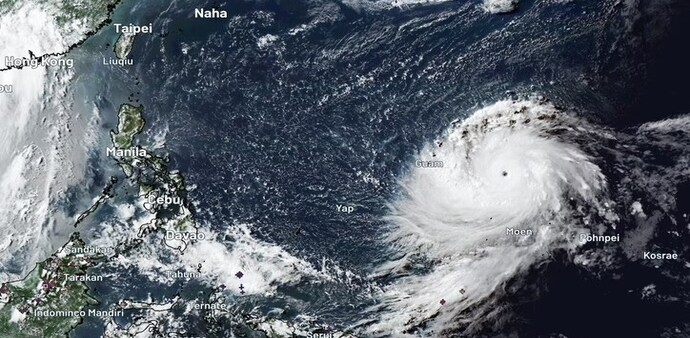
Super Typhoon Bavi has rapidly intensified into one of the most powerful tropical cyclones of 2026 over the western Pacific, prompting emergency preparations across the western Pacific. With sustained winds of around 260 km/h (160 mph) and gusts reaching 315 km/h (196 mph), the storm has strengthened into a Category 5-equivalent system over exceptionally warm ocean waters.
Which islands are in Bavi's path?
Forecast models indicate that Bavi will track across the Mariana Islands, placing several populated islands under typhoon warnings. The greatest impacts are expected across Guam, Saipan, Tinian and Rota, while the northern islands of Alamagan, Pagan and Agrihan could also experience severe weather as the cyclone passes nearby.
Although the exact track may still shift slightly, forecasters warn that even a small change could significantly alter which islands receive the strongest winds and heaviest rainfall. Dangerous conditions are expected to spread well beyond the eye of the storm, meaning damaging weather could affect a broad swathe of the island chain.
Evacuation orders & emergency preparations
Authorities in Guam and the Commonwealth of the Northern Mariana Islands (CNMI) have activated emergency response plans ahead of the storm's arrival. Emergency shelters have been opened, disaster response teams have been deployed and residents have been urged to complete preparations before weather conditions deteriorate.
MUST READ | Category 5 cyclones like Typhoon Bavi can reshape coastlines. Why they're so dangerous?
People living in low-lying coastal communities, flood-prone neighbourhoods and vulnerable housing have been advised — and in some locations ordered — to move to safer shelters. Residents have been told to secure homes and businesses, board up windows, bring outdoor furniture indoors, stock up on food, drinking water, medicines and batteries, and avoid unnecessary travel once conditions begin worsening.
Officials have also urged fishermen and boat owners to return to port immediately, warning that seas will become extremely dangerous. Wave heights of up to 10.7 metres (35 feet) are possible, while storm surge could inundate coastal roads and communities.
Why has Bavi become so powerful?
Meteorologists say Bavi underwent rapid intensification, a process in which a tropical cyclone gains strength dramatically within a short period. The storm has travelled over ocean waters with temperatures of around 29-30°C, providing abundant energy to fuel its development.
At the same time, very low vertical wind shear, high atmospheric moisture and exceptionally warm water extending deep below the ocean surface have allowed the cyclone to develop a well-defined eye and highly organised structure. These conditions have enabled Bavi to strengthen into one of the strongest storms observed anywhere in the world this year.
What hazards does Bavi pose?
Hurricane-force winds are capable of tearing roofs from buildings, uprooting trees, damaging power lines and causing widespread structural damage. Intense rainfall could trigger flash floods and landslides, particularly in hilly terrain, while prolonged heavy rain may overwhelm drainage systems in urban areas.
Along the coast, storm surge remains one of the greatest concerns. Powerful onshore winds can push seawater inland, flooding homes, roads and critical infrastructure. Combined with massive waves and dangerous surf, coastal areas may become inaccessible and highly hazardous well before the storm's centre arrives.
Extended power outages, communication disruptions and transportation delays are also expected in areas directly affected by the typhoon.
Could Bavi become one of the Pacific's "megastorms"?
Although the term "megastorm" has no official meteorological definition, it is often used to describe exceptionally powerful tropical cyclones capable of causing widespread devastation.
At its current intensity, Bavi already meets several of the characteristics commonly associated with the label. It has reached Category 5-equivalent strength, undergone explosive intensification and threatens multiple inhabited islands with destructive winds, flooding and storm surge.
Whether it ultimately joins the ranks of the Pacific's most infamous storms will depend on how long it maintains its extreme intensity, whether it makes direct landfall on major population centres and the scale of damage left in its wake.
Emergency shelters are opening, coastal communities are preparing to evacuate and residents are racing to secure homes as Super Typhoon Bavi charges towards the Mariana Islands. Bavi now threatens Guam and the Northern Mariana Islands with destructive winds, towering waves, storm surge and flooding. Here's why forecasters are treating it as one of the most dangerous storms of 2026.
Super Typhoon Bavi has rapidly intensified into one of the most powerful tropical cyclones of 2026 over the western Pacific, prompting emergency preparations across the western Pacific. With sustained winds of around 260 km/h (160 mph) and gusts reaching 315 km/h (196 mph), the storm has strengthened into a Category 5-equivalent system over exceptionally warm ocean waters.
Which islands are in Bavi's path?
Forecast models indicate that Bavi will track across the Mariana Islands, placing several populated islands under typhoon warnings. The greatest impacts are expected across Guam, Saipan, Tinian and Rota, while the northern islands of Alamagan, Pagan and Agrihan could also experience severe weather as the cyclone passes nearby.
Although the exact track may still shift slightly, forecasters warn that even a small change could significantly alter which islands receive the strongest winds and heaviest rainfall. Dangerous conditions are expected to spread well beyond the eye of the storm, meaning damaging weather could affect a broad swathe of the island chain.
Evacuation orders & emergency preparations
Authorities in Guam and the Commonwealth of the Northern Mariana Islands (CNMI) have activated emergency response plans ahead of the storm's arrival. Emergency shelters have been opened, disaster response teams have been deployed and residents have been urged to complete preparations before weather conditions deteriorate.
MUST READ | Category 5 cyclones like Typhoon Bavi can reshape coastlines. Why they're so dangerous?
People living in low-lying coastal communities, flood-prone neighbourhoods and vulnerable housing have been advised — and in some locations ordered — to move to safer shelters. Residents have been told to secure homes and businesses, board up windows, bring outdoor furniture indoors, stock up on food, drinking water, medicines and batteries, and avoid unnecessary travel once conditions begin worsening.
Officials have also urged fishermen and boat owners to return to port immediately, warning that seas will become extremely dangerous. Wave heights of up to 10.7 metres (35 feet) are possible, while storm surge could inundate coastal roads and communities.
Why has Bavi become so powerful?
Meteorologists say Bavi underwent rapid intensification, a process in which a tropical cyclone gains strength dramatically within a short period. The storm has travelled over ocean waters with temperatures of around 29-30°C, providing abundant energy to fuel its development.
At the same time, very low vertical wind shear, high atmospheric moisture and exceptionally warm water extending deep below the ocean surface have allowed the cyclone to develop a well-defined eye and highly organised structure. These conditions have enabled Bavi to strengthen into one of the strongest storms observed anywhere in the world this year.
What hazards does Bavi pose?
Hurricane-force winds are capable of tearing roofs from buildings, uprooting trees, damaging power lines and causing widespread structural damage. Intense rainfall could trigger flash floods and landslides, particularly in hilly terrain, while prolonged heavy rain may overwhelm drainage systems in urban areas.
Along the coast, storm surge remains one of the greatest concerns. Powerful onshore winds can push seawater inland, flooding homes, roads and critical infrastructure. Combined with massive waves and dangerous surf, coastal areas may become inaccessible and highly hazardous well before the storm's centre arrives.
Extended power outages, communication disruptions and transportation delays are also expected in areas directly affected by the typhoon.
Could Bavi become one of the Pacific's "megastorms"?
Although the term "megastorm" has no official meteorological definition, it is often used to describe exceptionally powerful tropical cyclones capable of causing widespread devastation.
At its current intensity, Bavi already meets several of the characteristics commonly associated with the label. It has reached Category 5-equivalent strength, undergone explosive intensification and threatens multiple inhabited islands with destructive winds, flooding and storm surge.
Whether it ultimately joins the ranks of the Pacific's most infamous storms will depend on how long it maintains its extreme intensity, whether it makes direct landfall on major population centres and the scale of damage left in its wake.