
Tariff ruling triggers first exit: Malaysia declares trade deal with US invalid
Malaysian minister said deal null and void after US Supreme Court ruling; other countries may also walk out of similar pacts
- Mar 15, 2026,
- Updated Mar 15, 2026 6:49 PM IST
In a potential setback to US President Donald Trump’s trade policies, Malaysia has said its trade deal with the US is invalid following the US Supreme Court ruling that struck down the reciprocal tariffs.
Also read: Hormuz shut, Bab el-Mandeb next? Houthi warnings put another chokepoint at risk Malaysian Investment, Trade and Industry Minister Johari Ghani, on March 15, is reported to have said that the reciprocal trade agreement (ART) between Malaysia and the US has been nullified in the wake of the US Supreme Court ruling that held that the US must have reasons to levy tariffs.
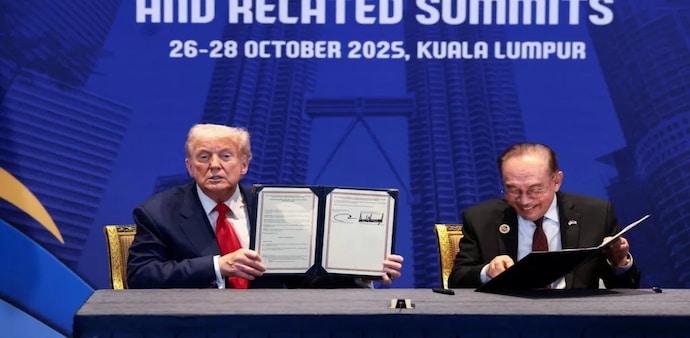
Also read: US-Israel-Iran war: Will oil prices rise on Monday? Here’s what we know Malaysia and the US had on October 26, 2025, signed the ART under which tariffs would climb down from the initial 47% to 24% and then 19% along with zero duty on certain products. Malaysia had also agreed to provide deeper market access and policy concessions to the US in return. The US Supreme Court had later, on February 20, 2026, struck down the reciprocal tariffs. US President Trump had then levied a 10% tariff across all countries for a period of 150 days and had said that it would soon be replaced with 15% tariff. The US has also warned that countries should not walk out of trade agreements that they had signed or else they could face dire repercussions. At the India Today Conclave 2026, US Ambassador to India Sergio Gor said that the US expects India and other trading countries to honour the trade deals that they had entered into. A report by Global Trade Research Initiative noted that two factors are likely to push more countries to walk away from trade deals signed with the US under the reciprocal tariff strategy. “First, the deals have lost their economic value after the US Supreme Court ruling… The preferential advantage promised by these agreements has therefore disappeared,” it said. Second, trade pressure from the US continues even after agreements are signed, it further said, pointing out that the US has launched fresh investigations on countries. This signals that even countries that negotiated trade arrangements remain exposed to new US investigations and potential tariffs. “For many governments, this combination raises a fundamental question: why maintain politically costly concessions if the same tariff treatment applies without a deal and trade pressure continues anyway? Malaysia’s decision to declare its agreement void may be followed by many other countries,” said Ajay Srivasatava, Founder, GTRI. On March 11, the US announced the initiation of investigations under Section 301(b) of the Trade Act of 1974 relating to structural excess capacity and production in manufacturing sectors on countries including China, the European Union, Singapore, Switzerland, Norway, Indonesia, Malaysia, Cambodia, Thailand, Korea, Vietnam, Taiwan, Bangladesh, Mexico, Japan, and India. This was followed by another announcement on March 12 that the US has launched investigations under Section 301 into forced-labour practices on 60 economies, including India, China, the European Union, the United Kingdom, Japan, Canada, Australia, Mexico, Brazil, Vietnam, Bangladesh, Cambodia, and Pakistan. India and the US had announced the conclusion of the initial trade deal agreement late on February 1 under which the penalty tariff of 25% would be removed, and the reciprocal tariff would be lowered to 18%. Till now, India and the US have said that they remain engaged for a mutually beneficial trade agreement, although there is no clarity on the timeline of the deal or its contours.
In a potential setback to US President Donald Trump’s trade policies, Malaysia has said its trade deal with the US is invalid following the US Supreme Court ruling that struck down the reciprocal tariffs.
Also read: Hormuz shut, Bab el-Mandeb next? Houthi warnings put another chokepoint at risk Malaysian Investment, Trade and Industry Minister Johari Ghani, on March 15, is reported to have said that the reciprocal trade agreement (ART) between Malaysia and the US has been nullified in the wake of the US Supreme Court ruling that held that the US must have reasons to levy tariffs.
Also read: US-Israel-Iran war: Will oil prices rise on Monday? Here’s what we know Malaysia and the US had on October 26, 2025, signed the ART under which tariffs would climb down from the initial 47% to 24% and then 19% along with zero duty on certain products. Malaysia had also agreed to provide deeper market access and policy concessions to the US in return. The US Supreme Court had later, on February 20, 2026, struck down the reciprocal tariffs. US President Trump had then levied a 10% tariff across all countries for a period of 150 days and had said that it would soon be replaced with 15% tariff. The US has also warned that countries should not walk out of trade agreements that they had signed or else they could face dire repercussions. At the India Today Conclave 2026, US Ambassador to India Sergio Gor said that the US expects India and other trading countries to honour the trade deals that they had entered into. A report by Global Trade Research Initiative noted that two factors are likely to push more countries to walk away from trade deals signed with the US under the reciprocal tariff strategy. “First, the deals have lost their economic value after the US Supreme Court ruling… The preferential advantage promised by these agreements has therefore disappeared,” it said. Second, trade pressure from the US continues even after agreements are signed, it further said, pointing out that the US has launched fresh investigations on countries. This signals that even countries that negotiated trade arrangements remain exposed to new US investigations and potential tariffs. “For many governments, this combination raises a fundamental question: why maintain politically costly concessions if the same tariff treatment applies without a deal and trade pressure continues anyway? Malaysia’s decision to declare its agreement void may be followed by many other countries,” said Ajay Srivasatava, Founder, GTRI. On March 11, the US announced the initiation of investigations under Section 301(b) of the Trade Act of 1974 relating to structural excess capacity and production in manufacturing sectors on countries including China, the European Union, Singapore, Switzerland, Norway, Indonesia, Malaysia, Cambodia, Thailand, Korea, Vietnam, Taiwan, Bangladesh, Mexico, Japan, and India. This was followed by another announcement on March 12 that the US has launched investigations under Section 301 into forced-labour practices on 60 economies, including India, China, the European Union, the United Kingdom, Japan, Canada, Australia, Mexico, Brazil, Vietnam, Bangladesh, Cambodia, and Pakistan. India and the US had announced the conclusion of the initial trade deal agreement late on February 1 under which the penalty tariff of 25% would be removed, and the reciprocal tariff would be lowered to 18%. Till now, India and the US have said that they remain engaged for a mutually beneficial trade agreement, although there is no clarity on the timeline of the deal or its contours.