
Trump administration launches $166 billion tariff refund system. Who are eligible for claims
The refund mechanism, called the Consolidated Administration and Processing of Entries (CAPE), has been introduced by US Customs and Border Protection to simplify what would otherwise be a highly complex process.
- Apr 20, 2026,
- Updated Apr 20, 2026 6:54 PM IST
In a major policy reversal with far-reaching financial implications, the administration of Donald Trump has launched a new system to refund an estimated $166 billion in tariffs to U.S. importers, following a landmark ruling by the Supreme Court of the United States that declared the levies unlawful earlier this year.
The refund mechanism, called the Consolidated Administration and Processing of Entries (CAPE), has been introduced by US Customs and Border Protection to simplify what would otherwise be a highly complex process. Instead of issuing refunds entry by entry, CAPE enables consolidated electronic payments — potentially speeding up reimbursements for businesses that had paid tariffs under the now-invalid regime.
The system’s rollout marks only the first phase, meaning eligibility remains limited for now. Not all importers — or all tariff categories — can immediately apply for refunds, with authorities yet to clarify when the system will fully open.
Supreme Court ruling triggers historic repayment
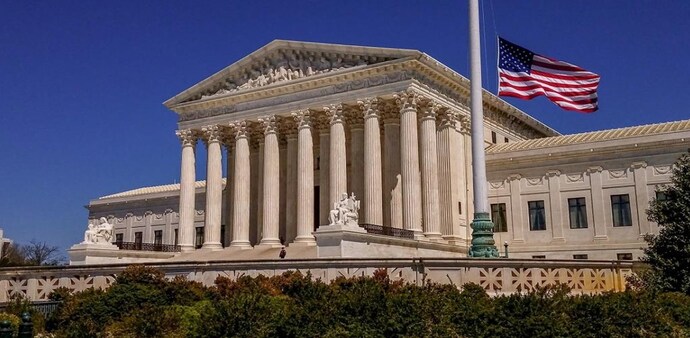
The refunds stem from a February decision by the Supreme Court of the United States, which struck down tariffs imposed under the International Emergency Economic Powers Act (IEEPA). The ruling effectively invalidated billions collected under the duties, setting the stage for one of the largest repayment exercises in US history.
The tariffs — imposed under emergency economic powers — had generated record revenues, especially after the so-called “Liberation Day” duties, amplifying the scale of refunds now owed.
Who can claim and what’s next
Only designated “importers of record” who directly paid the tariffs—or customs brokers authorized to act on their behalf—are eligible to file claims. Even among them, only select payments qualify in the initial phase.
Businesses are expected to rush to submit claims as the system expands, though uncertainty remains over timelines and the total payout.
There are also indications that the administration could seek to limit the financial impact. Kevin Hassett, Director of the National Economic Council, suggested in a recent interview that alternative legal authorities might be used to reduce the overall refund burden.
In a major policy reversal with far-reaching financial implications, the administration of Donald Trump has launched a new system to refund an estimated $166 billion in tariffs to U.S. importers, following a landmark ruling by the Supreme Court of the United States that declared the levies unlawful earlier this year.
The refund mechanism, called the Consolidated Administration and Processing of Entries (CAPE), has been introduced by US Customs and Border Protection to simplify what would otherwise be a highly complex process. Instead of issuing refunds entry by entry, CAPE enables consolidated electronic payments — potentially speeding up reimbursements for businesses that had paid tariffs under the now-invalid regime.
The system’s rollout marks only the first phase, meaning eligibility remains limited for now. Not all importers — or all tariff categories — can immediately apply for refunds, with authorities yet to clarify when the system will fully open.
Supreme Court ruling triggers historic repayment
The refunds stem from a February decision by the Supreme Court of the United States, which struck down tariffs imposed under the International Emergency Economic Powers Act (IEEPA). The ruling effectively invalidated billions collected under the duties, setting the stage for one of the largest repayment exercises in US history.
The tariffs — imposed under emergency economic powers — had generated record revenues, especially after the so-called “Liberation Day” duties, amplifying the scale of refunds now owed.
Who can claim and what’s next
Only designated “importers of record” who directly paid the tariffs—or customs brokers authorized to act on their behalf—are eligible to file claims. Even among them, only select payments qualify in the initial phase.
Businesses are expected to rush to submit claims as the system expands, though uncertainty remains over timelines and the total payout.
There are also indications that the administration could seek to limit the financial impact. Kevin Hassett, Director of the National Economic Council, suggested in a recent interview that alternative legal authorities might be used to reduce the overall refund burden.