
Trump issues 48-hour warning to Iran: 'Fully open Strait of Hormuz or US will hit and obliterate their...'
In a post on social media, Trump said the United States would target Iran’s power plants, beginning with its largest, if the strait is not restored to normal operations without disruption
- Mar 22, 2026,
- Updated Mar 22, 2026 7:40 AM IST
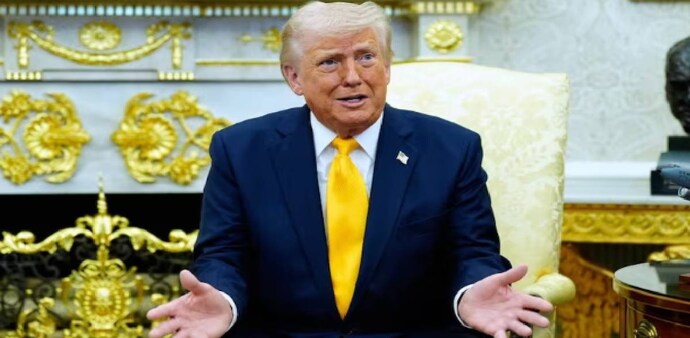
The standoff over the Strait of Hormuz has sharply escalated, with US President Donald Trump issuing a 48-hour deadline to Iran and warning of direct strikes on its power infrastructure if the key shipping route is not reopened.
In a post on social media, Trump said the United States would target Iran’s power plants, beginning with its largest, if the strait is not restored to normal operations without disruption.
“If Iran doesn’t FULLY OPEN, WITHOUT THREAT, the Strait of Hormuz, within 48 HOURS from this exact point in time, the United States of America will hit and obliterate their various POWER PLANTS, STARTING WITH THE BIGGEST ONE FIRST,” Trump said.
The warning comes at a time when the conflict involving the US, Israel and Iran is entering a more intense phase, with military activity expanding in scope and geography.
Long-range missile use marks escalation
Recent developments indicate a shift in the nature of the conflict. Israeli officials said Iran has deployed long-range ballistic missiles for the first time since hostilities began.
Eyal Zamir said Iran launched two 4,000-km-range ballistic missiles at the US-UK military base at Diego Garcia. The Israeli military described it as the “first time” Iran had used such long-range missiles since the United States and Israel began strikes on Iran on February 28.
“These missiles are not intended to strike Israel. Their range reaches European capitals — Berlin, Paris and Rome are all within direct threat range,” Zamir said.
Iranian media also reported that US and Israeli strikes hit the Shahid Ahmadi-Roshan Natanz enrichment complex earlier in the day.
Casualties mount as energy route remains blocked
The conflict has already caused significant loss of life. More than 2,000 people have been killed in Iran since the start of US and Israeli operations, while at least 15 people have died in Israeli territory in retaliatory attacks.
The Strait of Hormuz remains central to the crisis. The narrow corridor handles around one-fifth of global oil supply, making any disruption immediately felt across energy markets.
Iran’s actions in restricting movement through the strait have tightened supply flows and pushed oil prices higher, prompting widespread concern.
More than 20 countries have called for the restoration of safe passage through the route.
Europe and Japan step in with a coordinated response
Amid fears of further disruption, several major economies have signalled readiness to act in a coordinated manner to stabilise the situation.
In a joint statement, Britain, France, Germany, Italy, the Netherlands and Japan said they were prepared to help maintain safe transit through the Strait of Hormuz.
“We express our readiness to contribute to appropriate efforts to ensure safe passage through the Strait,” the countries said.
The standoff over the Strait of Hormuz has sharply escalated, with US President Donald Trump issuing a 48-hour deadline to Iran and warning of direct strikes on its power infrastructure if the key shipping route is not reopened.
In a post on social media, Trump said the United States would target Iran’s power plants, beginning with its largest, if the strait is not restored to normal operations without disruption.
“If Iran doesn’t FULLY OPEN, WITHOUT THREAT, the Strait of Hormuz, within 48 HOURS from this exact point in time, the United States of America will hit and obliterate their various POWER PLANTS, STARTING WITH THE BIGGEST ONE FIRST,” Trump said.
The warning comes at a time when the conflict involving the US, Israel and Iran is entering a more intense phase, with military activity expanding in scope and geography.
Long-range missile use marks escalation
Recent developments indicate a shift in the nature of the conflict. Israeli officials said Iran has deployed long-range ballistic missiles for the first time since hostilities began.
Eyal Zamir said Iran launched two 4,000-km-range ballistic missiles at the US-UK military base at Diego Garcia. The Israeli military described it as the “first time” Iran had used such long-range missiles since the United States and Israel began strikes on Iran on February 28.
“These missiles are not intended to strike Israel. Their range reaches European capitals — Berlin, Paris and Rome are all within direct threat range,” Zamir said.
Iranian media also reported that US and Israeli strikes hit the Shahid Ahmadi-Roshan Natanz enrichment complex earlier in the day.
Casualties mount as energy route remains blocked
The conflict has already caused significant loss of life. More than 2,000 people have been killed in Iran since the start of US and Israeli operations, while at least 15 people have died in Israeli territory in retaliatory attacks.
The Strait of Hormuz remains central to the crisis. The narrow corridor handles around one-fifth of global oil supply, making any disruption immediately felt across energy markets.
Iran’s actions in restricting movement through the strait have tightened supply flows and pushed oil prices higher, prompting widespread concern.
More than 20 countries have called for the restoration of safe passage through the route.
Europe and Japan step in with a coordinated response
Amid fears of further disruption, several major economies have signalled readiness to act in a coordinated manner to stabilise the situation.
In a joint statement, Britain, France, Germany, Italy, the Netherlands and Japan said they were prepared to help maintain safe transit through the Strait of Hormuz.
“We express our readiness to contribute to appropriate efforts to ensure safe passage through the Strait,” the countries said.