
Trump wants to focus on North Korea after Iran deal, says South Korean president
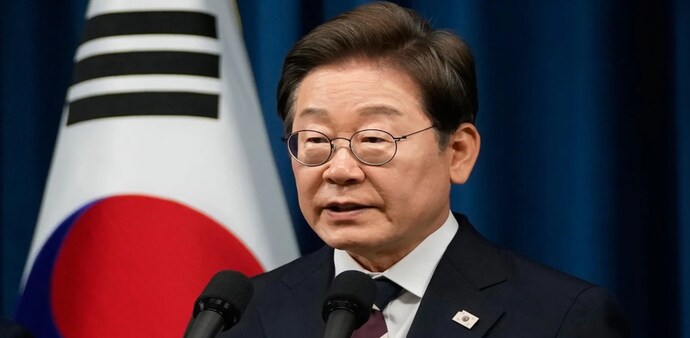
South Korean President Lee Jae Myung has argued that despite years of international pressure, North Korea has continued to advance its nuclear weapons and missile capabilities, making a purely sanctions-based strategy increasingly ineffective.
- Jun 19, 2026,
- Updated Jun 19, 2026 7:51 PM IST
US President Donald Trump is reportedly looking to shift his diplomatic focus toward North Korea following a breakthrough agreement with Iran, according to South Korean President Lee Jae Myung. The remarks come amid renewed speculation that Washington could seek to revive talks with Pyongyang after years of stalled nuclear negotiations.
Speaking after meetings with Trump on the sidelines of the G7 summit in France, Lee said the US President appeared eager to turn his attention to the Korean Peninsula now that an accord with Iran had been secured. Lee suggested Trump believes progress with North Korea could represent the next major diplomatic challenge on his foreign policy agenda.
Renewed push for dialogue
Lee has been advocating a more engagement-oriented approach toward North Korea since taking office. During discussions with Trump, he reportedly urged the US leader to take the lead in pursuing peaceful diplomacy with Pyongyang and restarting dialogue with North Korean leader Kim Jong Un.
According to Lee, Trump showed interest in resuming contact with Kim and was receptive to discussions about a phased approach to addressing North Korea's nuclear programme. Such a strategy would prioritize freezing the country's nuclear and missile development in the near term while keeping denuclearisation as a longer-term objective.
Shift from pressure to pragmatism
The comments reflect growing recognition in Seoul that sanctions alone have not achieved their intended goals. Lee has argued that despite years of international pressure, North Korea has continued to advance its nuclear weapons and missile capabilities, making a purely sanctions-based strategy increasingly ineffective.
South Korea's government has already taken several steps aimed at lowering tensions, including easing border restrictions and pursuing measures designed to improve inter-Korean relations. The administration has framed these moves as part of a broader effort to create conditions for future dialogue.
Any attempt to restart negotiations faces significant hurdles. North Korea has repeatedly insisted that its nuclear status is non-negotiable and has shown little enthusiasm for returning to talks. Previous summit diplomacy between Trump and Kim generated global attention but ultimately failed to produce a lasting agreement on denuclearisation.
US President Donald Trump is reportedly looking to shift his diplomatic focus toward North Korea following a breakthrough agreement with Iran, according to South Korean President Lee Jae Myung. The remarks come amid renewed speculation that Washington could seek to revive talks with Pyongyang after years of stalled nuclear negotiations.
Speaking after meetings with Trump on the sidelines of the G7 summit in France, Lee said the US President appeared eager to turn his attention to the Korean Peninsula now that an accord with Iran had been secured. Lee suggested Trump believes progress with North Korea could represent the next major diplomatic challenge on his foreign policy agenda.
Renewed push for dialogue
Lee has been advocating a more engagement-oriented approach toward North Korea since taking office. During discussions with Trump, he reportedly urged the US leader to take the lead in pursuing peaceful diplomacy with Pyongyang and restarting dialogue with North Korean leader Kim Jong Un.
According to Lee, Trump showed interest in resuming contact with Kim and was receptive to discussions about a phased approach to addressing North Korea's nuclear programme. Such a strategy would prioritize freezing the country's nuclear and missile development in the near term while keeping denuclearisation as a longer-term objective.
Shift from pressure to pragmatism
The comments reflect growing recognition in Seoul that sanctions alone have not achieved their intended goals. Lee has argued that despite years of international pressure, North Korea has continued to advance its nuclear weapons and missile capabilities, making a purely sanctions-based strategy increasingly ineffective.
South Korea's government has already taken several steps aimed at lowering tensions, including easing border restrictions and pursuing measures designed to improve inter-Korean relations. The administration has framed these moves as part of a broader effort to create conditions for future dialogue.
Any attempt to restart negotiations faces significant hurdles. North Korea has repeatedly insisted that its nuclear status is non-negotiable and has shown little enthusiasm for returning to talks. Previous summit diplomacy between Trump and Kim generated global attention but ultimately failed to produce a lasting agreement on denuclearisation.