
US hits Iran for sixth consecutive night: Leavitt says Tehran 'suffering devastating blows' but wants a deal
The strikes came barely an hour after the White House delivered what appeared to be a contradictory message. Press Secretary Karoline Leavitt told reporters that despite the escalating military campaign, Iran was still talking
- Jul 17, 2026,
- Updated Jul 17, 2026 8:32 AM IST
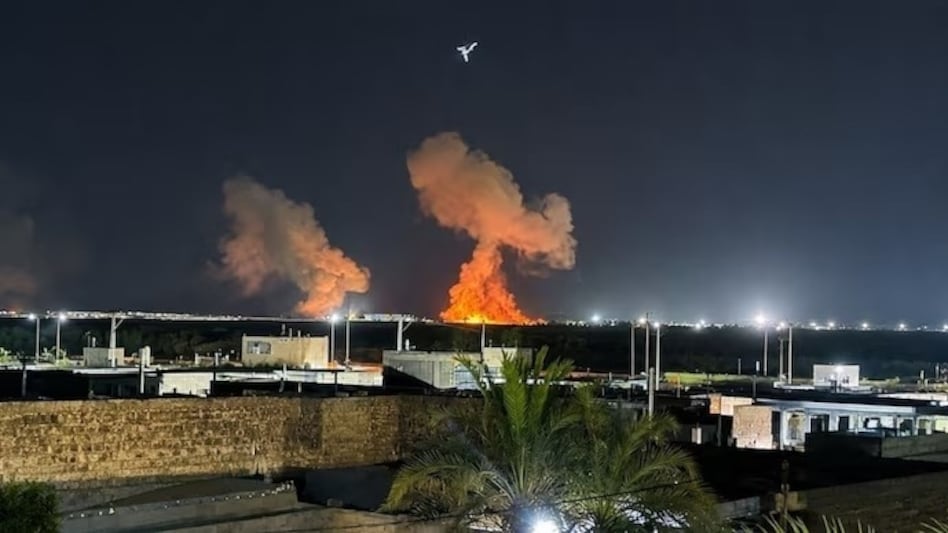
The United States struck Iran for the sixth consecutive night on Thursday, targeting military capabilities near Bandar Abbas and Qeshm Island, even as the White House said Iran remained engaged in negotiations and still wanted to reach a deal.
"US Central Command began conducting a new wave of strikes against Iran to further degrade Iranian military capabilities," the military said in a statement. The operation began at 2 pm ET. Iranian state television reported that American projectiles had struck areas in and around Bandar Abbas, Iran's most strategically significant southern port city, which sits directly overlooking the Strait of Hormuz. Iran's semi-official Mehr news agency also reported strikes near Qeshm Island.
The White House message: War and diplomacy, simultaneously
The strikes came barely an hour after the White House delivered what appeared to be a contradictory message. Press Secretary Karoline Leavitt told reporters that despite the escalating military campaign, Iran was still talking.
"Iran very much continues to talk to the United States of America and express that they want to make a deal with us because they are suffering devastating blows on behalf of our US military," Leavitt said at a briefing.
She defended the continued strikes as a direct consequence of Iranian behaviour in the Strait of Hormuz, saying Trump would not "sit by and allow these active acts of terrorism to take place in the strait without ensuring Iran pays consequences for that." At the same time, she emphasised the president "was always open to diplomacy."
What is being targeted
The latest operation focuses on Iran's military presence along its southern coastline, positions that Washington says have been used to threaten commercial shipping moving through the Strait of Hormuz. Bandar Abbas is a particularly significant target. It houses Iran's largest commercial port alongside major naval installations and Islamic Revolutionary Guard Corps facilities, making it central to both Iran's military posture and its economic infrastructure in the region.
The shipping crisis
Commercial traffic through the Strait of Hormuz remains severely disrupted. The renewed fighting escalated after Iran tightened its control over the waterway, prompting the US to respond with a naval blockade of Iranian ports. The strait carries roughly one-fifth of the world's oil and gas supplies, and six straight nights of strikes, combined with Iranian countermeasures, have pushed global energy prices higher and deepened concerns about the security of international shipping through one of the planet's most critical maritime corridors.
The United States struck Iran for the sixth consecutive night on Thursday, targeting military capabilities near Bandar Abbas and Qeshm Island, even as the White House said Iran remained engaged in negotiations and still wanted to reach a deal.
"US Central Command began conducting a new wave of strikes against Iran to further degrade Iranian military capabilities," the military said in a statement. The operation began at 2 pm ET. Iranian state television reported that American projectiles had struck areas in and around Bandar Abbas, Iran's most strategically significant southern port city, which sits directly overlooking the Strait of Hormuz. Iran's semi-official Mehr news agency also reported strikes near Qeshm Island.
The White House message: War and diplomacy, simultaneously
The strikes came barely an hour after the White House delivered what appeared to be a contradictory message. Press Secretary Karoline Leavitt told reporters that despite the escalating military campaign, Iran was still talking.
"Iran very much continues to talk to the United States of America and express that they want to make a deal with us because they are suffering devastating blows on behalf of our US military," Leavitt said at a briefing.
She defended the continued strikes as a direct consequence of Iranian behaviour in the Strait of Hormuz, saying Trump would not "sit by and allow these active acts of terrorism to take place in the strait without ensuring Iran pays consequences for that." At the same time, she emphasised the president "was always open to diplomacy."
What is being targeted
The latest operation focuses on Iran's military presence along its southern coastline, positions that Washington says have been used to threaten commercial shipping moving through the Strait of Hormuz. Bandar Abbas is a particularly significant target. It houses Iran's largest commercial port alongside major naval installations and Islamic Revolutionary Guard Corps facilities, making it central to both Iran's military posture and its economic infrastructure in the region.
The shipping crisis
Commercial traffic through the Strait of Hormuz remains severely disrupted. The renewed fighting escalated after Iran tightened its control over the waterway, prompting the US to respond with a naval blockade of Iranian ports. The strait carries roughly one-fifth of the world's oil and gas supplies, and six straight nights of strikes, combined with Iranian countermeasures, have pushed global energy prices higher and deepened concerns about the security of international shipping through one of the planet's most critical maritime corridors.