
US strikes Iranian air defences after Apache downed over Hormuz; Iran targets US Fifth Fleet
US Central Command said its forces targeted Iranian air defence systems, ground control stations, and surveillance radar sites near the Strait of Hormuz
- Jun 10, 2026,
- Updated Jun 10, 2026 7:38 AM IST
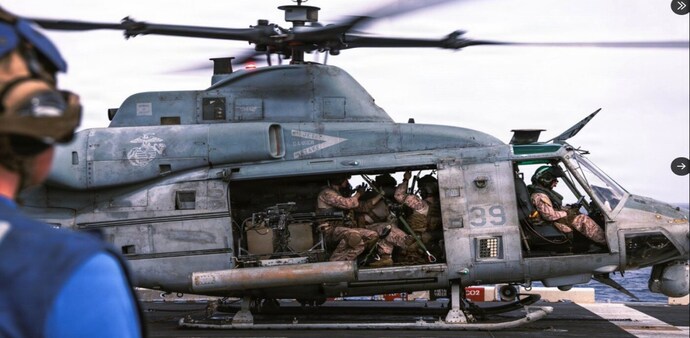
An Iranian one-way attack drone brought down a US Apache helicopter over the Strait of Hormuz, and within hours, American forces had struck multiple Iranian targets across southern Iran in retaliation. Tehran then launched drones at the US Fifth Fleet in Bahrain. What began as a single incident over the world's most strategically critical waterway has rapidly become one of the most serious direct military confrontations between Washington and Tehran in recent memory.
The US military described its operation as a "proportional response to unjustified Iranian aggression." According to a US official who spoke to Reuters, the two American pilots aboard the Apache survived the drone strike without injuries. President Donald Trump confirmed the pilots were safe but made clear a response was coming.
What the US struck
US Central Command said its forces targeted Iranian air defence systems, ground control stations, and surveillance radar sites near the Strait of Hormuz. The strikes were characterised as "self-defence" actions. A US official told Axios that the operation specifically focused on Iranian air defence and radar infrastructure around the strait. CENTCOM subsequently confirmed that US forces had completed their strikes against Iran.
Explosions across southern Iran
The scale of the operation was reflected in reports from across the region. Iran's Fars news agency reported blasts in eastern areas of Hormozgan province. Mehr news agency confirmed explosions in the port city of Bandar Abbas. Iranian state media reported a confirmed projectile impact in Sirik and said Qeshm Island had also come under attack. The pattern of strikes suggested a coordinated operation targeting multiple sites near the Strait of Hormuz.
Iran's warnings
Iranian Foreign Minister Abbas Araqchi stopped short of directly addressing the helicopter incident but issued a pointed warning about the risks faced by foreign military forces operating near Iranian territory. "To reduce risk, the best solution is for them to leave," he said in a post on social media.
Following the US strikes, Araqchi escalated his language further, saying that despite what he described as US "defeats on the battlefield," Washington had chosen to test Iran's resolve. He warned that Iran's armed forces would leave "no attack or threat unanswered" and invoked the history of the Persian Gulf as a warning to foreign forces, saying it contained many examples of the "dire fates of intruding outsiders."
Iran retaliates against the Fifth Fleet
Iran's Islamic Revolutionary Guard Corps said it launched drones targeting the US Fifth Fleet in Bahrain in direct retaliation for the American strikes on southern Iran. The Guards said clashes were ongoing and warned of a "more severe response" if US aggression continued. They also said the American strikes had damaged a telecommunications tower and two water tanks in the Iranian port town of Sirik.
Iranian state media had earlier quoted a military source as saying no offensive Iranian air operations had been conducted over the Strait of Hormuz in the previous 24 hours, and that Iran would deliver a "decisive response" if faced with fresh hostility linked to the helicopter incident.
An Iranian one-way attack drone brought down a US Apache helicopter over the Strait of Hormuz, and within hours, American forces had struck multiple Iranian targets across southern Iran in retaliation. Tehran then launched drones at the US Fifth Fleet in Bahrain. What began as a single incident over the world's most strategically critical waterway has rapidly become one of the most serious direct military confrontations between Washington and Tehran in recent memory.
The US military described its operation as a "proportional response to unjustified Iranian aggression." According to a US official who spoke to Reuters, the two American pilots aboard the Apache survived the drone strike without injuries. President Donald Trump confirmed the pilots were safe but made clear a response was coming.
What the US struck
US Central Command said its forces targeted Iranian air defence systems, ground control stations, and surveillance radar sites near the Strait of Hormuz. The strikes were characterised as "self-defence" actions. A US official told Axios that the operation specifically focused on Iranian air defence and radar infrastructure around the strait. CENTCOM subsequently confirmed that US forces had completed their strikes against Iran.
Explosions across southern Iran
The scale of the operation was reflected in reports from across the region. Iran's Fars news agency reported blasts in eastern areas of Hormozgan province. Mehr news agency confirmed explosions in the port city of Bandar Abbas. Iranian state media reported a confirmed projectile impact in Sirik and said Qeshm Island had also come under attack. The pattern of strikes suggested a coordinated operation targeting multiple sites near the Strait of Hormuz.
Iran's warnings
Iranian Foreign Minister Abbas Araqchi stopped short of directly addressing the helicopter incident but issued a pointed warning about the risks faced by foreign military forces operating near Iranian territory. "To reduce risk, the best solution is for them to leave," he said in a post on social media.
Following the US strikes, Araqchi escalated his language further, saying that despite what he described as US "defeats on the battlefield," Washington had chosen to test Iran's resolve. He warned that Iran's armed forces would leave "no attack or threat unanswered" and invoked the history of the Persian Gulf as a warning to foreign forces, saying it contained many examples of the "dire fates of intruding outsiders."
Iran retaliates against the Fifth Fleet
Iran's Islamic Revolutionary Guard Corps said it launched drones targeting the US Fifth Fleet in Bahrain in direct retaliation for the American strikes on southern Iran. The Guards said clashes were ongoing and warned of a "more severe response" if US aggression continued. They also said the American strikes had damaged a telecommunications tower and two water tanks in the Iranian port town of Sirik.
Iranian state media had earlier quoted a military source as saying no offensive Iranian air operations had been conducted over the Strait of Hormuz in the previous 24 hours, and that Iran would deliver a "decisive response" if faced with fresh hostility linked to the helicopter incident.