
Venezuela hit by 7.1 and 7.5 magnitude quakes within a minute: Buildings collapse, tsunami alert issued
Within the space of sixty seconds, two earthquakes shook the nation's northern coastline and sent tremors rippling through Caracas, where buildings crumbled, walls gave way and thousands of people rushed to the streets.
- Jun 25, 2026,
- Updated Jun 25, 2026 7:30 AM IST
Venezuela was struck by two powerful earthquakes in quick succession on Wednesday evening, the strongest to hit the country in more than a century. Within the space of sixty seconds, two seismic events shook the nation's northern coastline and sent tremors rippling through Caracas, where buildings crumbled, walls gave way and thousands of people rushed to the streets.
The first quake, registering 7.1 on the Richter scale, struck near Morón, a coastal community roughly 168 kilometres west of Caracas, at a depth of 13 kilometres. Before the shaking had fully subsided, a second, more powerful tremor of 7.5 magnitude hit approximately 16 kilometres southwest of the same location, at a depth of 10 kilometres, according to the US Geological Survey.
The back-to-back strikes sent shockwaves well beyond Venezuela's borders, triggering tsunami alerts across parts of the Caribbean.
What happened in Caracas
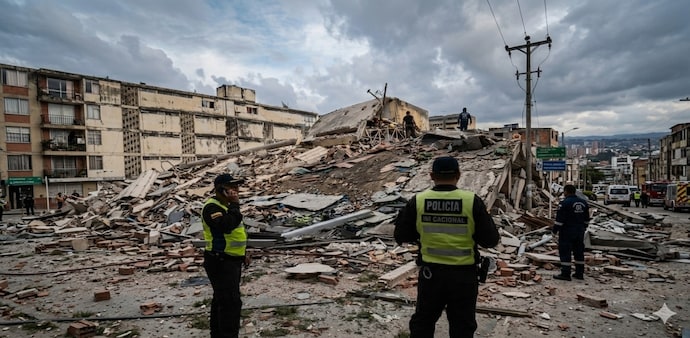
The impact on the capital was immediate and visible. Residents in typically busy neighbourhoods watched entire building facades crumble, exposing furniture and interior rooms to the open air. Columns of dust rose over at least two districts as people fled swaying structures, many too afraid to return inside.
Caracas resident Roberto Damas described what it felt like to be outside when the quakes hit. "The building really shook from side to side. Unreal. The force was incredibly strong. We were walking, and it was tossing us around. Everything in the apartment fell. Well, thank God we were able to get out," he said.
Government response
Interior Minister Diosdado Cabello confirmed the tremors had been felt across multiple states. He singled out the Altamira neighbourhood in Caracas as an area of particular concern, describing "alarming situations" involving collapsed homes and structures and acknowledging that people had been injured. He appealed to motorists to make way for ambulances and emergency teams.
"We understand that some people may be desperate, but we are acting according to protocols to activate aid and rescue efforts to help those who need it most," Cabello said in a broadcast on state television. "Be very careful with children and the elderly; call each other and check that no one has been harmed."
He also urged residents to remain outdoors, warning that aftershocks could cause further structural damage to already weakened buildings.
Tsunami alerts across the Caribbean
The seismic events prompted rapid warnings across the wider region. The US Pacific Tsunami Warning Centre issued an alert for the Virgin Islands, while the Dominican Republic activated its own warning for the island. A separate alert issued for Puerto Rico was subsequently lifted. Emergency services across the affected areas remained on heightened alert as authorities monitored sea levels and assessed conditions along vulnerable coastlines.
(With inputs from PTI)
Venezuela was struck by two powerful earthquakes in quick succession on Wednesday evening, the strongest to hit the country in more than a century. Within the space of sixty seconds, two seismic events shook the nation's northern coastline and sent tremors rippling through Caracas, where buildings crumbled, walls gave way and thousands of people rushed to the streets.
The first quake, registering 7.1 on the Richter scale, struck near Morón, a coastal community roughly 168 kilometres west of Caracas, at a depth of 13 kilometres. Before the shaking had fully subsided, a second, more powerful tremor of 7.5 magnitude hit approximately 16 kilometres southwest of the same location, at a depth of 10 kilometres, according to the US Geological Survey.
The back-to-back strikes sent shockwaves well beyond Venezuela's borders, triggering tsunami alerts across parts of the Caribbean.
What happened in Caracas
The impact on the capital was immediate and visible. Residents in typically busy neighbourhoods watched entire building facades crumble, exposing furniture and interior rooms to the open air. Columns of dust rose over at least two districts as people fled swaying structures, many too afraid to return inside.
Caracas resident Roberto Damas described what it felt like to be outside when the quakes hit. "The building really shook from side to side. Unreal. The force was incredibly strong. We were walking, and it was tossing us around. Everything in the apartment fell. Well, thank God we were able to get out," he said.
Government response
Interior Minister Diosdado Cabello confirmed the tremors had been felt across multiple states. He singled out the Altamira neighbourhood in Caracas as an area of particular concern, describing "alarming situations" involving collapsed homes and structures and acknowledging that people had been injured. He appealed to motorists to make way for ambulances and emergency teams.
"We understand that some people may be desperate, but we are acting according to protocols to activate aid and rescue efforts to help those who need it most," Cabello said in a broadcast on state television. "Be very careful with children and the elderly; call each other and check that no one has been harmed."
He also urged residents to remain outdoors, warning that aftershocks could cause further structural damage to already weakened buildings.
Tsunami alerts across the Caribbean
The seismic events prompted rapid warnings across the wider region. The US Pacific Tsunami Warning Centre issued an alert for the Virgin Islands, while the Dominican Republic activated its own warning for the island. A separate alert issued for Puerto Rico was subsequently lifted. Emergency services across the affected areas remained on heightened alert as authorities monitored sea levels and assessed conditions along vulnerable coastlines.
(With inputs from PTI)