
Volkswagen hired 100 sheep to maintain a solar farm — and the reason is brilliant
Volkswagen is collaborating with the Poznań University of Life Sciences to study how livestock and renewable energy infrastructure can coexist effectively
- Jul 20, 2026,
- Updated Jul 20, 2026 4:17 PM IST
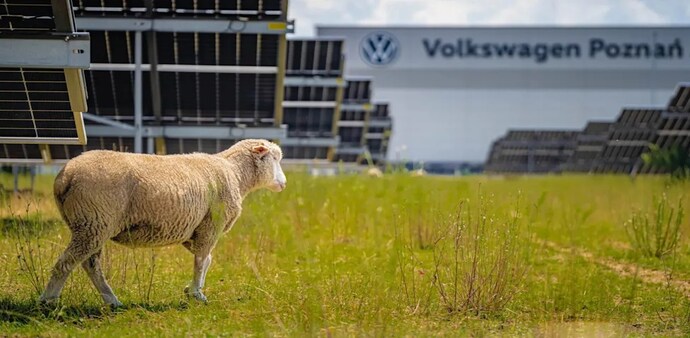
In a unique blend of clean energy and agriculture, German automaker Volkswagen has deployed a flock of 100 sheep to maintain the grass beneath thousands of solar panels at its manufacturing facility in Poznań, Poland.
The sheep feed underneath more than 31,000 photovoltaic panels installed at Volkswagen's 18.3-megawatt solar farm, which supplies around 25% of the factory's annual electricity needs and can meet the plant's entire power demand on sunny days. The move not only reduces emissions associated with mechanical mowing but also lowers maintenance costs while supporting biodiversity, according to The Times of India (TOI).
READ THIS: Solar panels over canals? The Gujarat experiment every Indian should know about
"The photovoltaic farm delivers much more than green electricity. It has also become a place that supports biodiversity, local agriculture and scientific research," said Marzena Pillich-Gronska, director of Volkswagen Poznań. "The sheep grazing project demonstrates that modern industry can work in harmony with nature," she added.
More than just grass cutting
The initiative goes beyond sustainable landscaping. Volkswagen is collaborating with the Poznań University of Life Sciences to study how livestock and renewable energy infrastructure can coexist effectively.
Researchers are examining the impact of sheep grazing on animal welfare, soil quality, biodiversity, vegetation and the site's microclimate. Scientists are also evaluating whether the shade provided by solar panels helps reduce heat stress for the animals.
Dr Joanna Składanowska-Baryza from the university said agrivoltaics offers a broader perspective on renewable energy projects, according to TOI.
"We are studying how photovoltaic installations affect animal welfare, the local ecosystem and whether the shade created by solar panels reduces heat stress in animals. At the same time, we are analysing changes in the microclimate, vegetation and soil to identify solutions that support the effective integration of renewable energy generation with agricultural activity," she said.
ALSO READ: BT EXPLAINER: 30 years after Dolly, here's why cloning is still making headlines
Sheep settle into their new workplace
According to Justyna Nowak-Gajek, owner of the flock, the sheep have adapted quickly to their unusual surroundings.
"We can clearly see that the herd feels safe. The sheep naturally divide into small groups and graze calmly in different parts of the solar farm. This is the best proof that they have adapted well to these conditions," she said. The sheep are expected to remain at the solar farm through the grazing season under the supervision of experienced breeders.
In a unique blend of clean energy and agriculture, German automaker Volkswagen has deployed a flock of 100 sheep to maintain the grass beneath thousands of solar panels at its manufacturing facility in Poznań, Poland.
The sheep feed underneath more than 31,000 photovoltaic panels installed at Volkswagen's 18.3-megawatt solar farm, which supplies around 25% of the factory's annual electricity needs and can meet the plant's entire power demand on sunny days. The move not only reduces emissions associated with mechanical mowing but also lowers maintenance costs while supporting biodiversity, according to The Times of India (TOI).
READ THIS: Solar panels over canals? The Gujarat experiment every Indian should know about
"The photovoltaic farm delivers much more than green electricity. It has also become a place that supports biodiversity, local agriculture and scientific research," said Marzena Pillich-Gronska, director of Volkswagen Poznań. "The sheep grazing project demonstrates that modern industry can work in harmony with nature," she added.
More than just grass cutting
The initiative goes beyond sustainable landscaping. Volkswagen is collaborating with the Poznań University of Life Sciences to study how livestock and renewable energy infrastructure can coexist effectively.
Researchers are examining the impact of sheep grazing on animal welfare, soil quality, biodiversity, vegetation and the site's microclimate. Scientists are also evaluating whether the shade provided by solar panels helps reduce heat stress for the animals.
Dr Joanna Składanowska-Baryza from the university said agrivoltaics offers a broader perspective on renewable energy projects, according to TOI.
"We are studying how photovoltaic installations affect animal welfare, the local ecosystem and whether the shade created by solar panels reduces heat stress in animals. At the same time, we are analysing changes in the microclimate, vegetation and soil to identify solutions that support the effective integration of renewable energy generation with agricultural activity," she said.
ALSO READ: BT EXPLAINER: 30 years after Dolly, here's why cloning is still making headlines
Sheep settle into their new workplace
According to Justyna Nowak-Gajek, owner of the flock, the sheep have adapted quickly to their unusual surroundings.
"We can clearly see that the herd feels safe. The sheep naturally divide into small groups and graze calmly in different parts of the solar farm. This is the best proof that they have adapted well to these conditions," she said. The sheep are expected to remain at the solar farm through the grazing season under the supervision of experienced breeders.