


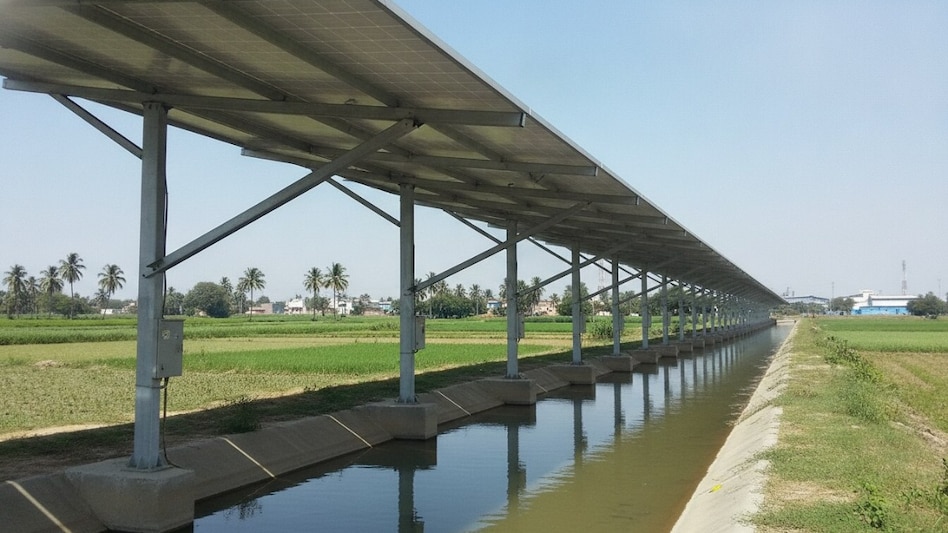
 The biggest advantage is obvious—clean electricity without taking away agricultural land.
India needs more solar power. India also needs more farmland. For years, that was a brutal trade-off—until one team in Gujarat asked a question nobody else had bothered to: what if you didn't need land at all? Their answer is now humming quietly above thousands of kilometres of irrigation canals, generating clean electricity and stopping millions of litres of water from evaporating into thin air.
Why put solar panels over canals?

 Setback for Indian professionals? US suspends Cognizant green card filings in H-1B visa fraud probe
 Rupee at ₹97 in Dec, ₹100 in June: Why Axis Bank sees another leg of INR weakness
 Apple’s most ambitious iPhone yet? The decade-long road to its $2,000+ foldable
  'Legally prohibited from leaving UK': Vijay Mallya says Indian govt 'grossly unjust' to him
 ‘Time to think about improving these missiles’: India, Russia want to upgrade BrahMos
  Index Funds Vs ETFs: Which Is Better For Your Money? A Beginner’s Guide To Passive Investing
 “Files Used To Get Stuck”: PM Modi Takes Dig At Delays, Hails 2,800 Km Freight Corridor
 Indegene’s Growth Story: Global Expansion, AI & The Future Of Healthcare Tech
 Ambareesh Baliga Turns Bullish On Specialty Chemicals, Bets On Archean Chemicals & Vinati Organics
 Gold Loan Rise Faces Risk? Ambareesh Baliga Flags Correction Threat For NBFCs
 IIFL Finance shares fall 3%; company denies Fairfax exit report
 Novartis India shares zoom 20% to hit record high; Minipress deal fuels rally
 Infosys, TCS, Coforge, Mphasis shares: Targets as Amazon, Google, Microsoft ramp up capex
 Siemens Energy India shares fall as firm clarifies on Blue portfolio
 Chennai Petroleum, MRPL, Oil India shares gain as Brent nears $100
 Meet ‘Granny’, Poland’s 63-year-old train that refuses to retire & is back on the tracks
 Did The UN Just Endorse A New Global Map? MEA Sets The Record Straight
 Rajpal Yadav gets relief from surrender in 7 cheque cases, ₹5 crore deposit deadline set by Supreme CourtIIFL Finance shares fall 3%; company denies Fairfax exit report
 Easier Visas For China? MEA Explains The Gradual Normalization Of Bilateral Ties












