
'We will cut off those hands': Pakistan minister threatens India over Indus water row
Pakistan has pushed back repeatedly against India's stance, cautioning against any interference with the river flows it depends on
- Jun 30, 2026,
- Updated Jun 30, 2026 7:35 AM IST
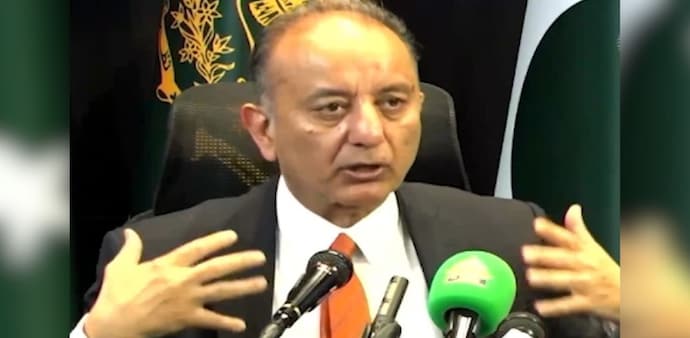
Pakistan has sharpened its rhetoric in the ongoing standoff with India over the Indus Waters Treaty, with Climate Change Minister Musadik Malik vowing that Islamabad would forcibly stop anyone attempting to claim what he described as Pakistan's rightful share of water under the agreement. The remarks come at a moment when the decades-old water-sharing arrangement remains under unprecedented strain, following New Delhi's decision to suspend the treaty in the aftermath of the 2025 Pahalgam terror attack.
Speaking alongside Information Minister Attaullah Tarar at a joint media briefing, Malik accused India of attempting to exert control over Pakistan's water supply and cautioned that any threat to Islamabad's entitlements would not go unanswered. According to Dawn, he characterised the situation as one where a neighbouring country's leadership held unilateral control over the flow of water into Pakistan, framing it as an act of deliberate restriction.
He then delivered what amounted to the most pointed statement of the briefing, warning that Pakistan would forcibly act against anyone attempting to lay claim to water it considers its own. Footage of his comments circulated through Pakistani broadcaster 24NewsHD and other outlets, though the clips could not be independently authenticated.
Malik went on to reaffirm Pakistan's resolve to safeguard its treaty-mandated water allocation, insisting that India would not be permitted to interfere with the flows designated for Pakistan.
ALSO READ: 'We will go to war against India if...': Pakistan's Khwaja Asif threatens over Indus Waters Treaty
Pakistan insists the treaty cannot be unilaterally altered
Tarar, for his part, argued that the Indus Waters Treaty remains a binding legal instrument that cannot be suspended, cancelled, or modified by either side acting alone. He claimed that India's attempt to place the treaty in abeyance had failed to gain meaningful traction internationally, asserting that the agreement continued to hold legal force precisely because India's position had not been endorsed by any global platform.
He further noted that both Prime Minister Shehbaz Sharif and Army Chief Field Marshal Asim Munir had consistently described water as both a vital lifeline and a line that could not be crossed. According to Dawn, Tarar maintained that Pakistan's entitlements remained protected under international legal frameworks, describing the treaty as a binding commitment accepted by both nations that continues to be in effect today.
He added that international opinion had increasingly come to recognise Pakistan's position on the matter, reiterating his view that the agreement was immune to one-sided revocation or amendment.
The two ministers also announced that Pakistan would host what they billed as its first dedicated international seminar on the Indus Waters Treaty, scheduled for Tuesday in Islamabad. Tarar said legal experts, water resource specialists, and foreign delegates had already begun arriving for the event, which he said would delve into both the legal foundations and technical dimensions of Pakistan's claims under the treaty.
A treaty under growing pressure
Pakistan has pushed back repeatedly against India's stance, cautioning against any interference with the river flows it depends on. Defence Minister Khawaja Asif went further still in earlier remarks, suggesting that any perceived threat to Pakistan's water security could trigger armed conflict. Speaking to ARY News, he stated plainly that since water security forms part of national security, any sense that it was under threat would lead Pakistan toward war with India.
India defends its position, calls the treaty out of step with the times
India has stood firmly behind its decision, arguing that the treaty, signed more than six decades ago, no longer fits the realities of the present day. Speaking at the 62nd session of the UN Human Rights Council, India's First Secretary to the UN, Anupama Singh, questioned the logic of a country accused of state-sponsored terrorism expecting the continued benefits of bilateral cooperation. She argued it was inconsistent for a nation that uses terrorism as a tool of policy to simultaneously seek the goodwill-based privileges that come with a cooperative treaty framework.
Describing the agreement as outdated, Singh said a treaty negotiated in 1960 could not reasonably be viewed as a permanent, unconditional entitlement, immune from scrutiny and disconnected from how dramatically circumstances have shifted over the past sixty years. She also called on Pakistan to redirect its attention toward addressing its own domestic difficulties rather than raising bilateral disputes on international platforms.
Pakistan has sharpened its rhetoric in the ongoing standoff with India over the Indus Waters Treaty, with Climate Change Minister Musadik Malik vowing that Islamabad would forcibly stop anyone attempting to claim what he described as Pakistan's rightful share of water under the agreement. The remarks come at a moment when the decades-old water-sharing arrangement remains under unprecedented strain, following New Delhi's decision to suspend the treaty in the aftermath of the 2025 Pahalgam terror attack.
Speaking alongside Information Minister Attaullah Tarar at a joint media briefing, Malik accused India of attempting to exert control over Pakistan's water supply and cautioned that any threat to Islamabad's entitlements would not go unanswered. According to Dawn, he characterised the situation as one where a neighbouring country's leadership held unilateral control over the flow of water into Pakistan, framing it as an act of deliberate restriction.
He then delivered what amounted to the most pointed statement of the briefing, warning that Pakistan would forcibly act against anyone attempting to lay claim to water it considers its own. Footage of his comments circulated through Pakistani broadcaster 24NewsHD and other outlets, though the clips could not be independently authenticated.
Malik went on to reaffirm Pakistan's resolve to safeguard its treaty-mandated water allocation, insisting that India would not be permitted to interfere with the flows designated for Pakistan.
ALSO READ: 'We will go to war against India if...': Pakistan's Khwaja Asif threatens over Indus Waters Treaty
Pakistan insists the treaty cannot be unilaterally altered
Tarar, for his part, argued that the Indus Waters Treaty remains a binding legal instrument that cannot be suspended, cancelled, or modified by either side acting alone. He claimed that India's attempt to place the treaty in abeyance had failed to gain meaningful traction internationally, asserting that the agreement continued to hold legal force precisely because India's position had not been endorsed by any global platform.
He further noted that both Prime Minister Shehbaz Sharif and Army Chief Field Marshal Asim Munir had consistently described water as both a vital lifeline and a line that could not be crossed. According to Dawn, Tarar maintained that Pakistan's entitlements remained protected under international legal frameworks, describing the treaty as a binding commitment accepted by both nations that continues to be in effect today.
He added that international opinion had increasingly come to recognise Pakistan's position on the matter, reiterating his view that the agreement was immune to one-sided revocation or amendment.
The two ministers also announced that Pakistan would host what they billed as its first dedicated international seminar on the Indus Waters Treaty, scheduled for Tuesday in Islamabad. Tarar said legal experts, water resource specialists, and foreign delegates had already begun arriving for the event, which he said would delve into both the legal foundations and technical dimensions of Pakistan's claims under the treaty.
A treaty under growing pressure
Pakistan has pushed back repeatedly against India's stance, cautioning against any interference with the river flows it depends on. Defence Minister Khawaja Asif went further still in earlier remarks, suggesting that any perceived threat to Pakistan's water security could trigger armed conflict. Speaking to ARY News, he stated plainly that since water security forms part of national security, any sense that it was under threat would lead Pakistan toward war with India.
India defends its position, calls the treaty out of step with the times
India has stood firmly behind its decision, arguing that the treaty, signed more than six decades ago, no longer fits the realities of the present day. Speaking at the 62nd session of the UN Human Rights Council, India's First Secretary to the UN, Anupama Singh, questioned the logic of a country accused of state-sponsored terrorism expecting the continued benefits of bilateral cooperation. She argued it was inconsistent for a nation that uses terrorism as a tool of policy to simultaneously seek the goodwill-based privileges that come with a cooperative treaty framework.
Describing the agreement as outdated, Singh said a treaty negotiated in 1960 could not reasonably be viewed as a permanent, unconditional entitlement, immune from scrutiny and disconnected from how dramatically circumstances have shifted over the past sixty years. She also called on Pakistan to redirect its attention toward addressing its own domestic difficulties rather than raising bilateral disputes on international platforms.