
'We are making a lot of money with India': Trump praises PM Modi, backs US-India trade agreement
Donald Trump expressed confidence that the two countries would reach a trade agreement while also making clear that the era of one-sided arrangements was over
- Jun 5, 2026,
- Updated Jun 5, 2026 7:43 AM IST
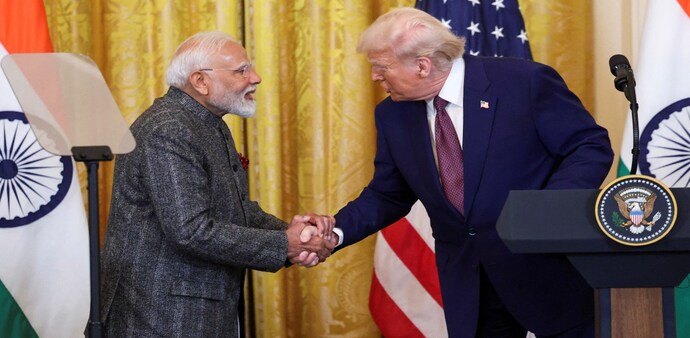
The US President, Donald Trump, praised Prime Minister Narendra Modi in remarks to reporters at the White House, expressing confidence that the two countries would reach a trade agreement while also making clear that the era of one-sided arrangements was over.
"I like your Prime Minister a lot. He is a good friend of mine, and we get along well. We have a good relationship," Trump said, framing the personal dynamic between the two leaders as a facilitating factor in the ongoing negotiations.
But his characterisation of the trade history was blunt. "For years, India took advantage of the United States. They charged us tremendous tariffs and paid nothing. Now it is the exact reverse, and we are making a lot of money with India," he said, before striking an optimistic note on what comes next. "But we will get to a deal."
Where negotiations stand
The remarks came on the heels of four days of trade talks held in New Delhi from June 1 to June 4, where officials from the Office of the United States Trade Representative, led by the agency's chief negotiator, sat down with Indian counterparts on a range of issues, including trade in goods, customs procedures, non-tariff barriers, and economic security cooperation. Both sides described the discussions as productive.
Signs of an imminent breakthrough have been building. US Ambassador to India Sergio Gor said negotiations were in their final stages, with only a small portion of the agreement yet to be resolved. Commerce and Industry Minister Piyush Goyal has also indicated that most outstanding issues have been settled, with discussions now focused on the final details before the first tranche of the deal is announced. Work on a broader Bilateral Trade Agreement is also progressing alongside the interim deal.
The tariff cloud
Despite the momentum, a significant complication looms. The Trump administration is considering imposing an additional 12.5% tariff on imports from 60 economies, India included, under a Section 301 review conducted by the USTR. The proposal is linked to concerns over imports allegedly connected to forced labour. Economies that have adopted restrictions on such imports could face a 10% tariff, while those that have not could face up to 12.5%. India, China, Japan, South Korea, the United Kingdom, Bangladesh, and Vietnam are all covered by the review.
US Trade Representative Jamieson Greer said countries that fail to address imports tied to forced labour create unfair conditions for American workers. The proposal adds a layer of uncertainty to negotiations that have otherwise been trending toward a conclusion.
The US President, Donald Trump, praised Prime Minister Narendra Modi in remarks to reporters at the White House, expressing confidence that the two countries would reach a trade agreement while also making clear that the era of one-sided arrangements was over.
"I like your Prime Minister a lot. He is a good friend of mine, and we get along well. We have a good relationship," Trump said, framing the personal dynamic between the two leaders as a facilitating factor in the ongoing negotiations.
But his characterisation of the trade history was blunt. "For years, India took advantage of the United States. They charged us tremendous tariffs and paid nothing. Now it is the exact reverse, and we are making a lot of money with India," he said, before striking an optimistic note on what comes next. "But we will get to a deal."
Where negotiations stand
The remarks came on the heels of four days of trade talks held in New Delhi from June 1 to June 4, where officials from the Office of the United States Trade Representative, led by the agency's chief negotiator, sat down with Indian counterparts on a range of issues, including trade in goods, customs procedures, non-tariff barriers, and economic security cooperation. Both sides described the discussions as productive.
Signs of an imminent breakthrough have been building. US Ambassador to India Sergio Gor said negotiations were in their final stages, with only a small portion of the agreement yet to be resolved. Commerce and Industry Minister Piyush Goyal has also indicated that most outstanding issues have been settled, with discussions now focused on the final details before the first tranche of the deal is announced. Work on a broader Bilateral Trade Agreement is also progressing alongside the interim deal.
The tariff cloud
Despite the momentum, a significant complication looms. The Trump administration is considering imposing an additional 12.5% tariff on imports from 60 economies, India included, under a Section 301 review conducted by the USTR. The proposal is linked to concerns over imports allegedly connected to forced labour. Economies that have adopted restrictions on such imports could face a 10% tariff, while those that have not could face up to 12.5%. India, China, Japan, South Korea, the United Kingdom, Bangladesh, and Vietnam are all covered by the review.
US Trade Representative Jamieson Greer said countries that fail to address imports tied to forced labour create unfair conditions for American workers. The proposal adds a layer of uncertainty to negotiations that have otherwise been trending toward a conclusion.