
‘We’re going to ask for money…’: Trump says it is Iran who should pay reparations, not the US
US-Iran war: Washington and Tehran agreed to a ceasefire in June, but the US reimposed a blockade on Iranian shipping in July.
- Aug 11, 2026,
- Updated Aug 11, 2026 8:26 AM IST
US-Iran war: US President Donald Trump has said the United States wants Iran to pay compensation for deaths and damage linked to wars, attacks and protests over the past 50 years, adding a new demand that could complicate efforts to reach a peace agreement and reopen the Strait of Hormuz.
Trump's comments on Monday came in response to Iranian conditions for a peace deal, including compensation, an end to sanctions and an end to military threats. Tehran's demands largely reflected terms of a preliminary peace agreement signed in June that has since broken down.
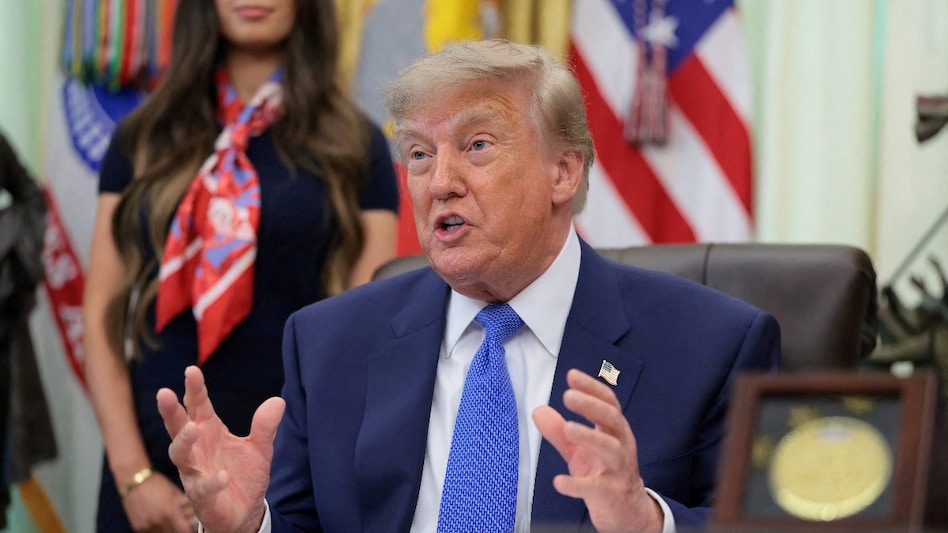
“We're going to ask for money for the damage they've done over a 50-year period,” Trump said at the White House, adding that payments should cover deaths among civilians and US forces in the region.
“If there's damages to be paid, I think Iran should pay those damages,” he said.
Trump also said Iran should compensate families of 17 US sailors killed in the October 2000 attack on the USS Cole in Yemen. The attack, however, has been blamed on al Qaeda, not Iran. In a Truth Social post, Trump also said Iran should be responsible for damages and deaths in Lebanon, Syria, Yemen and Gaza.
Trump cited Iran's crackdown on demonstrations in late 2025 and 2026, claiming about 52,000 protesters had been killed as of six weeks ago. The US-based Human Rights Activists News Agency reported around 7,000 deaths in February, including 6,500 protesters.
DON'T MISS | No attacks on allies, compensation: Iran lays down six demands to reopen Hormuz
Iran has said it is nearing a final pact with Oman to establish new shipping lanes through the Strait of Hormuz. Iranian Foreign Ministry spokesman Esmaeil Baghaei said discussions were progressing and that a shipping route map had been agreed, with technical issues still unresolved.
The talks also covered safe navigation, environmental protection, maritime services and combating crime. US officials have ruled out any agreement allowing Tehran to charge fees for access to the strait.
The waterway, through which about a fifth of global oil and liquefied natural gas flowed before the conflict, has been effectively blocked since the war began, contributing to higher oil prices and inflation.
Trump is also facing pressure to end the conflict ahead of November's midterm elections, with high fuel prices a key concern in rural areas that have supported him.
Washington and Tehran agreed to a ceasefire in June, but the US reimposed a blockade on Iranian shipping in July. Iran said the move violated the truce and has since retaliated with missile and drone attacks against US allies and commercial vessels.
US-Iran war: US President Donald Trump has said the United States wants Iran to pay compensation for deaths and damage linked to wars, attacks and protests over the past 50 years, adding a new demand that could complicate efforts to reach a peace agreement and reopen the Strait of Hormuz.
Trump's comments on Monday came in response to Iranian conditions for a peace deal, including compensation, an end to sanctions and an end to military threats. Tehran's demands largely reflected terms of a preliminary peace agreement signed in June that has since broken down.
“We're going to ask for money for the damage they've done over a 50-year period,” Trump said at the White House, adding that payments should cover deaths among civilians and US forces in the region.
“If there's damages to be paid, I think Iran should pay those damages,” he said.
Trump also said Iran should compensate families of 17 US sailors killed in the October 2000 attack on the USS Cole in Yemen. The attack, however, has been blamed on al Qaeda, not Iran. In a Truth Social post, Trump also said Iran should be responsible for damages and deaths in Lebanon, Syria, Yemen and Gaza.
Trump cited Iran's crackdown on demonstrations in late 2025 and 2026, claiming about 52,000 protesters had been killed as of six weeks ago. The US-based Human Rights Activists News Agency reported around 7,000 deaths in February, including 6,500 protesters.
DON'T MISS | No attacks on allies, compensation: Iran lays down six demands to reopen Hormuz
Iran has said it is nearing a final pact with Oman to establish new shipping lanes through the Strait of Hormuz. Iranian Foreign Ministry spokesman Esmaeil Baghaei said discussions were progressing and that a shipping route map had been agreed, with technical issues still unresolved.
The talks also covered safe navigation, environmental protection, maritime services and combating crime. US officials have ruled out any agreement allowing Tehran to charge fees for access to the strait.
The waterway, through which about a fifth of global oil and liquefied natural gas flowed before the conflict, has been effectively blocked since the war began, contributing to higher oil prices and inflation.
Trump is also facing pressure to end the conflict ahead of November's midterm elections, with high fuel prices a key concern in rural areas that have supported him.
Washington and Tehran agreed to a ceasefire in June, but the US reimposed a blockade on Iranian shipping in July. Iran said the move violated the truce and has since retaliated with missile and drone attacks against US allies and commercial vessels.