


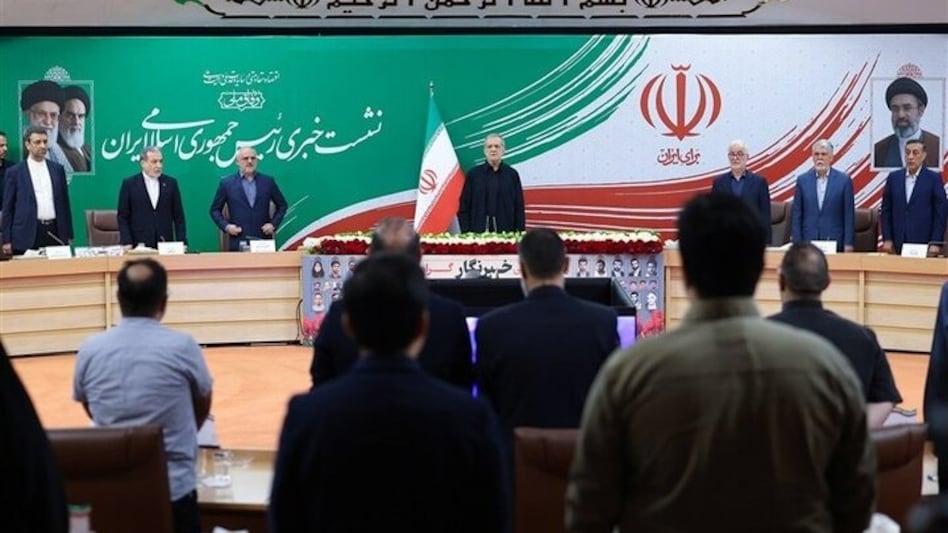
 Hormuz reopening hits roadblock: Iran sets six demands from US
The Strait of Hormuz will remain closed until the United States changes its behaviour and meets a set of Iranian demands, Mohammad Bagher Zolghadr, secretary of Iran's Supreme National Security Council, said Saturday.
Zolghadr said Washington must "correct its behavior" before the strategic waterway can reopen, Iran's Mehr News reported.

 What is Pickaxe Mountain? Inside the Iranian nuclear site being threatened by Trump
 China’s oil use drops sharply: Expert says EV shift is changing global energy demand
 US debt hits $40 trillion: Why India should worry about rising yields, rupee and capital flows now
 From HUL to local jewellery brands: Bigg Boss creates a two-tier advertising ecosystem
 WMO warns El Niño could intensify through February 2027: What it means for India? Check here
 LIC CEO On Changing Insurance Needs, Younger Customers & The Rise Of Retirement Planning
 Is Travel Insurance Necessary For Every Trip? Costs And Coverage Explained
 #DemocraticNewsroom | '800 Million People On Subsidies': Siddharth Zarabi On India’s K-Shaped Economy
 #DemocraticNewsroom | India Inflation Data: Are Official Numbers Hiding The Real Economic Picture?
 GDP Real Or Fudged? Siddharth Zarabi Defends India’s Growth Numbers With Data
 600% dividend stock: Check dividend per share, record date, payment date and other key details
 56% rally in TBZ stock: Upper circuit led to record high today; here's why
  Sensex, Nifty snap four sessions of losing streak; RIL, Tata Steel, Bajaj Finance boost sentiment
  Physicswallah shares jump 9% as Motilal Oswal sees 66% upside
 KEC International: At 52-week low, Geojit expects more downside in infra stock
 'Toxic' box office collection day 10: Yash's film headed towards disaster, Hanuman Ansh sees 6,300% growth in week 4
 'Quality maintain karna or I’ll send HIM': Salman Khan drops hilarious warning for Bandra caféLIC CEO On Changing Insurance Needs, Younger Customers & The Rise Of Retirement Planning
 Apple iPhone Ultra: 11 key things to know about the foldable ahead of September 9 eventIs Travel Insurance Necessary For Every Trip? Costs And Coverage Explained












