
West Asia crisis: Iran fires 10 ballistic, 2 cruise missiles at Qatar
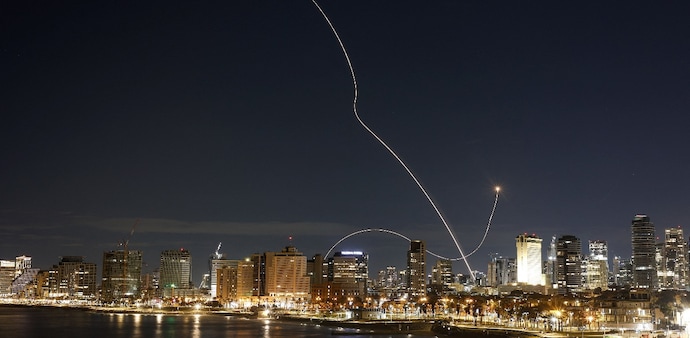
Qatar said most of the incoming projectiles were intercepted by its air defenses, and no casualties were reported. Two ballistic missiles fell into territorial waters while two others struck an uninhabited area
- Mar 8, 2026,
- Updated Mar 8, 2026 8:00 AM IST
Iran launched 10 ballistic missiles and two cruise missiles at Qatar on Saturday, the Gulf state's defense ministry said early Sunday, as the war involving Iran, Israel, and the United States continued to widen across the region.
Also read: West Asia crisis: Kuwait reduces oil output citing Iran threats to Strait of Hormuz shipping
Qatar said most of the incoming projectiles were intercepted by its air defenses, and no casualties were reported. Two ballistic missiles fell into territorial waters while two others struck an uninhabited area, authorities said.
The attack comes as fighting between Iran and Israel, with the United States backing Israeli operations, has intensified across the Middle East, raising concerns that the conflict could spread to Gulf states hosting U.S. military installations.
In a statement, Qatar's Ministry of Defense said: "The State of Qatar was subjected yesterday, Saturday, to an attack involving 10 ballistic missiles and 2 cruise missiles launched from the Islamic Republic of Iran. Qatar Armed Forces, by the grace of God, successfully intercepted 6 ballistic missiles, while 2 ballistic missiles fell in Qatar’s territorial waters, and 2 ballistic missiles landed in an uninhabited area without causing any casualties. Our Armed Forces also successfully intercepted 2 cruise missiles."
The ministry said the armed forces were fully prepared to respond to threats and defend the country. "The Ministry of Defense stresses that Qatar Armed Forces possess the full capabilities and readiness, God willing, to protect the sovereignty and territory of the country and to respond firmly to any external threat."
The missile strike came as Iran's leadership signaled mixed messages over the expanding conflict. Iranian President Masoud Pezeshkian apologised on Saturday for attacks on neighbouring countries, saying Tehran should pursue diplomacy and avoid targeting regional states unless Iran itself was attacked.
"I should apologise to the neighbouring countries that were attacked by Iran, on my own behalf," Pezeshkian said. "From now on, they should not attack neighbouring countries or fire missiles at them, unless we are attacked by those countries. I think we should solve this through diplomacy."
The remarks highlighted divisions within Iran's leadership council, formed after Supreme Leader Ayatollah Ali Khamenei was killed in early strikes during the conflict.
Hard-line officials suggested the military campaign would continue. Judiciary chief Gholam Hossein Mohseni-Ejei said regional territory used by U.S. forces would remain targets, writing that "intense attacks on these targets will continue."
Iran's parliament speaker Mohammad Bagher Ghalibaf said the presence of U.S. bases in the region meant that neighbouring countries would struggle to avoid being drawn into the conflict.
Meanwhile, Israel signalled further escalation. Prime Minister Benjamin Netanyahu said Israel had "an organised plan with many surprises" for the next stage of the war and said the goal was to destabilise Iran’s leadership.
The Israeli military said it had already struck more than 300 targets over the weekend, while witnesses reported airstrikes on a refinery in southern Tehran - the first civil industrial facility hit since the war began.
Iran's state media responded by warning that oil refineries in the Israeli city of Haifa could be targeted.
Iran launched 10 ballistic missiles and two cruise missiles at Qatar on Saturday, the Gulf state's defense ministry said early Sunday, as the war involving Iran, Israel, and the United States continued to widen across the region.
Also read: West Asia crisis: Kuwait reduces oil output citing Iran threats to Strait of Hormuz shipping
Qatar said most of the incoming projectiles were intercepted by its air defenses, and no casualties were reported. Two ballistic missiles fell into territorial waters while two others struck an uninhabited area, authorities said.
The attack comes as fighting between Iran and Israel, with the United States backing Israeli operations, has intensified across the Middle East, raising concerns that the conflict could spread to Gulf states hosting U.S. military installations.
In a statement, Qatar's Ministry of Defense said: "The State of Qatar was subjected yesterday, Saturday, to an attack involving 10 ballistic missiles and 2 cruise missiles launched from the Islamic Republic of Iran. Qatar Armed Forces, by the grace of God, successfully intercepted 6 ballistic missiles, while 2 ballistic missiles fell in Qatar’s territorial waters, and 2 ballistic missiles landed in an uninhabited area without causing any casualties. Our Armed Forces also successfully intercepted 2 cruise missiles."
The ministry said the armed forces were fully prepared to respond to threats and defend the country. "The Ministry of Defense stresses that Qatar Armed Forces possess the full capabilities and readiness, God willing, to protect the sovereignty and territory of the country and to respond firmly to any external threat."
The missile strike came as Iran's leadership signaled mixed messages over the expanding conflict. Iranian President Masoud Pezeshkian apologised on Saturday for attacks on neighbouring countries, saying Tehran should pursue diplomacy and avoid targeting regional states unless Iran itself was attacked.
"I should apologise to the neighbouring countries that were attacked by Iran, on my own behalf," Pezeshkian said. "From now on, they should not attack neighbouring countries or fire missiles at them, unless we are attacked by those countries. I think we should solve this through diplomacy."
The remarks highlighted divisions within Iran's leadership council, formed after Supreme Leader Ayatollah Ali Khamenei was killed in early strikes during the conflict.
Hard-line officials suggested the military campaign would continue. Judiciary chief Gholam Hossein Mohseni-Ejei said regional territory used by U.S. forces would remain targets, writing that "intense attacks on these targets will continue."
Iran's parliament speaker Mohammad Bagher Ghalibaf said the presence of U.S. bases in the region meant that neighbouring countries would struggle to avoid being drawn into the conflict.
Meanwhile, Israel signalled further escalation. Prime Minister Benjamin Netanyahu said Israel had "an organised plan with many surprises" for the next stage of the war and said the goal was to destabilise Iran’s leadership.
The Israeli military said it had already struck more than 300 targets over the weekend, while witnesses reported airstrikes on a refinery in southern Tehran - the first civil industrial facility hit since the war began.
Iran's state media responded by warning that oil refineries in the Israeli city of Haifa could be targeted.