
West Asia War: Container train operators seek relief as cargo shipments hit
Iran war: The Association of Container Train Operators (ACTO) wants a waiver on the levy of stabling charges on trains and haulage of empty wagons and relief from ports.
- Mar 17, 2026,
- Updated Mar 17, 2026 3:49 PM IST
With the conflict in West Asia impacting the movement of EXIM cargoes, private container operators have approached the government to consider a waiver of stabling charges on trains and haulage of empty wagons and relief on ground rent and related container storage charges at private and state-controlled ports such as Mundra and Pipavav.
The Association of Container Train Operators (ACTO), a key trade body representing private container train operators in India, says the conflict in the Gulf has led to a force majeure-like situation for cargo from and to India and there may be further disruptions in the coming weeks.
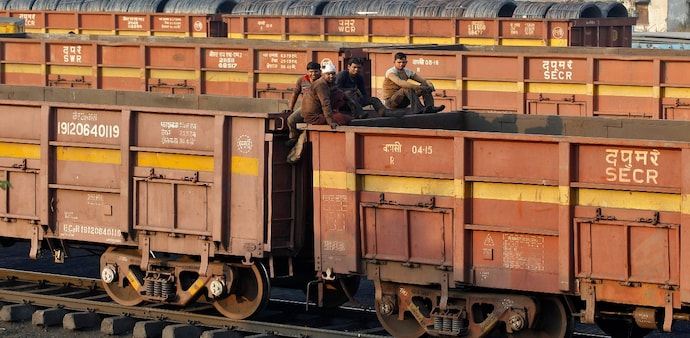
ACTO said more than 50 rakes were idling already in March due to the dearth of cargo, representing a dramatic increase from 4-5 rakes that are sometimes stabled to deal with cargo fluctuations.
Also, there has been an increase in empty wagons because of the reduction in cargo volumes with an estimated 15-20% of wagons running empty at present. This is a significant increase from the pre-war average of 5%. Most operators have reduced double stack cargo movements to avoid empty runs, but this increases the cost of operations.
EXIM volumes are reported to be down by approximately 40% in March with reductions and heavy fluctuations in both export and import volumes. Domestic transport volumes in the tile and steel industries, which rely heavily on the import of raw materials, have dropped significantly by an estimated 10% already. That figure is increasing rapidly, according to experts.
Manish Puri, President of ACTO, said some relief has been provided by government agencies, but the Indian Railways, a key influencer of costs in the container sector, has not taken any action yet.
“ACTO has requested support from the Ministry of Railways and other government departments. We strongly feel this will help us manage costs and ensure the costs are not passed on from us to cargo end users. Similar steps were taken by the government during the Covid-19 pandemic to support trade,” said Puri.
With the conflict in West Asia impacting the movement of EXIM cargoes, private container operators have approached the government to consider a waiver of stabling charges on trains and haulage of empty wagons and relief on ground rent and related container storage charges at private and state-controlled ports such as Mundra and Pipavav.
The Association of Container Train Operators (ACTO), a key trade body representing private container train operators in India, says the conflict in the Gulf has led to a force majeure-like situation for cargo from and to India and there may be further disruptions in the coming weeks.
ACTO said more than 50 rakes were idling already in March due to the dearth of cargo, representing a dramatic increase from 4-5 rakes that are sometimes stabled to deal with cargo fluctuations.
Also, there has been an increase in empty wagons because of the reduction in cargo volumes with an estimated 15-20% of wagons running empty at present. This is a significant increase from the pre-war average of 5%. Most operators have reduced double stack cargo movements to avoid empty runs, but this increases the cost of operations.
EXIM volumes are reported to be down by approximately 40% in March with reductions and heavy fluctuations in both export and import volumes. Domestic transport volumes in the tile and steel industries, which rely heavily on the import of raw materials, have dropped significantly by an estimated 10% already. That figure is increasing rapidly, according to experts.
Manish Puri, President of ACTO, said some relief has been provided by government agencies, but the Indian Railways, a key influencer of costs in the container sector, has not taken any action yet.
“ACTO has requested support from the Ministry of Railways and other government departments. We strongly feel this will help us manage costs and ensure the costs are not passed on from us to cargo end users. Similar steps were taken by the government during the Covid-19 pandemic to support trade,” said Puri.