
West Asia war: Iran proposes 7-day deadline to clear Strait of Hormuz, re-engage on nuclear talks
During this interim window, all hostilities would cease while Washington lifts its naval blockade of Iranian ports, releases over $12 billion in frozen Iranian financial assets, and issues oil sanction waivers.
- Sep 25, 2026,
- Updated Sep 25, 2026 11:00 AM IST
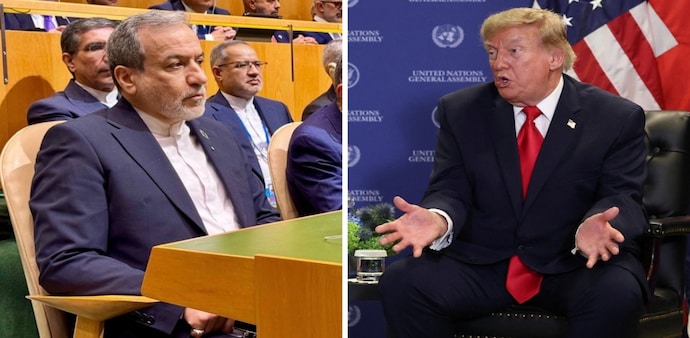
In a high-stakes diplomatic move at the United Nations General Assembly in New York, Iranian Foreign Minister Abbas Araghchi announced that Tehran has presented a seven-day roadmap to Washington via Qatari intermediaries, offering to halt hostilities, reopen the Strait of Hormuz, and immediately resume formal nuclear negotiations.
Speaking to reporters on the sidelines of the UN gathering, Araghchi revealed that the proposal mirrors key commitments from a June memorandum of understanding that previously unraveled.
Under the proposed framework, a strict seven-day clock begins the moment Washington formally accepts Tehran's conditions.
MUST READ | Iran President Pezeshkian urges US to revive June truce agreement before November midterms
During this interim window, all hostilities would cease — including fighting in Lebanon — while Washington lifts its naval blockade of Iranian ports, releases over $12 billion in frozen Iranian financial assets, and issues oil sanction waivers.
On the seventh day, commercial shipping through the vital Persian Gulf corridor would fully resume, paving the way for immediate nuclear talks.
The diplomatic push coincides with statements from Iranian President Masoud Pezeshkian, who reaffirmed during an interview with Fox News that Tehran harbors no ambition to build nuclear weapons.
DON'T MISS | After 'annihilation' threat for Iran, Donald Trump backs India-Middle East-Europe Corridor
Pezeshkian signaled Tehran's readiness to accept international inspections and dilute its enriched nuclear material if terms are secured, noting that an agreement before upcoming US political deadlines would be ideal.
The proposal comes amid intense regional strain, as restrictions on Iranian ports continue to squeeze the country's crude oil exports and drive domestic economic pressure.
DO CHECKOUT | War could reach Indian Ocean, perhaps beyond, if US continues attacks, says Iran
While Iranian defense officials maintain that their military forces remain prepared for further confrontation if Washington rejects the terms, the seven-day roadmap leaves the decision firmly with the White House as international observers await an official response.
In a high-stakes diplomatic move at the United Nations General Assembly in New York, Iranian Foreign Minister Abbas Araghchi announced that Tehran has presented a seven-day roadmap to Washington via Qatari intermediaries, offering to halt hostilities, reopen the Strait of Hormuz, and immediately resume formal nuclear negotiations.
Speaking to reporters on the sidelines of the UN gathering, Araghchi revealed that the proposal mirrors key commitments from a June memorandum of understanding that previously unraveled.
Under the proposed framework, a strict seven-day clock begins the moment Washington formally accepts Tehran's conditions.
MUST READ | Iran President Pezeshkian urges US to revive June truce agreement before November midterms
During this interim window, all hostilities would cease — including fighting in Lebanon — while Washington lifts its naval blockade of Iranian ports, releases over $12 billion in frozen Iranian financial assets, and issues oil sanction waivers.
On the seventh day, commercial shipping through the vital Persian Gulf corridor would fully resume, paving the way for immediate nuclear talks.
The diplomatic push coincides with statements from Iranian President Masoud Pezeshkian, who reaffirmed during an interview with Fox News that Tehran harbors no ambition to build nuclear weapons.
DON'T MISS | After 'annihilation' threat for Iran, Donald Trump backs India-Middle East-Europe Corridor
Pezeshkian signaled Tehran's readiness to accept international inspections and dilute its enriched nuclear material if terms are secured, noting that an agreement before upcoming US political deadlines would be ideal.
The proposal comes amid intense regional strain, as restrictions on Iranian ports continue to squeeze the country's crude oil exports and drive domestic economic pressure.
DO CHECKOUT | War could reach Indian Ocean, perhaps beyond, if US continues attacks, says Iran
While Iranian defense officials maintain that their military forces remain prepared for further confrontation if Washington rejects the terms, the seven-day roadmap leaves the decision firmly with the White House as international observers await an official response.