
West Asia war: South Pars, Ras Laffan under the line of fire; All about the gas sites
West Asia war: South Pars, Ras Laffan under the line of fire; All about the gas sites
On Wednesday, Israel struck Iran's South Pars gas field, the largest in the world, marking the first direct attack on a major fossil fuel production facility since the conflict escalated. Hours later, Iran retaliated, hitting Qatar's Ras Laffan industrial city, the single largest liquefied natural gas (LNG) export hub on the planet
Sonali
- Mar 19, 2026,
- Updated Mar 19, 2026 12:48 PM IST
The conflict between Israel and Iran has entered a new and more consequential phase, with critical energy infrastructure now directly in the line of fire.
On Wednesday, Israel struck Iran's South Pars gas field, the largest in the world, marking the first direct attack on a major fossil fuel production facility since the conflict escalated.
Advertisement
Hours later, Iran retaliated, hitting Qatar's Ras Laffan industrial city, the single largest liquefied natural gas (LNG) export hub on the planet. In the space of one day, two of the world's most consequential energy sites had become targets.
US President Donald Trump distanced Washington from the operation, stating, “The United States knew nothing about this,” even as reports suggested the US had prior information about Israel’s plans.
In a separate post, Trump added, "The United States knew nothing about this particular attack, and the country of Qatar was in no way, shape, or form, involved with it, nor did it have any idea that it was going to happen.”
Advertisement
South Pars: Backbone of Iran’s energy system
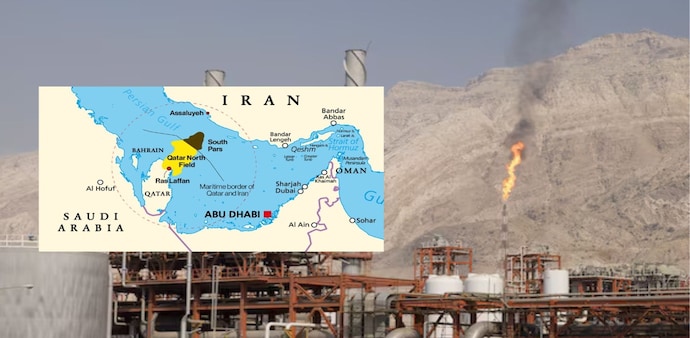
The South Pars gas field, located in the Persian Gulf and shared between Iran and Qatar, is central to Iran’s energy security. Spanning roughly 9,700 square kilometres, it is the largest known gas field in the world and accounts for a major share of Iran’s domestic gas supply.
The field contributes up to 70 percent of Iran’s gas production, making it a critical pillar of the country’s energy infrastructure. Initial reports indicate that sections accounting for nearly 12 percent of total output may have been affected by the strike.
The attack is significant not just because of the scale of the facility, but also because it is the first confirmed instance of a major fossil fuel production site being targeted in the ongoing conflict.
Advertisement
The damage comes at a time when Iran is already dealing with recurring energy shortages, raising concerns about further strain on its domestic supply.
Ras Laffan: The world’s largest LNG export hub
Across the Gulf, Ras Laffan in Qatar represents the other side of this shared energy ecosystem, and a potential flashpoint if the conflict spreads further.
Ras Laffan is the world's largest liquefied natural gas (LNG) export facility, producing around 20 percent of global LNG supply. Built around Qatar’s North Field, which holds roughly 40 per cent of the world’s recoverable gas, the industrial complex is central to energy flows into Europe and Asia.
Its importance extends beyond LNG. Ras Laffan hosts major infrastructure including gas-to-liquid plants such as ORYX and Pearl GTL, the Dolphin gas project, and desalination facilities that provide about 30 percent of Qatar’s electricity and 20 percent of its potable water, according to QatarEnergy.
Located on the Persian Gulf, it also operates the world’s largest artificial harbour, making it a critical logistics and export hub.
Regional fallout
Qatar condemned the South Pars strike as "dangerous and irresponsible," calling it a direct threat to global energy security. The UAE issued its own warning about risks to regional stability. Iran, meanwhile, has listed major oil and gas installations across Saudi Arabia, the UAE, and Qatar as potential future targets. Explosions were subsequently reported in Riyadh.
Advertisement
With both sides now explicitly targeting critical energy infrastructure, and with the Gulf supplying a significant share of the world's hydrocarbons, experts warn the conflict risks spiralling in ways that could have lasting consequences far beyond the region.
The conflict between Israel and Iran has entered a new and more consequential phase, with critical energy infrastructure now directly in the line of fire.
On Wednesday, Israel struck Iran's South Pars gas field, the largest in the world, marking the first direct attack on a major fossil fuel production facility since the conflict escalated.
Advertisement
Hours later, Iran retaliated, hitting Qatar's Ras Laffan industrial city, the single largest liquefied natural gas (LNG) export hub on the planet. In the space of one day, two of the world's most consequential energy sites had become targets.
US President Donald Trump distanced Washington from the operation, stating, “The United States knew nothing about this,” even as reports suggested the US had prior information about Israel’s plans.
In a separate post, Trump added, "The United States knew nothing about this particular attack, and the country of Qatar was in no way, shape, or form, involved with it, nor did it have any idea that it was going to happen.”
Advertisement
South Pars: Backbone of Iran’s energy system
The South Pars gas field, located in the Persian Gulf and shared between Iran and Qatar, is central to Iran’s energy security. Spanning roughly 9,700 square kilometres, it is the largest known gas field in the world and accounts for a major share of Iran’s domestic gas supply.
The field contributes up to 70 percent of Iran’s gas production, making it a critical pillar of the country’s energy infrastructure. Initial reports indicate that sections accounting for nearly 12 percent of total output may have been affected by the strike.
The attack is significant not just because of the scale of the facility, but also because it is the first confirmed instance of a major fossil fuel production site being targeted in the ongoing conflict.
Advertisement
The damage comes at a time when Iran is already dealing with recurring energy shortages, raising concerns about further strain on its domestic supply.
Ras Laffan: The world’s largest LNG export hub
Across the Gulf, Ras Laffan in Qatar represents the other side of this shared energy ecosystem, and a potential flashpoint if the conflict spreads further.
Ras Laffan is the world's largest liquefied natural gas (LNG) export facility, producing around 20 percent of global LNG supply. Built around Qatar’s North Field, which holds roughly 40 per cent of the world’s recoverable gas, the industrial complex is central to energy flows into Europe and Asia.
Its importance extends beyond LNG. Ras Laffan hosts major infrastructure including gas-to-liquid plants such as ORYX and Pearl GTL, the Dolphin gas project, and desalination facilities that provide about 30 percent of Qatar’s electricity and 20 percent of its potable water, according to QatarEnergy.
Located on the Persian Gulf, it also operates the world’s largest artificial harbour, making it a critical logistics and export hub.
Regional fallout
Qatar condemned the South Pars strike as "dangerous and irresponsible," calling it a direct threat to global energy security. The UAE issued its own warning about risks to regional stability. Iran, meanwhile, has listed major oil and gas installations across Saudi Arabia, the UAE, and Qatar as potential future targets. Explosions were subsequently reported in Riyadh.
Advertisement
With both sides now explicitly targeting critical energy infrastructure, and with the Gulf supplying a significant share of the world's hydrocarbons, experts warn the conflict risks spiralling in ways that could have lasting consequences far beyond the region.
Read more!