
Who controls the Strait of Hormuz? US says Washington, Iran says Tehran
US-Iran war: Iran’s joint military command, Khatam al-Anbiya Central Headquarters, stated that no vessel could pass through the Strait without Tehran’s permission.
- Aug 14, 2026,
- Updated Aug 14, 2026 8:27 AM IST
US-Iran war: Hormuz has become the focal point of the West Asia war. However the question is: who controls the strait.
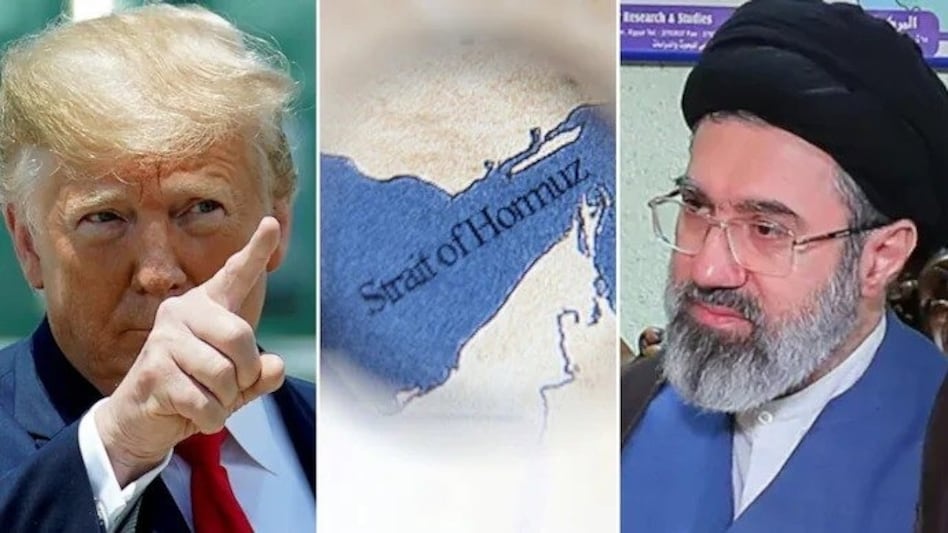
The answer depends on who you ask. According to the US, Washington has the reins to the strait. And according to Iran, it is Tehran. Tehran says the strategic waterway is under its management, while US President Donald Trump declared that Washington has "total control" of the key shipping route.
Hossein Taeb, the head of Iran’s Basij paramilitary unit, said on Thursday that the Strait was under the "management and control" of the Islamic Republic and that Iran was maintaining complete security in the area. He added that the US had tried to disrupt Iran’s influence in the region by initiating another conflict around the Strait but had failed, despite claims that Iran lacked an air force and navy.
MUST READ | 'IRGC is decimated and fleeing': Trump says US blockade has full control of Hormuz
Iran’s joint military command, Khatam al-Anbiya Central Headquarters, stated that no vessel could pass through the Strait without Tehran’s permission. It dismissed US claims about the normal passage of vessels as "lies and falsehoods," according to state media.
Meanwhile, Trump said in a post: "The USA has total control over the Strait of Hormuz. I THINK WE WILL KEEP IT! Our Naval Blockade is being called, by everyone, "A WALL OF STEEL," and there is nothing Iran can do about it."
He said Iran has no navy, no air force, no money, their leadership is uncertain, their “remaining soldiers” are unpaid, and the IRGC is “decimated”.
The confrontation follows the war that began with US-Israeli strikes on Iran on February 28. After the conflict started, Tehran effectively closed the Strait. Before the war, the waterway handled about one-fifth of the world’s oil and liquefied natural gas shipments.
The US imposed a naval blockade on Iranian shipping and ports, while asserting it would protect freedom of navigation for vessels travelling to and from non-Iranian ports. In June, the two countries reached an interim agreement declaring a permanent ceasefire and calling for a swift return to freedom of navigation in the Gulf. However, the agreement broke down weeks later, with both sides accusing each other of violations.
Iran resumed limited attacks on vessels it said were violating the agreement, while the US restarted strikes on Iran’s southern provinces, aiming to reduce Tehran’s ability to target vessels in the Gulf.
Mohammad Mokhber, adviser to Iran’s Supreme Leader Mojtaba Khamenei, said on X that Khamenei’s strategy would be an "offensive war" if Tehran’s conditions were not met. He referred to a proposed Hormuz economic-security mechanism, linked to a possible Iran-Oman deal to organise transit through the Strait.
Iranian military political official Rasoul Sanaei-Rad said Iran would not reopen the waterway unless the other side fulfilled its commitments under the interim deal. He added that the US could not reopen the Strait unilaterally.
US-Iran war: Hormuz has become the focal point of the West Asia war. However the question is: who controls the strait.
The answer depends on who you ask. According to the US, Washington has the reins to the strait. And according to Iran, it is Tehran. Tehran says the strategic waterway is under its management, while US President Donald Trump declared that Washington has "total control" of the key shipping route.
Hossein Taeb, the head of Iran’s Basij paramilitary unit, said on Thursday that the Strait was under the "management and control" of the Islamic Republic and that Iran was maintaining complete security in the area. He added that the US had tried to disrupt Iran’s influence in the region by initiating another conflict around the Strait but had failed, despite claims that Iran lacked an air force and navy.
MUST READ | 'IRGC is decimated and fleeing': Trump says US blockade has full control of Hormuz
Iran’s joint military command, Khatam al-Anbiya Central Headquarters, stated that no vessel could pass through the Strait without Tehran’s permission. It dismissed US claims about the normal passage of vessels as "lies and falsehoods," according to state media.
Meanwhile, Trump said in a post: "The USA has total control over the Strait of Hormuz. I THINK WE WILL KEEP IT! Our Naval Blockade is being called, by everyone, "A WALL OF STEEL," and there is nothing Iran can do about it."
He said Iran has no navy, no air force, no money, their leadership is uncertain, their “remaining soldiers” are unpaid, and the IRGC is “decimated”.
The confrontation follows the war that began with US-Israeli strikes on Iran on February 28. After the conflict started, Tehran effectively closed the Strait. Before the war, the waterway handled about one-fifth of the world’s oil and liquefied natural gas shipments.
The US imposed a naval blockade on Iranian shipping and ports, while asserting it would protect freedom of navigation for vessels travelling to and from non-Iranian ports. In June, the two countries reached an interim agreement declaring a permanent ceasefire and calling for a swift return to freedom of navigation in the Gulf. However, the agreement broke down weeks later, with both sides accusing each other of violations.
Iran resumed limited attacks on vessels it said were violating the agreement, while the US restarted strikes on Iran’s southern provinces, aiming to reduce Tehran’s ability to target vessels in the Gulf.
Mohammad Mokhber, adviser to Iran’s Supreme Leader Mojtaba Khamenei, said on X that Khamenei’s strategy would be an "offensive war" if Tehran’s conditions were not met. He referred to a proposed Hormuz economic-security mechanism, linked to a possible Iran-Oman deal to organise transit through the Strait.
Iranian military political official Rasoul Sanaei-Rad said Iran would not reopen the waterway unless the other side fulfilled its commitments under the interim deal. He added that the US could not reopen the Strait unilaterally.