
World’s first AI-run government? UAE plans massive shift to agentic systems in 2 years
Government performance will be evaluated based on three key metrics: speed of adoption, quality of implementation, and the ability to redesign workflows using AI.
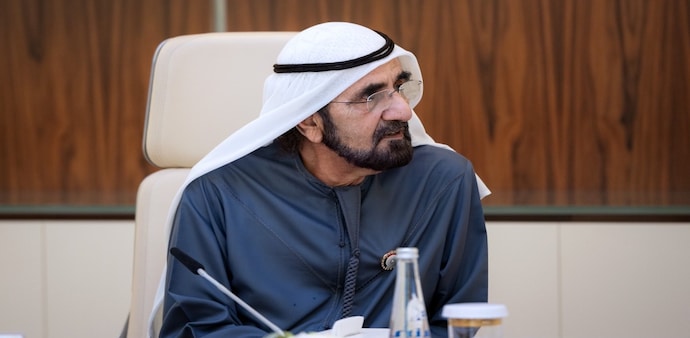
- Apr 23, 2026,
- Updated Apr 23, 2026 11:19 PM IST
In a move that could redefine how governments function in the digital age, the United Arab Emirates has announced an ambitious plan to integrate “Agentic AI” across half of its public sector operations within the next two years — positioning itself at the forefront of autonomous governance.
Sheikh Mohammed bin Rashid Al Maktoum, Vice-President and Prime Minister of the UAE and Ruler of Dubai, revealed that 50% of government sectors, services, and operations will transition to Agentic AI — systems capable of independently analysing data, making decisions, executing tasks, and improving outcomes in real time.
A government powered by AI
The initiative, launched under the directives of Sheikh Mohamed bin Zayed Al Nahyan, aims to make the UAE the first country in the world to operate government functions at such a scale through autonomous systems.
In a detailed public statement, Sheikh Mohammed underscored a shift in how artificial intelligence is viewed: no longer just a support tool, but an “executive partner” embedded in governance itself. The goal, he said, is to enhance service delivery, accelerate decision-making, and significantly boost efficiency across departments.
Defined timeline, measurable goals
Unlike many policy announcements, the UAE’s AI transition comes with a strict two-year deadline. Government performance will be evaluated based on three key metrics: speed of adoption, quality of implementation, and the ability to redesign workflows using AI.
Oversight of the rollout will be led by Sheikh Mansour bin Zayed Al Nahyan, with a dedicated taskforce chaired by Mohammad Al Gergawi managing execution.
The leadership has also emphasised human capital as central to the transition. Every federal employee is set to undergo AI training, signalling a parallel investment in workforce capability alongside technological infrastructure.
Building on 2 decades of digital transformation
The Agentic AI push is not an isolated leap but the latest phase in a long-running digital evolution. Over the past 20 years, the UAE has steadily digitised governance — moving from early eGovernment initiatives to mobile-first services and fully integrated systems.
Key milestones include the introduction of UAE Pass, which streamlined identity verification, and the Government Services 2.0 programme that enabled proactive, data-driven service delivery.
The country has also taken early institutional steps in AI governance. In 2017, it became the first nation to appoint a dedicated AI minister and launched the UAE Artificial Intelligence Strategy 2031 as part of its long-term development vision. This was followed by the creation of the Ministry of Artificial Intelligence, Digital Economy and Remote Work Applications in 2020.
Redefining governance for future
At its core, the UAE’s new model reflects a broader shift in governance philosophy — one where speed, responsiveness, and predictive capability become defining features of the state.
“The world is changing. Technology is accelerating. Our principle remains constant — people come first,” Sheikh Mohammed noted, framing the initiative as a means to create a more agile and impactful government.
In a move that could redefine how governments function in the digital age, the United Arab Emirates has announced an ambitious plan to integrate “Agentic AI” across half of its public sector operations within the next two years — positioning itself at the forefront of autonomous governance.
Sheikh Mohammed bin Rashid Al Maktoum, Vice-President and Prime Minister of the UAE and Ruler of Dubai, revealed that 50% of government sectors, services, and operations will transition to Agentic AI — systems capable of independently analysing data, making decisions, executing tasks, and improving outcomes in real time.
A government powered by AI
The initiative, launched under the directives of Sheikh Mohamed bin Zayed Al Nahyan, aims to make the UAE the first country in the world to operate government functions at such a scale through autonomous systems.
In a detailed public statement, Sheikh Mohammed underscored a shift in how artificial intelligence is viewed: no longer just a support tool, but an “executive partner” embedded in governance itself. The goal, he said, is to enhance service delivery, accelerate decision-making, and significantly boost efficiency across departments.
Defined timeline, measurable goals
Unlike many policy announcements, the UAE’s AI transition comes with a strict two-year deadline. Government performance will be evaluated based on three key metrics: speed of adoption, quality of implementation, and the ability to redesign workflows using AI.
Oversight of the rollout will be led by Sheikh Mansour bin Zayed Al Nahyan, with a dedicated taskforce chaired by Mohammad Al Gergawi managing execution.
The leadership has also emphasised human capital as central to the transition. Every federal employee is set to undergo AI training, signalling a parallel investment in workforce capability alongside technological infrastructure.
Building on 2 decades of digital transformation
The Agentic AI push is not an isolated leap but the latest phase in a long-running digital evolution. Over the past 20 years, the UAE has steadily digitised governance — moving from early eGovernment initiatives to mobile-first services and fully integrated systems.
Key milestones include the introduction of UAE Pass, which streamlined identity verification, and the Government Services 2.0 programme that enabled proactive, data-driven service delivery.
The country has also taken early institutional steps in AI governance. In 2017, it became the first nation to appoint a dedicated AI minister and launched the UAE Artificial Intelligence Strategy 2031 as part of its long-term development vision. This was followed by the creation of the Ministry of Artificial Intelligence, Digital Economy and Remote Work Applications in 2020.
Redefining governance for future
At its core, the UAE’s new model reflects a broader shift in governance philosophy — one where speed, responsiveness, and predictive capability become defining features of the state.
“The world is changing. Technology is accelerating. Our principle remains constant — people come first,” Sheikh Mohammed noted, framing the initiative as a means to create a more agile and impactful government.