
'You have to bring your ships closer': Iran responds to US Hormuz blockade plan
The US CENTCOM said on Monday its forces would start implementing a blockade of all maritime traffic entering and exiting Iranian ports from 10 a.m. ET on 13 April, in line with a presidential proclamation.
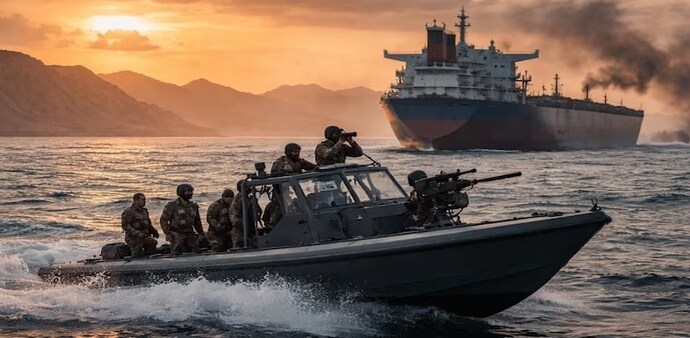
- Apr 13, 2026,
- Updated Apr 13, 2026 12:26 PM IST
Iran has, once again, mocked the US announcement of a naval blockade, saying such a move cannot be enforced "by posting on X".
Don't Miss: Trump considers bombing Iran again after peace talks in Islamabad fail: Report
After US Central Command (CENTCOM) said it would begin a blockade of Iranian maritime traffic, Iran's embassy in Sierra Leone responded online: "You know you can't execute a blockade by posting on X, right? Like you have to actually bring your ships closer!"
The US CENTCOM said on Monday its forces would start implementing a blockade of all maritime traffic entering and exiting Iranian ports from 10 a.m. ET on 13 April, in line with a presidential proclamation.
Must Read: $115 oil in sight: Markets rattle as US-Iran tensions spike over Strait of Hormuz
It said the blockade would be "enforced impartially against vessels of all nations entering or departing Iranian ports and coastal areas", including those on the Arabian Gulf and Gulf of Oman.
The command added that its forces would not impede freedom of navigation for vessels transiting the Strait of Hormuz to and from non-Iranian ports.
It said further guidance would be issued to commercial mariners, advising them to monitor Notice to Mariners broadcasts and contact US naval forces on channel 16 when operating in the Gulf of Oman and Strait of Hormuz approaches.
The US move comes just a day after President Donald Trump signalled that Washington would block Iranian ships in the strategic waterway, a key route for global energy supplies.
Reacting on Sunday, Iran's embassy in Japan warned the plan could backfire. "Perhaps a tactical bluff, perhaps not—but it represents neither a breakthrough nor a magic bullet," it said.
"First, expecting Iran to bend is simply hollow. This only confirms Iran's correct assessment and that of the world that this Admin. views diplomacy as synonymous with capitulation. Iran, of course, negotiated in Islamabad, but it did not bend.
"Second, a naval blockade is simply a losing hand. It would disastrously backfire, crippling the Strait of Hormuz traffic, imperiling U.S. forces, sending oil prices skyrocketing, and shattering the global economy."
The US is seeking to block Iranian ships crossing the Strait of Hormuz in an effort to choke its oil revenue. While Iran has restricted passage for other countries' vessels, its own shipments have continued to flow.
Iran has, once again, mocked the US announcement of a naval blockade, saying such a move cannot be enforced "by posting on X".
Don't Miss: Trump considers bombing Iran again after peace talks in Islamabad fail: Report
After US Central Command (CENTCOM) said it would begin a blockade of Iranian maritime traffic, Iran's embassy in Sierra Leone responded online: "You know you can't execute a blockade by posting on X, right? Like you have to actually bring your ships closer!"
The US CENTCOM said on Monday its forces would start implementing a blockade of all maritime traffic entering and exiting Iranian ports from 10 a.m. ET on 13 April, in line with a presidential proclamation.
Must Read: $115 oil in sight: Markets rattle as US-Iran tensions spike over Strait of Hormuz
It said the blockade would be "enforced impartially against vessels of all nations entering or departing Iranian ports and coastal areas", including those on the Arabian Gulf and Gulf of Oman.
The command added that its forces would not impede freedom of navigation for vessels transiting the Strait of Hormuz to and from non-Iranian ports.
It said further guidance would be issued to commercial mariners, advising them to monitor Notice to Mariners broadcasts and contact US naval forces on channel 16 when operating in the Gulf of Oman and Strait of Hormuz approaches.
The US move comes just a day after President Donald Trump signalled that Washington would block Iranian ships in the strategic waterway, a key route for global energy supplies.
Reacting on Sunday, Iran's embassy in Japan warned the plan could backfire. "Perhaps a tactical bluff, perhaps not—but it represents neither a breakthrough nor a magic bullet," it said.
"First, expecting Iran to bend is simply hollow. This only confirms Iran's correct assessment and that of the world that this Admin. views diplomacy as synonymous with capitulation. Iran, of course, negotiated in Islamabad, but it did not bend.
"Second, a naval blockade is simply a losing hand. It would disastrously backfire, crippling the Strait of Hormuz traffic, imperiling U.S. forces, sending oil prices skyrocketing, and shattering the global economy."
The US is seeking to block Iranian ships crossing the Strait of Hormuz in an effort to choke its oil revenue. While Iran has restricted passage for other countries' vessels, its own shipments have continued to flow.