
From deal to delivery: India-UK trade pact kicks in as first shipments leave Indian shores
Over $140 million worth of consignments sent; commerce department to work with export promotion councils to help industrial clusters understand benefits of CETA.
- Jul 15, 2026,
- Updated Jul 15, 2026 4:43 PM IST
India flagged off shipments to the UK on Wednesday as the free trade agreement (FTA) between the two countries came into effect, enabling goods from both countries to get preferential tariffs.
Flag-off ceremonies were held in different parts of the country, including Delhi, Coimbatore, Hyderabad and Jammu.
Commerce Secretary Rajesh Agarwal said this is one of the most aspirational trade agreements by India to date.
Many consignments are being sent from different parts of India to the UK on Day One, he said. More than $140 million worth of goods had been shipped to the UK under the Comprehensive Trade and Economic Agreement (CETA). Rules of origin certificates and customs facilitation are being provided.
"More than 800 technical sessions were held over 14 formal rounds of negotiations," he said, highlighting the efforts to finalise the deal. He added that arriving at the agreement is only part of the work.
Agarwal said the next milestone should be that, a year down the line, both countries should look at the change the trade pact brings to people's lives.
The Department of Commerce will work with export promotion councils to help industrial clusters understand how they can benefit from the agreement.
"The deal turns ambition into action... and marks the next stage in bilateral trade," said British High Commissioner to India Lindy Cameron, adding that UK-India trade is increasingly about services and knowledge. This, too, is supported through the trade deal.
"The India-UK FTA creates unprecedented opportunities for our textiles, leather, gems and jewellery, engineering goods, marine products, chemicals, processed foods, MSMEs, farmers and manufacturers," said Commerce and Industry Minister Piyush Goyal in a post on X. "It also opens new frontiers for our IT, professional, financial, education and business services sectors, while expanding mobility for Indian talent," he said.
India and the UK aim to increase bilateral trade to $100 billion by 2030 from the current level of close to $60 billion in FY26, of which merchandise trade was worth $25.12 billion.
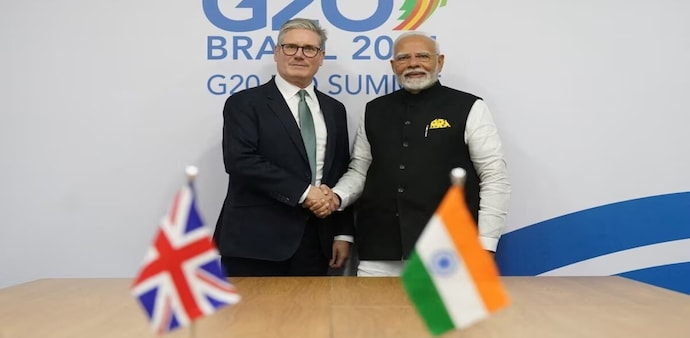
The India-UK Comprehensive Trade and Economic Agreement was signed in July 2025 by Prime Minister Narendra Modi and UK PM Keir Starmer following 14 rounds of negotiations.
The deal, which spans 30 chapters, eliminates duties by the UK on 99% of Indian goods from Day One.
India has offered zero tariff on 64% of UK exports, which will gradually rise to 85% of goods.
It also includes a Double Contribution Convention Agreement that will help Indian professionals temporarily working in the UK by exempting them from social security contributions there.
Meanwhile, a bilateral investment treaty is being negotiated separately, which officials said is in an advanced stage of negotiations.
Exporters welcomed the trade pact becoming effective from July 15. "The focus must now shift from agreement to action — supporting exporters with market intelligence, compliance readiness, buyer-connect initiatives and sector-specific handholding to fully harness the potential of CETA," said Mohit Singla, Chairman, Trade Promotion Council of India (TPCI), noting that it has the potential to significantly boost India’s competitiveness across key sectors.
Indian exporters have been facing challenges over the last several months, with the US tariff action followed by the conflict in West Asia.
India flagged off shipments to the UK on Wednesday as the free trade agreement (FTA) between the two countries came into effect, enabling goods from both countries to get preferential tariffs.
Flag-off ceremonies were held in different parts of the country, including Delhi, Coimbatore, Hyderabad and Jammu.
Commerce Secretary Rajesh Agarwal said this is one of the most aspirational trade agreements by India to date.
Many consignments are being sent from different parts of India to the UK on Day One, he said. More than $140 million worth of goods had been shipped to the UK under the Comprehensive Trade and Economic Agreement (CETA). Rules of origin certificates and customs facilitation are being provided.
"More than 800 technical sessions were held over 14 formal rounds of negotiations," he said, highlighting the efforts to finalise the deal. He added that arriving at the agreement is only part of the work.
Agarwal said the next milestone should be that, a year down the line, both countries should look at the change the trade pact brings to people's lives.
The Department of Commerce will work with export promotion councils to help industrial clusters understand how they can benefit from the agreement.
"The deal turns ambition into action... and marks the next stage in bilateral trade," said British High Commissioner to India Lindy Cameron, adding that UK-India trade is increasingly about services and knowledge. This, too, is supported through the trade deal.
"The India-UK FTA creates unprecedented opportunities for our textiles, leather, gems and jewellery, engineering goods, marine products, chemicals, processed foods, MSMEs, farmers and manufacturers," said Commerce and Industry Minister Piyush Goyal in a post on X. "It also opens new frontiers for our IT, professional, financial, education and business services sectors, while expanding mobility for Indian talent," he said.
India and the UK aim to increase bilateral trade to $100 billion by 2030 from the current level of close to $60 billion in FY26, of which merchandise trade was worth $25.12 billion.
The India-UK Comprehensive Trade and Economic Agreement was signed in July 2025 by Prime Minister Narendra Modi and UK PM Keir Starmer following 14 rounds of negotiations.
The deal, which spans 30 chapters, eliminates duties by the UK on 99% of Indian goods from Day One.
India has offered zero tariff on 64% of UK exports, which will gradually rise to 85% of goods.
It also includes a Double Contribution Convention Agreement that will help Indian professionals temporarily working in the UK by exempting them from social security contributions there.
Meanwhile, a bilateral investment treaty is being negotiated separately, which officials said is in an advanced stage of negotiations.
Exporters welcomed the trade pact becoming effective from July 15. "The focus must now shift from agreement to action — supporting exporters with market intelligence, compliance readiness, buyer-connect initiatives and sector-specific handholding to fully harness the potential of CETA," said Mohit Singla, Chairman, Trade Promotion Council of India (TPCI), noting that it has the potential to significantly boost India’s competitiveness across key sectors.
Indian exporters have been facing challenges over the last several months, with the US tariff action followed by the conflict in West Asia.