
America trims air traffic in 40 cities amid shutdown: Will your US flight be delayed?
The impacted group will likely include the busiest and most essential hubs such as those in Atlanta, New York City, Boston, Dallas-Fort Worth, Chicago O'Hare, Phoenix, Houston, and Los Angeles among others. The details are not out yet.
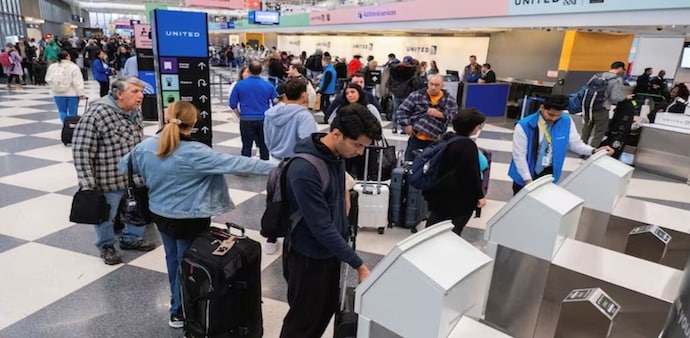
- Nov 6, 2025,
- Updated Nov 6, 2025 7:28 AM IST
The FAA will slash air traffic by 10% in 40 major U.S. markets starting Friday, citing growing safety concerns as unpaid air traffic controllers show signs of strain during the longest government shutdown in U.S. history.
With air traffic controllers working six-day weeks without pay since the shutdown began on October 1, the Federal Aviation Administration announced Wednesday that it would cut flight operations in top-volume zones to prevent a potential crisis.
FAA Administrator Bryan Bedford, alongside U.S. Transportation Secretary Sean Duffy, warned of rising fatigue, absences, and staffing shortages—factors that have already triggered delays at several U.S. airports.
“We're not going to wait for a safety problem to truly manifest itself,” Bedford said, referencing early indicators of strain across the National Airspace System. “The system is extremely safe today and will be extremely safe tomorrow.”
The 10% reduction, effective Friday morning, could impact thousands of daily flights. While the FAA did not specify which airports will be affected, a full list is expected Thursday. The U.S. aviation system handles more than 44,000 flights a day.
The impacted group will likely include the busiest and most essential hubs such as those in Atlanta, New York City, Boston, Dallas-Fort Worth, Chicago O'Hare, Phoenix, Houston, and Los Angeles among others.
Industry leaders and unions have pressed Congress to end the shutdown, fearing widespread disruption. Airlines are evaluating the fallout, with Southwest urging Congress to “restore the National Airspace System to its full capacity.”
AAA spokesperson Aixa Diaz advised travelers to monitor airline apps and arrive early at airports, noting that many are now considering driving. “At the end of the day, you either fly or you don’t,” Diaz said. “You roll the dice.”
According to the Associated Press, from Friday to Sunday alone, at least 39 FAA facilities signaled potential staffing issues—more than triple the pre-shutdown average.
Secretary Duffy underscored the urgency, referencing the January mid-air collision near Reagan National. “We learned from that,” he said. “Now we act before there could be adverse consequence
The FAA will slash air traffic by 10% in 40 major U.S. markets starting Friday, citing growing safety concerns as unpaid air traffic controllers show signs of strain during the longest government shutdown in U.S. history.
With air traffic controllers working six-day weeks without pay since the shutdown began on October 1, the Federal Aviation Administration announced Wednesday that it would cut flight operations in top-volume zones to prevent a potential crisis.
FAA Administrator Bryan Bedford, alongside U.S. Transportation Secretary Sean Duffy, warned of rising fatigue, absences, and staffing shortages—factors that have already triggered delays at several U.S. airports.
“We're not going to wait for a safety problem to truly manifest itself,” Bedford said, referencing early indicators of strain across the National Airspace System. “The system is extremely safe today and will be extremely safe tomorrow.”
The 10% reduction, effective Friday morning, could impact thousands of daily flights. While the FAA did not specify which airports will be affected, a full list is expected Thursday. The U.S. aviation system handles more than 44,000 flights a day.
The impacted group will likely include the busiest and most essential hubs such as those in Atlanta, New York City, Boston, Dallas-Fort Worth, Chicago O'Hare, Phoenix, Houston, and Los Angeles among others.
Industry leaders and unions have pressed Congress to end the shutdown, fearing widespread disruption. Airlines are evaluating the fallout, with Southwest urging Congress to “restore the National Airspace System to its full capacity.”
AAA spokesperson Aixa Diaz advised travelers to monitor airline apps and arrive early at airports, noting that many are now considering driving. “At the end of the day, you either fly or you don’t,” Diaz said. “You roll the dice.”
According to the Associated Press, from Friday to Sunday alone, at least 39 FAA facilities signaled potential staffing issues—more than triple the pre-shutdown average.
Secretary Duffy underscored the urgency, referencing the January mid-air collision near Reagan National. “We learned from that,” he said. “Now we act before there could be adverse consequence