
'Coordinated moves': Kanwal Sibal after Trump declares Saudi Arabia as a major non-NATO ally
'Coordinated moves': Kanwal Sibal after Trump declares Saudi Arabia as a major non-NATO ally
He pointed out that Pakistan and Saudi Arabia have separately concluded their own defence pact, while US Senator Marco Rubio has indicated that Washington is exploring a “stronger strategic partnership” with Pakistan.
Business Today Desk
- Nov 19, 2025,
- Updated Nov 19, 2025 11:51 AM IST
Former Foreign Secretary Kanwal Sibal has raised concerns over what he describes as a series of coordinated geopolitical moves involving the United States, Saudi Arabia and Pakistan. In a post on X, Sibal noted that Saudi Arabia has now been designated a major non-NATO ally (MNNA) of the US — a status Pakistan already holds — alongside Washington’s newly signed strategic defence agreement with Riyadh.
Advertisement
He pointed out that Pakistan and Saudi Arabia have separately concluded their own defence pact, while US Senator Marco Rubio has indicated that Washington is exploring a “stronger strategic partnership” with Pakistan. According to Sibal, these developments appear to be interconnected.
He argued that this alignment helps explain US President Donald Trump’s recent praise of Pakistan Army chief General Asim Munir and what he called attempts to influence India-Pakistan dynamics in Islamabad’s favour.
Sibal suggested that the broader strategic objective is to strengthen Pakistan’s position against India so it can fulfil what Washington views as its “designated regional role.”
Read Kanwal Sibal's full post here
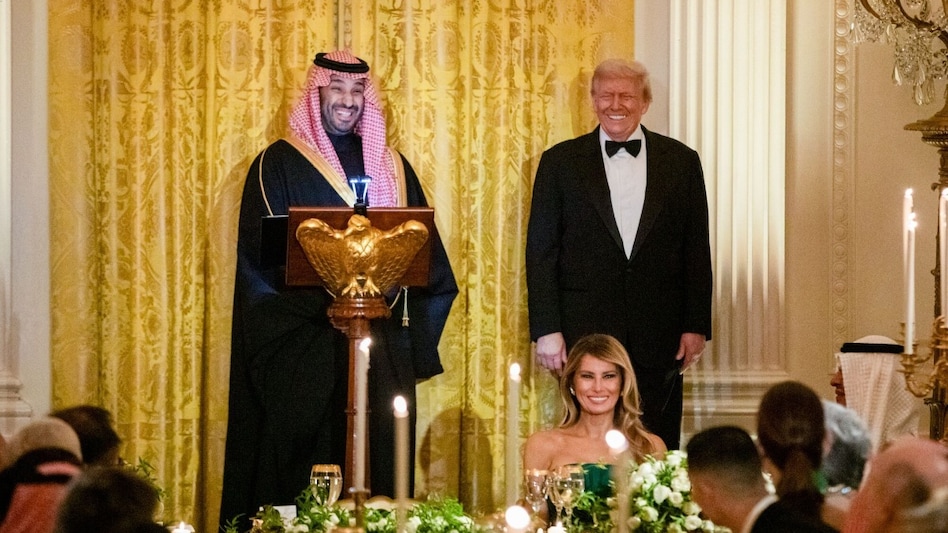
Earlier in the day, Trump on Tuesday (local time) declared that the United States would designate Saudi Arabia as a major non-NATO ally while hosting Crown Prince Mohammed bin Salman at a White House gala dinner.
Advertisement
Bloomberg reported that the status—reserved for countries with strong strategic partnerships with Washington—provides access to specific financing options, priority for certain military hardware purchases, and opportunities for joint research programmes.
AFP quoted Trump as saying, "Tonight, I'm pleased to announce that we're taking our military cooperation to even greater heights by formally designating Saudi Arabia as a major non-NATO ally, which is something that is very important to them."
He also added that the announcement was being made for the first time that evening because “they wanted to keep a little secret for tonight," noting that only 19 other nations currently hold the designation.
Saudi Arabia is the 20th country to get the MNNA status after Argentina, Australia, Bahrain, Brazil, Colombia, Egypt, Israel, Japan, Jordan, Kenya, Kuwait, Morocco, New Zealand, Pakistan, the Philippines, Qatar, South Korea, Thailand, and Tunisia.
Former Foreign Secretary Kanwal Sibal has raised concerns over what he describes as a series of coordinated geopolitical moves involving the United States, Saudi Arabia and Pakistan. In a post on X, Sibal noted that Saudi Arabia has now been designated a major non-NATO ally (MNNA) of the US — a status Pakistan already holds — alongside Washington’s newly signed strategic defence agreement with Riyadh.
Advertisement
He pointed out that Pakistan and Saudi Arabia have separately concluded their own defence pact, while US Senator Marco Rubio has indicated that Washington is exploring a “stronger strategic partnership” with Pakistan. According to Sibal, these developments appear to be interconnected.
He argued that this alignment helps explain US President Donald Trump’s recent praise of Pakistan Army chief General Asim Munir and what he called attempts to influence India-Pakistan dynamics in Islamabad’s favour.
Sibal suggested that the broader strategic objective is to strengthen Pakistan’s position against India so it can fulfil what Washington views as its “designated regional role.”
Read Kanwal Sibal's full post here
Earlier in the day, Trump on Tuesday (local time) declared that the United States would designate Saudi Arabia as a major non-NATO ally while hosting Crown Prince Mohammed bin Salman at a White House gala dinner.
Advertisement
Bloomberg reported that the status—reserved for countries with strong strategic partnerships with Washington—provides access to specific financing options, priority for certain military hardware purchases, and opportunities for joint research programmes.
AFP quoted Trump as saying, "Tonight, I'm pleased to announce that we're taking our military cooperation to even greater heights by formally designating Saudi Arabia as a major non-NATO ally, which is something that is very important to them."
He also added that the announcement was being made for the first time that evening because “they wanted to keep a little secret for tonight," noting that only 19 other nations currently hold the designation.
Saudi Arabia is the 20th country to get the MNNA status after Argentina, Australia, Bahrain, Brazil, Colombia, Egypt, Israel, Japan, Jordan, Kenya, Kuwait, Morocco, New Zealand, Pakistan, the Philippines, Qatar, South Korea, Thailand, and Tunisia.
Read more!