
'Dividend on the table': Donald Trump says Americans could get paid from tariff money
The statement follows Trump’s sweeping imposition of reciprocal tariffs on nearly all U.S. trading partners, including a steep 25% duty on Indian exports.
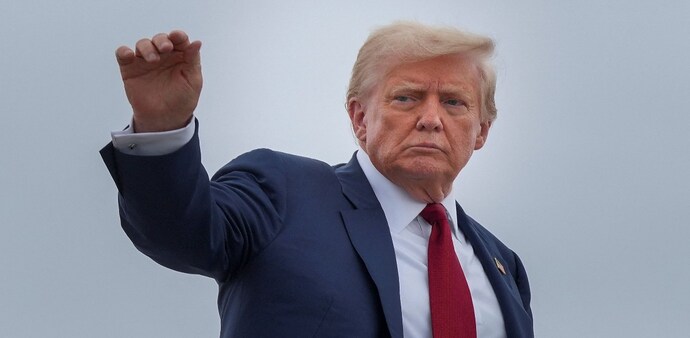
- Aug 4, 2025,
- Updated Aug 4, 2025 7:58 AM IST
U.S. President Donald Trump has floated the idea of distributing tariff revenue directly to American citizens, suggesting a “dividend” for middle- and lower-income households as his trade war escalates with nations like India.
“There could be a distribution or a dividend to the people of our country,” Trump told reporters in New Jersey before boarding Air Force One. “I would say for people that would be middle income people and lower income people, we could do a dividend.”
The statement follows Trump’s sweeping imposition of reciprocal tariffs on nearly all U.S. trading partners, including a steep 25% duty on Indian exports. India was among the few major economies that failed to secure a trade agreement before the August 1 deadline, unlike the UK, EU, Japan, South Korea, and even Pakistan.
Initially announced in April, the tariff regime caused global markets to plummet, triggering a financial crisis and trade anxiety across the board. Trump temporarily paused the full rollout with a 90-day moratorium and a baseline 10% rate, allowing time for negotiations. But countries that didn’t finalize terms—including India—now face higher penalties, compounded by threats of additional sanctions for buying Russian oil and weapons.
Despite criticism, Trump maintains that tariffs protect American industry and jobs. He insists the policy is already helping domestic manufacturing, even as U.S. consumers face rising prices and international markets reel from the disruption.
Trump’s latest dividend proposal appears aimed at softening the domestic blow, but it has sparked fresh debate about the sustainability and fairness of redistributing revenue from aggressive trade tactics.
With Washington’s global trade war deepening, and India hit especially hard, the ripple effects of Trump's policy decisions continue to destabilize economies—and now, could reshape U.S. fiscal policy as well.
U.S. President Donald Trump has floated the idea of distributing tariff revenue directly to American citizens, suggesting a “dividend” for middle- and lower-income households as his trade war escalates with nations like India.
“There could be a distribution or a dividend to the people of our country,” Trump told reporters in New Jersey before boarding Air Force One. “I would say for people that would be middle income people and lower income people, we could do a dividend.”
The statement follows Trump’s sweeping imposition of reciprocal tariffs on nearly all U.S. trading partners, including a steep 25% duty on Indian exports. India was among the few major economies that failed to secure a trade agreement before the August 1 deadline, unlike the UK, EU, Japan, South Korea, and even Pakistan.
Initially announced in April, the tariff regime caused global markets to plummet, triggering a financial crisis and trade anxiety across the board. Trump temporarily paused the full rollout with a 90-day moratorium and a baseline 10% rate, allowing time for negotiations. But countries that didn’t finalize terms—including India—now face higher penalties, compounded by threats of additional sanctions for buying Russian oil and weapons.
Despite criticism, Trump maintains that tariffs protect American industry and jobs. He insists the policy is already helping domestic manufacturing, even as U.S. consumers face rising prices and international markets reel from the disruption.
Trump’s latest dividend proposal appears aimed at softening the domestic blow, but it has sparked fresh debate about the sustainability and fairness of redistributing revenue from aggressive trade tactics.
With Washington’s global trade war deepening, and India hit especially hard, the ripple effects of Trump's policy decisions continue to destabilize economies—and now, could reshape U.S. fiscal policy as well.