
Donald Trump escalates with 35% Canada tariff, hints at a major Russia twist next week
Since Monday, Trump has sent more than 20 letters signaling new tariffs, including a 50% duty on copper and penalties on key Asian allies Japan and South Korea. His administration is also weighing across-the-board tariffs on global partners.
- Jul 11, 2025,
- Updated Jul 11, 2025 7:02 AM IST
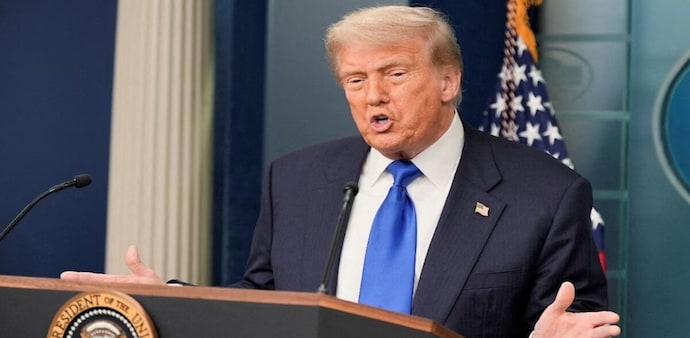
President Donald Trump on Thursday announced a sweeping 35% tariff on Canadian imports effective August 1, the latest in a flurry of unilateral trade actions targeting allies and adversaries alike — and teased a “major statement” on Russia set for Monday.
The announcement, made via a public letter to Canadian Prime Minister Mark Carney, comes amid Trump's broader push to implement “reciprocal” tariffs. The former president warned the rate could climb further if Ottawa retaliates.
“We’re just setting our tariffs,” Trump told NBC News. “All of the remaining countries are going to pay, whether it’s 20% or 15%. We’ll work that out now.”
Since Monday, Trump has sent more than 20 letters signaling new tariffs, including a 50% duty on copper and penalties on key Asian allies Japan and South Korea. His administration is also weighing across-the-board tariffs on global partners.
In a separate move, Trump voiced strong support for the Sanctioning Russia Act of 2025, which would slap a staggering 500% tariff on countries still buying Russian energy — a direct shot at India and China.
“I’m looking at it very strongly,” Trump said Thursday, adding that the bill’s implementation and termination remained entirely “at my option.”
Backed by 84 co-sponsors, the legislation was introduced by Republican Senator Lindsey Graham, a staunch Trump ally. “This is an economic bunker buster,” Graham said, specifically naming India and China for funding Russia’s war machine through continued oil purchases.
The bill grants the president a 180-day waiver on national security grounds, with lawmakers mulling a second under limited conditions. India, the second-largest buyer of Russian fossil fuels, imported €4.2 billion in May alone, according to the Centre for Research on Energy and Clean Air.
India’s Foreign Minister S. Jaishankar acknowledged ongoing diplomatic engagement: “Our concerns and interests on energy security have been made conversant,” he said, referring to talks with U.S. lawmakers.
Graham was blunt: “If you are buying products from Russia and you are not helping Ukraine, then there’s a 500% tariff on your products.”
Amid these escalating trade moves, Trump hinted Thursday he would make a “major statement” on Russia this coming Monday, raising speculation over further sanctions or policy shifts.
President Donald Trump on Thursday announced a sweeping 35% tariff on Canadian imports effective August 1, the latest in a flurry of unilateral trade actions targeting allies and adversaries alike — and teased a “major statement” on Russia set for Monday.
The announcement, made via a public letter to Canadian Prime Minister Mark Carney, comes amid Trump's broader push to implement “reciprocal” tariffs. The former president warned the rate could climb further if Ottawa retaliates.
“We’re just setting our tariffs,” Trump told NBC News. “All of the remaining countries are going to pay, whether it’s 20% or 15%. We’ll work that out now.”
Since Monday, Trump has sent more than 20 letters signaling new tariffs, including a 50% duty on copper and penalties on key Asian allies Japan and South Korea. His administration is also weighing across-the-board tariffs on global partners.
In a separate move, Trump voiced strong support for the Sanctioning Russia Act of 2025, which would slap a staggering 500% tariff on countries still buying Russian energy — a direct shot at India and China.
“I’m looking at it very strongly,” Trump said Thursday, adding that the bill’s implementation and termination remained entirely “at my option.”
Backed by 84 co-sponsors, the legislation was introduced by Republican Senator Lindsey Graham, a staunch Trump ally. “This is an economic bunker buster,” Graham said, specifically naming India and China for funding Russia’s war machine through continued oil purchases.
The bill grants the president a 180-day waiver on national security grounds, with lawmakers mulling a second under limited conditions. India, the second-largest buyer of Russian fossil fuels, imported €4.2 billion in May alone, according to the Centre for Research on Energy and Clean Air.
India’s Foreign Minister S. Jaishankar acknowledged ongoing diplomatic engagement: “Our concerns and interests on energy security have been made conversant,” he said, referring to talks with U.S. lawmakers.
Graham was blunt: “If you are buying products from Russia and you are not helping Ukraine, then there’s a 500% tariff on your products.”
Amid these escalating trade moves, Trump hinted Thursday he would make a “major statement” on Russia this coming Monday, raising speculation over further sanctions or policy shifts.