
‘Don’t ask who’s in charge’: Trump warns of second strike on Venezuela; asks leaders to behave
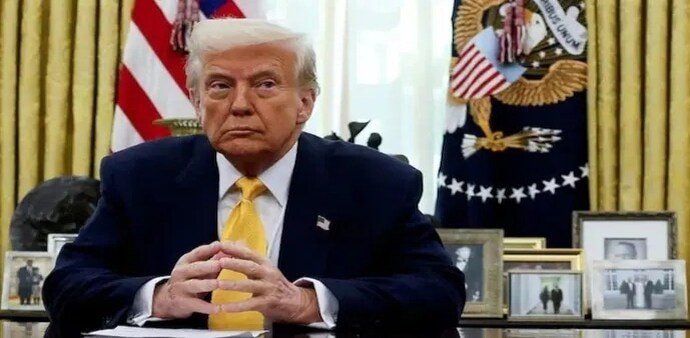
Trump emphasised Washington's position, stating, "If they do not behave, we will carry out a second strike on Venezuela."
- Jan 5, 2026,
- Updated Jan 5, 2026 7:44 AM IST
US President Donald Trump has issued a direct threat of renewed military intervention in Venezuela, declaring that a "second wave" of attacks could be launched if the country's interim leadership does not meet American expectations. This development comes after the removal of President Nicolás Maduro, as US officials aim to influence the political transition underway in the country.
Trump emphasised Washington's position, stating, "If they do not behave, we will carry out a second strike on Venezuela," and reiterated that the US focus is on "getting Venezuela fixed." He added, "We were prepared for a second wave, we were all set to go, but I don’t think we will need it," while maintaining that the option for further action remains open.
Describing US involvement, Trump said the United States is effectively "in charge" following Maduro's ousting. He remarked, "Don’t ask me who’s in charge because I’ll give you an answer and it’ll be very controversial.”
Behind the scenes, US advisers reportedly see an opportunity to work with interim President Delcy Rodríguez, who, despite public opposition, is viewed as a potential partner for political transition and oil-related matters. Trump claimed that private talks have occurred.
US officials continue to apply pressure through a significant military presence off Venezuela’s coast and maintain the threat of additional airstrikes or targeted actions against Maduro loyalists. As an incentive for cooperation, offers of amnesty or safe exile have been considered, though similar proposals were previously rejected by Maduro before his arrest.
Venezuelan Defence Minister Vladimir Padrino López labelled the US operation as "imperial aggression" and interim leader Rodríguez condemned Maduro's capture as an "atrocity". Both figures retain significant authority within the country’s military and intelligence establishments, presenting challenges to US efforts.
Opposition and international voices have reacted to the developments. Exiled opposition figure Edmundo González Urrutia described Maduro’s removal as "an important step, but not enough." Regional and European officials have also expressed concerns, warning that US actions could set a troubling precedent for the region.
US President Donald Trump has issued a direct threat of renewed military intervention in Venezuela, declaring that a "second wave" of attacks could be launched if the country's interim leadership does not meet American expectations. This development comes after the removal of President Nicolás Maduro, as US officials aim to influence the political transition underway in the country.
Trump emphasised Washington's position, stating, "If they do not behave, we will carry out a second strike on Venezuela," and reiterated that the US focus is on "getting Venezuela fixed." He added, "We were prepared for a second wave, we were all set to go, but I don’t think we will need it," while maintaining that the option for further action remains open.
Describing US involvement, Trump said the United States is effectively "in charge" following Maduro's ousting. He remarked, "Don’t ask me who’s in charge because I’ll give you an answer and it’ll be very controversial.”
Behind the scenes, US advisers reportedly see an opportunity to work with interim President Delcy Rodríguez, who, despite public opposition, is viewed as a potential partner for political transition and oil-related matters. Trump claimed that private talks have occurred.
US officials continue to apply pressure through a significant military presence off Venezuela’s coast and maintain the threat of additional airstrikes or targeted actions against Maduro loyalists. As an incentive for cooperation, offers of amnesty or safe exile have been considered, though similar proposals were previously rejected by Maduro before his arrest.
Venezuelan Defence Minister Vladimir Padrino López labelled the US operation as "imperial aggression" and interim leader Rodríguez condemned Maduro's capture as an "atrocity". Both figures retain significant authority within the country’s military and intelligence establishments, presenting challenges to US efforts.
Opposition and international voices have reacted to the developments. Exiled opposition figure Edmundo González Urrutia described Maduro’s removal as "an important step, but not enough." Regional and European officials have also expressed concerns, warning that US actions could set a troubling precedent for the region.