
Trump’s US-Russia diesel deal faltering? First two tankers change course; here’s what we know
Diesel prices at the pump have climbed to $6.27 per gallon, close to their September record, while futures prices have risen more than 60 per cent since Trump launched the Iran war.
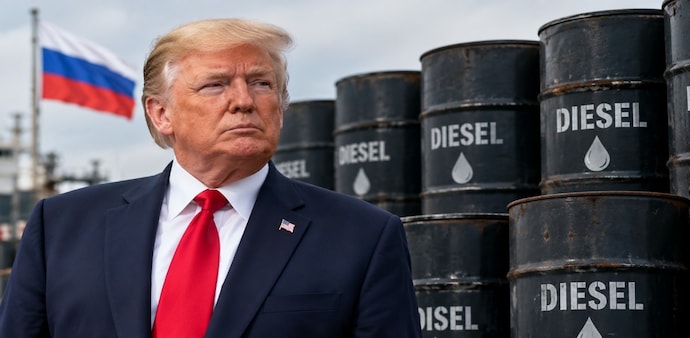
- Nov 5, 2026,
- Updated Nov 5, 2026 9:54 AM IST
US President Donald Trump’s effort to import Russian diesel to the US appears to be faltering, with two of the first tankers initially headed for the country changing course amid regulatory and political opposition.
According to a report in Financial Times, the diversions come as US diesel inventories have fallen below 100 million barrels for the first time in more than two decades, tightening supplies of a fuel critical to the economy.
Diesel prices at the pump have climbed to $6.27 per gallon, close to their September record, while futures prices have risen more than 60 per cent since Trump launched the Iran war.
MUST READ | Government hikes windfall tax on diesel, ATF exports; cuts petrol export duty to zero
Trump had struck an agreement with Russian President Vladimir Putin in the weeks before the midterm elections to purchase Russian diesel cargoes in an effort to lower fuel prices and strengthen political support. However, the deal did little to prevent a Republican election rout, with Democrats winning control of both houses of Congress.
Two tankers, the Talisman and Leruo, no longer list the US Atlantic coast as their destination. The Talisman, a Russian vessel under US, UK and EU sanctions, has moved into the Mediterranean and is signalling “for orders”. The Leruo, sanctioned by the UK, EU and Canada, changed its destination signal to Brazil on Monday.
A third tanker, the Greek-owned Agioi Fanendes, appears to be continuing towards the US but is also signalling “for orders”, indicating that its discharge port has not been confirmed. A fourth vessel, the sanctioned tanker Beast, has sailed from Russia's Primorsk port towards the Atlantic.
New Jersey Governor Mikie Sherrill warned port and terminal operators in the state against accepting Russian diesel cargoes, threatening harsh penalties. Trump's agreement with Putin has also drawn criticism from Democratic and some Republican lawmakers, who questioned its legality.
Analyst Matt Smith said two of the three cargoes initially bound for the US had diverted, while the third was expected to reach New York over the weekend. However, he said it could also change course because of buyers' concerns over regulatory, legislative and sanctions issues.
The supply crunch has been compounded by the loss of global refinery capacity linked to the wars in Iran and Ukraine.