












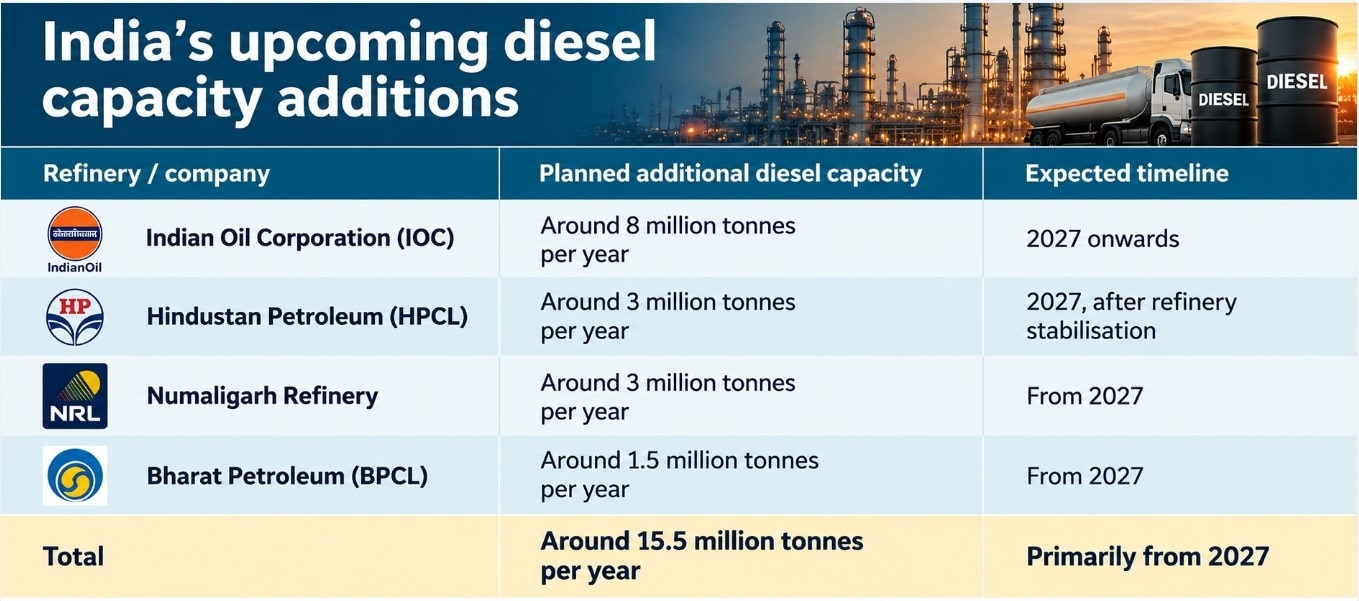



 India's expanding refining capacity comes as global fuel markets face supply uncertainty.
India is set to significantly expand its diesel production capacity from 2027 as state-run refiners ramp up output, potentially strengthening the country's position as a major supplier to global fuel markets amid disruptions caused by geopolitical conflicts and refinery closures.
Indian state refiners will collectively add around 16.5 million tonnes per year of diesel production capacity in 2027, industry officials said, as the country seeks to increase its role in international refined-fuel trade. The expansion comes as conflicts involving the US and Iran, and Russia and Ukraine, disrupt trade flows and push up freight rates.

 Foreign airlines resist Navi Mumbai shift, Adani Airports seeks transition plans by Nov 3
 Info Edge CEO Hitesh Oberoi resigns, founder Sanjeev Bikhchandani to take charge
 Goodbye LCD, hello touchscreen: Apple unveils OLED MacBook Pro with touch display
 India's industrial growth slows to 6.7% in September from 8% in August; manufacturing rises 7.6%
 Sebi to review foreign investor rules: What could change for FPIs in Indian markets?
 Theatre Releases This Week: 4 New Films To Watch, Ramayana Buzz Builds
 Yamuna River Pollution EXPOSED: Toxic Froth Vs Delhi's Cruise Safari Dream!
 BJP's 4-0 Sweep In Karnataka MLC Polls: Congress Gets ZERO Seats Amid 'Vote Chori' Row!
 Akash Ambani Reveals How Jio Transformed India’s Telecom Sector As IPO Draws ₹7.5 Lakh Crore Demand
 Piramal Pharma Q2 Profit At ₹5 Crore After Year-Ago Loss; FY27 Growth Outlook Raised
 Sebi to review foreign investor rules: What could change for FPIs in Indian markets?
 How to trade Bharti Airtel stock: Analyst's advice amid Jio Platform's market debut
 Jio Platforms becomes world's sixth-most valuable telecom firm on debut
 Bandhan Bank Q2 earnings: Net profit rises five times, NPAs fall
 TVS Motor shares rise 4% as Q2 revenue hits record, profit jumps 52%
 JioBlackRock MF folios jump 261%: Can new fund houses challenge established AMCs?
 Financial Horoscope Today, October 29, 2026: Sagittarius Should Not Rush Investments, Know the Status of Other Signs
 South Korea targets 4 lakh international students with proposed visa, employment reforms
 Want Canada PR? Ontario reopens REDI programme for skilled workers in 6 regions
 Buying a car on an ₹80,000 salary? Calculate your budget before visiting the showroom


