
'Unacceptable': Trump rejects Khamenei's son, says he must be involved in picking Iran’s next leader
Trump also warned that installing a leader who continues the policies of the late Iranian leader could lead to renewed conflict with the United States within a few years.
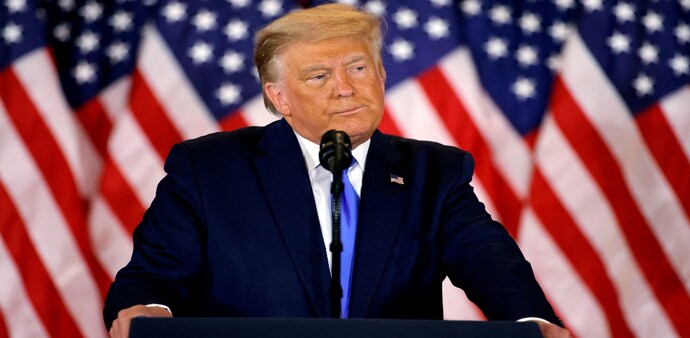
- Mar 5, 2026,
- Updated Mar 5, 2026 11:12 PM IST
US President Donald Trump on March 5 said he must be personally involved in selecting Iran’s next leader following the death of the country’s longtime supreme leader, Ali Khamenei, who was killed in joint US-Israeli strikes last week.
In an interview with Axios, Trump dismissed the possibility of Khamenei’s son, Mojtaba Khamenei, succeeding him, calling the idea “unacceptable” and describing the cleric as a “lightweight.” He said Washington should help shape the outcome of Iran’s leadership transition.
“They are wasting their time. Khamenei’s son is a lightweight. I have to be involved in the appointment, like with Delcy Rodríguez in Venezuela,” Trump said.
Trump also warned that installing a leader who continues the policies of the late Iranian leader could lead to renewed conflict with the United States within a few years.
“Khamenei’s son is unacceptable to me. We want someone that will bring harmony and peace to Iran,” he said.
The remarks come amid heightened tensions in the region after coordinated US-Israeli air strikes on February 28 killed Khamenei in the Iranian capital, Tehran. The strikes triggered uncertainty over the future leadership of the Islamic Republic.
Iran’s clerical body responsible for selecting the supreme leader — the Assembly of Experts — is expected to determine the successor. Reports suggest Mojtaba Khamenei, a mid-ranking cleric who managed his father’s office and maintained close ties with the Islamic Revolutionary Guard Corps, has emerged as a key contender despite lacking a formal public role.
Israeli forces earlier targeted a building in the city of Qom that houses the clerical body responsible for choosing the next leader, in what analysts say may have been an attempt to disrupt the succession process.
Trump also indicated that the White House had reviewed several possible candidates for Iran’s leadership, though he noted that some potential figures were now dead. He suggested that a more moderate leader from within Iran could be preferable, saying, “If there’s such a person, but we have people like that. We have people … more moderate.”
US President Donald Trump on March 5 said he must be personally involved in selecting Iran’s next leader following the death of the country’s longtime supreme leader, Ali Khamenei, who was killed in joint US-Israeli strikes last week.
In an interview with Axios, Trump dismissed the possibility of Khamenei’s son, Mojtaba Khamenei, succeeding him, calling the idea “unacceptable” and describing the cleric as a “lightweight.” He said Washington should help shape the outcome of Iran’s leadership transition.
“They are wasting their time. Khamenei’s son is a lightweight. I have to be involved in the appointment, like with Delcy Rodríguez in Venezuela,” Trump said.
Trump also warned that installing a leader who continues the policies of the late Iranian leader could lead to renewed conflict with the United States within a few years.
“Khamenei’s son is unacceptable to me. We want someone that will bring harmony and peace to Iran,” he said.
The remarks come amid heightened tensions in the region after coordinated US-Israeli air strikes on February 28 killed Khamenei in the Iranian capital, Tehran. The strikes triggered uncertainty over the future leadership of the Islamic Republic.
Iran’s clerical body responsible for selecting the supreme leader — the Assembly of Experts — is expected to determine the successor. Reports suggest Mojtaba Khamenei, a mid-ranking cleric who managed his father’s office and maintained close ties with the Islamic Revolutionary Guard Corps, has emerged as a key contender despite lacking a formal public role.
Israeli forces earlier targeted a building in the city of Qom that houses the clerical body responsible for choosing the next leader, in what analysts say may have been an attempt to disrupt the succession process.
Trump also indicated that the White House had reviewed several possible candidates for Iran’s leadership, though he noted that some potential figures were now dead. He suggested that a more moderate leader from within Iran could be preferable, saying, “If there’s such a person, but we have people like that. We have people … more moderate.”