
US enters partial shutdown as House delays vote on funding deal, social security payments to continue
The funding lapse began at midnight US eastern time (05:00 GMT), hours after senators agreed to a stopgap measure to fund most federal agencies through September. The bill, however, provides only two weeks of funding for the Department of Homeland Security (DHS), avoiding a full shutdown of the agency that oversees immigration enforcement.
- Jan 31, 2026,
- Updated Jan 31, 2026 4:02 PM IST
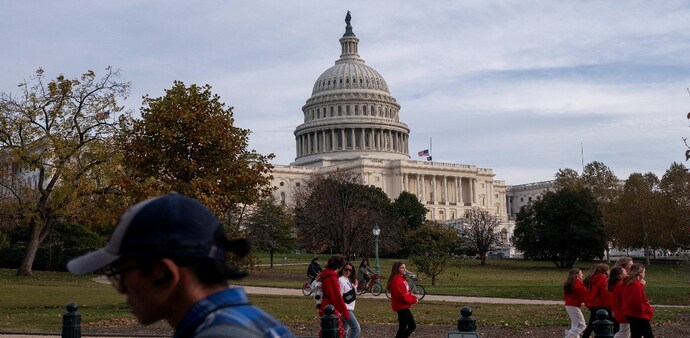
The United States federal government slipped into a partial shutdown early Saturday after a last-minute funding deal cleared the Senate but failed to secure approval from the House of Representatives, which is currently out of session.
The funding lapse began at midnight US eastern time (05:00 GMT), hours after senators agreed to a stopgap measure to fund most federal agencies through September. The bill, however, provides only two weeks of funding for the Department of Homeland Security (DHS), avoiding a full shutdown of the agency that oversees immigration enforcement.
The deal was struck by US President Donald Trump and Senate Democrats after Democrats refused to approve additional funding for immigration enforcement. The standoff followed a politically charged debate triggered by the fatal shooting of two US citizens in Minneapolis by federal agents, further hardening opposition to expanded immigration spending.
With no House vote completed before the deadline, congressionally approved appropriations expired for several major departments, including State, Defense, Financial Services, Homeland Security, Labor, Health and Human Services, Transportation, Education, and Housing and Urban Development, along with their related agencies and programmes.
In anticipation of the shutdown, Office of Management and Budget Director Russell Vought instructed federal agency heads to begin orderly shutdown procedures. In a memo circulated on Friday, Vought said employees “should report to work for their next regularly scheduled tour of duty to undertake orderly shutdown activities.”
The effects of the shutdown have begun to ripple across government operations. The US Embassy in India announced on social media platform X that its account would not be updated regularly during the funding lapse, except for urgent safety and security information, reflecting broader disruptions to federal communications.
Despite the shutdown, Social Security payments will continue without interruption. The Social Security Administration confirmed that benefits including retirement payments, Social Security Disability Insurance (SSDI), and Supplemental Security Income (SSI) are classified as mandatory spending and are not subject to annual appropriations that trigger shutdowns.
“In the event of a lapse in appropriation, SSA will follow the contingency plan for continued activities,” the agency said, assuring beneficiaries that payments would continue even as parts of the federal government remain closed. Multiple expert analyses cited by US media outlets have echoed this assessment.
The duration of the partial shutdown now hinges on when the House reconvenes and whether lawmakers can quickly approve the Senate-passed funding deal or negotiate an alternative compromise.
The United States federal government slipped into a partial shutdown early Saturday after a last-minute funding deal cleared the Senate but failed to secure approval from the House of Representatives, which is currently out of session.
The funding lapse began at midnight US eastern time (05:00 GMT), hours after senators agreed to a stopgap measure to fund most federal agencies through September. The bill, however, provides only two weeks of funding for the Department of Homeland Security (DHS), avoiding a full shutdown of the agency that oversees immigration enforcement.
The deal was struck by US President Donald Trump and Senate Democrats after Democrats refused to approve additional funding for immigration enforcement. The standoff followed a politically charged debate triggered by the fatal shooting of two US citizens in Minneapolis by federal agents, further hardening opposition to expanded immigration spending.
With no House vote completed before the deadline, congressionally approved appropriations expired for several major departments, including State, Defense, Financial Services, Homeland Security, Labor, Health and Human Services, Transportation, Education, and Housing and Urban Development, along with their related agencies and programmes.
In anticipation of the shutdown, Office of Management and Budget Director Russell Vought instructed federal agency heads to begin orderly shutdown procedures. In a memo circulated on Friday, Vought said employees “should report to work for their next regularly scheduled tour of duty to undertake orderly shutdown activities.”
The effects of the shutdown have begun to ripple across government operations. The US Embassy in India announced on social media platform X that its account would not be updated regularly during the funding lapse, except for urgent safety and security information, reflecting broader disruptions to federal communications.
Despite the shutdown, Social Security payments will continue without interruption. The Social Security Administration confirmed that benefits including retirement payments, Social Security Disability Insurance (SSDI), and Supplemental Security Income (SSI) are classified as mandatory spending and are not subject to annual appropriations that trigger shutdowns.
“In the event of a lapse in appropriation, SSA will follow the contingency plan for continued activities,” the agency said, assuring beneficiaries that payments would continue even as parts of the federal government remain closed. Multiple expert analyses cited by US media outlets have echoed this assessment.
The duration of the partial shutdown now hinges on when the House reconvenes and whether lawmakers can quickly approve the Senate-passed funding deal or negotiate an alternative compromise.