
US-Iran war day 4: Full list of airports shut, affected in Middle East as airspace closes
Airlines are rerouting long-haul flights, suspending services and repositioning aircraft to avoid restricted corridors
- Mar 3, 2026,
- Updated Mar 3, 2026 3:12 PM IST
Commercial aviation across the Middle East has been severely disrupted as the ongoing war has led to sweeping airspace closures and the suspension of normal passenger operations at key airports.
While authorities are describing the situation as “suspended” or “halted” commercial operations rather than permanent shutdowns, the practical effect has been the same: scheduled flights have been cancelled in large numbers, and major global transit hubs are operating at a fraction of their capacity.
Below is a full list of major airports effectively shut to normal commercial traffic as of early March 2026:
United Arab Emirates
-
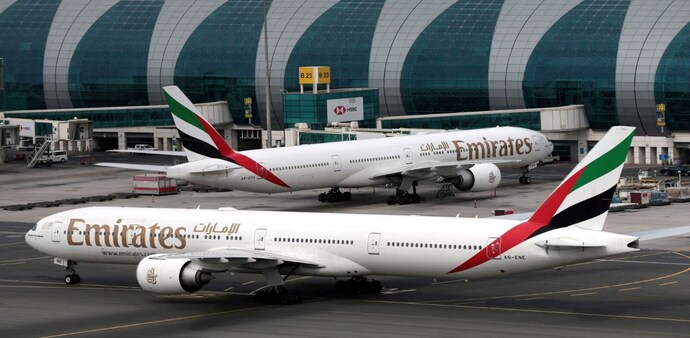
Dubai International Airport (DXB) – Regular commercial flights suspended following strikes and airspace closure. Only limited, exceptional operations permitted.
-
Al Maktoum International Airport (DWC) – Normal commercial operations halted.
-
Zayed International Airport (AUH), Abu Dhabi – Brought close to a standstill, with only very limited flights operating.
Qatar
-
Hamad International Airport (DOH), Doha – Commercial passenger flights suspended for multiple days, effectively closing the airport to routine traffic.
Israel
-
Ben Gurion Airport (TLV), Tel Aviv – Civilian airspace was placed off-limits to many international airlines following the outbreak of strikes.
Advertisement
Kuwait
-
Kuwait International Airport (KWI) – Civilian flights to and from Iran halted; regional airspace instability has severely disrupted hub operations.
Iraq
Following a complete closure of Iraqi airspace to civilian traffic:
-
Baghdad International Airport (BGW)
-
Erbil International Airport (EBL)
Both airports have seen civilian operations suspended due to security concerns.
Jordan
-
Queen Alia International Airport (AMM), Amman – Jordanian authorities announced airspace closure “until further notice,” grounding most scheduled services.
Bahrain
-
Bahrain International Airport (BAH) – Airspace disruption has rendered normal commercial operations largely non-functional.
Iran
Following reciprocal strikes and security restrictions:
-
Imam Khomeini International Airport (IKA), Tehran
-
Mehrabad Airport (THR), Tehran
Both have faced extended closures and severe operational limits.
Airspace closures amplify impact
In several cases, it is not just individual airports but entire national airspaces that have been closed, compounding disruption. Airlines are rerouting long-haul flights, suspending services and repositioning aircraft to avoid restricted corridors.
The situation remains fluid. Governments and airlines continue to review operations daily, but for now, some of the world’s busiest aviation gateways, from Dubai and Doha to Tel Aviv and Baghdad, remain effectively shut to normal commercial passenger traffic.
Commercial aviation across the Middle East has been severely disrupted as the ongoing war has led to sweeping airspace closures and the suspension of normal passenger operations at key airports.
While authorities are describing the situation as “suspended” or “halted” commercial operations rather than permanent shutdowns, the practical effect has been the same: scheduled flights have been cancelled in large numbers, and major global transit hubs are operating at a fraction of their capacity.
Below is a full list of major airports effectively shut to normal commercial traffic as of early March 2026:
United Arab Emirates
-
Dubai International Airport (DXB) – Regular commercial flights suspended following strikes and airspace closure. Only limited, exceptional operations permitted.
-
Al Maktoum International Airport (DWC) – Normal commercial operations halted.
-
Zayed International Airport (AUH), Abu Dhabi – Brought close to a standstill, with only very limited flights operating.
Qatar
-
Hamad International Airport (DOH), Doha – Commercial passenger flights suspended for multiple days, effectively closing the airport to routine traffic.
Israel
-
Ben Gurion Airport (TLV), Tel Aviv – Civilian airspace was placed off-limits to many international airlines following the outbreak of strikes.
Advertisement
Kuwait
-
Kuwait International Airport (KWI) – Civilian flights to and from Iran halted; regional airspace instability has severely disrupted hub operations.
Iraq
Following a complete closure of Iraqi airspace to civilian traffic:
-
Baghdad International Airport (BGW)
-
Erbil International Airport (EBL)
Both airports have seen civilian operations suspended due to security concerns.
Jordan
-
Queen Alia International Airport (AMM), Amman – Jordanian authorities announced airspace closure “until further notice,” grounding most scheduled services.
Bahrain
-
Bahrain International Airport (BAH) – Airspace disruption has rendered normal commercial operations largely non-functional.
Iran
Following reciprocal strikes and security restrictions:
-
Imam Khomeini International Airport (IKA), Tehran
-
Mehrabad Airport (THR), Tehran
Both have faced extended closures and severe operational limits.
Airspace closures amplify impact
In several cases, it is not just individual airports but entire national airspaces that have been closed, compounding disruption. Airlines are rerouting long-haul flights, suspending services and repositioning aircraft to avoid restricted corridors.
The situation remains fluid. Governments and airlines continue to review operations daily, but for now, some of the world’s busiest aviation gateways, from Dubai and Doha to Tel Aviv and Baghdad, remain effectively shut to normal commercial passenger traffic.