
US-led strikes cut Iranian missile launches by 86%, Pentagon reports early success
US Central Command reported a 23 per cent decrease in missile launches within the last 24 hours, alongside a substantial reduction in Iranian drone activity. The Pentagon emphasised that these developments signal marked progress in the early days of the conflict, while cautioning the situation remains volatile.
- Mar 4, 2026,
- Updated Mar 4, 2026 9:25 PM IST
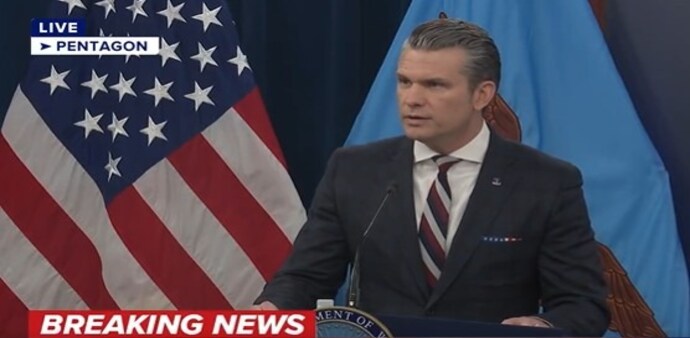
Senior US defence officials stated on Wednesday that Iranian missile launches have dropped by 86 per cent following large-scale American and allied attacks on military targets in Iran. Air Force General Dan Caine, Chairman of the Joint Chiefs of Staff, credited Operation Epic Fury with severely degrading Iran’s capacity to launch attacks, citing direct strikes on ballistic missile sites and naval assets. US Central Command reported a 23 per cent decrease in missile launches within the last 24 hours, alongside a substantial reduction in Iranian drone activity. The Pentagon emphasised that these developments signal marked progress in the early days of the conflict, while cautioning the situation remains volatile.
General Caine outlined the Pentagon’s three-pronged campaign objectives, stating: “First, we are targeting and eliminating Iran’s ballistic missile systems. Second, we are destroying the Iranian Navy. Third, we are ensuring Iran cannot rapidly rebuild or reconstitute its combat capability.” The US military confirmed the destruction of over 20 Iranian naval vessels, including at least one submarine, significantly weakening Iran’s maritime position in the Persian Gulf.
Highlighting a rare naval engagement, General Caine announced: “For the first time since 1945, a United States Navy fast-attack submarine has sunk an enemy combatant ship using a single Mark 48 torpedo.” The statement underscores the escalation of direct US involvement, with American forces now engaging Iranian targets both at sea and within the country’s borders.
US forces are adapting their operational approach, moving from long-range missile barrages to targeted precision strikes inside Iran. “CENTCOM is now shifting from large deliberate strike packages using standoff munitions to stand-in precision strikes over Iran,” Caine said. Pentagon officials describe the campaign as accelerating, with Secretary of War Pete Hegseth adding, “We are accelerating, not decelerating. Iran’s capabilities are evaporating by the hour.”
In the opening days of Operation Epic Fury, US command confirmed the loss of six American service members, naming four and expressing condolences. “To the families of our fallen, we grieve with you today,” Caine said. Defence officials also confirmed active participation from regional allies, with Jordan, Bahrain, Saudi Arabia, the United Arab Emirates, Qatar and Kuwait intercepting drones and missiles aimed at civilian infrastructure.
Despite early battlefield successes, both Caine and Hegseth warned against complacency. “We’re 100 hours in. It’s still very early,” Caine said. “These operations are complex, dangerous, and far from over.” Hegseth added, “First, we are only four days into this. Metrics are shifting, dust is settling, and more forces are arriving. Second, we are only four days into this, and the results have been incredible – historic, really.”
Senior US defence officials stated on Wednesday that Iranian missile launches have dropped by 86 per cent following large-scale American and allied attacks on military targets in Iran. Air Force General Dan Caine, Chairman of the Joint Chiefs of Staff, credited Operation Epic Fury with severely degrading Iran’s capacity to launch attacks, citing direct strikes on ballistic missile sites and naval assets. US Central Command reported a 23 per cent decrease in missile launches within the last 24 hours, alongside a substantial reduction in Iranian drone activity. The Pentagon emphasised that these developments signal marked progress in the early days of the conflict, while cautioning the situation remains volatile.
General Caine outlined the Pentagon’s three-pronged campaign objectives, stating: “First, we are targeting and eliminating Iran’s ballistic missile systems. Second, we are destroying the Iranian Navy. Third, we are ensuring Iran cannot rapidly rebuild or reconstitute its combat capability.” The US military confirmed the destruction of over 20 Iranian naval vessels, including at least one submarine, significantly weakening Iran’s maritime position in the Persian Gulf.
Highlighting a rare naval engagement, General Caine announced: “For the first time since 1945, a United States Navy fast-attack submarine has sunk an enemy combatant ship using a single Mark 48 torpedo.” The statement underscores the escalation of direct US involvement, with American forces now engaging Iranian targets both at sea and within the country’s borders.
US forces are adapting their operational approach, moving from long-range missile barrages to targeted precision strikes inside Iran. “CENTCOM is now shifting from large deliberate strike packages using standoff munitions to stand-in precision strikes over Iran,” Caine said. Pentagon officials describe the campaign as accelerating, with Secretary of War Pete Hegseth adding, “We are accelerating, not decelerating. Iran’s capabilities are evaporating by the hour.”
In the opening days of Operation Epic Fury, US command confirmed the loss of six American service members, naming four and expressing condolences. “To the families of our fallen, we grieve with you today,” Caine said. Defence officials also confirmed active participation from regional allies, with Jordan, Bahrain, Saudi Arabia, the United Arab Emirates, Qatar and Kuwait intercepting drones and missiles aimed at civilian infrastructure.
Despite early battlefield successes, both Caine and Hegseth warned against complacency. “We’re 100 hours in. It’s still very early,” Caine said. “These operations are complex, dangerous, and far from over.” Hegseth added, “First, we are only four days into this. Metrics are shifting, dust is settling, and more forces are arriving. Second, we are only four days into this, and the results have been incredible – historic, really.”