
US preparing to strike Iran in days? Here’s what could erupt if missiles fly
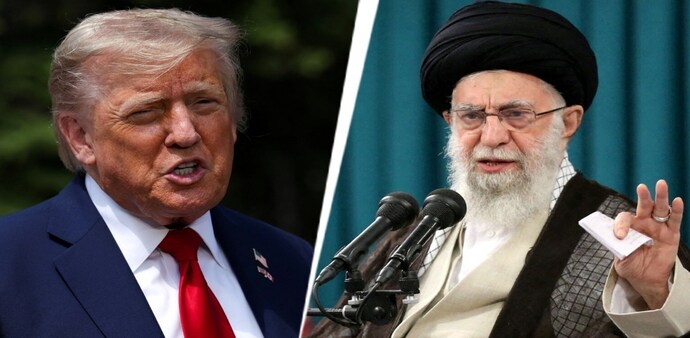
President Donald Trump, when pressed outside the White House, gave no clarity. “I may do it. I may not do it. I mean, nobody knows what I’m going to do,” he said.
- Jun 19, 2025,
- Updated Jun 19, 2025 7:52 AM IST
The U.S. is preparing for a potential military strike on Iran within days, according to a Bloomberg report.
Senior U.S. officials are laying groundwork for a possible strike as early as this weekend, the agency claimed. While plans remain fluid, the mere preparation signals heightened tensions amid Israel’s ongoing campaign against Iran-linked forces.
President Donald Trump, when pressed outside the White House, gave no clarity. “I may do it. I may not do it. I mean, nobody knows what I’m going to do,” he said.
Any strike could provoke immediate retaliation from Iran. Intelligence sources warn that Tehran has already armed its regional proxies and may target U.S. military bases, embassies, or other assets, especially in Iraq.
Iranian officials have vowed “significant and irreversible repercussions” if attacked. The Islamic Republic could also mobilize the Axis of Resistance—a network of allied militias—to launch retaliatory strikes or orchestrate hostage situations.
Beyond direct conflict, U.S. action could ignite a broader regional war. Analysts say Tehran might block the Strait of Hormuz, through which nearly a fifth of global oil supply passes. Iranian-aligned Houthis could resume attacks on shipping lanes in the Red Sea.
Diplomatic experts caution that an airstrike would not eliminate Iran’s nuclear knowledge or ambitions. “It would only strengthen Iran’s resolve to get the bomb,” one warned.
There are also long-term risks to U.S. interests. A military campaign could jeopardize the safety of American personnel abroad and erode U.S. influence in future negotiations, both in the Middle East and elsewhere.
Impact on India
India faces significant risks if the U.S. proceeds with a military strike on Iran, with energy security topping the list. Over 80% of India’s crude oil imports come from West Asia, and any disruption in the region could trigger a spike in global oil prices. Analysts warn Brent crude could soar to $120 per barrel, with every $10 increase potentially adding $12–13 billion to India’s annual import bill.
That would widen the current account deficit by 0.3% of GDP, weaken the rupee, fuel inflation, and ripple across the economy by raising costs in transport, manufacturing, and consumer goods.
Beyond energy, a conflict could cripple India’s strategic trade routes, especially the Chabahar Port in Iran, key to its Central Asia outreach. A shutdown of the Strait of Hormuz or interruptions along the International North-South Transport Corridor would hinder access to Eurasian markets and boost Chinese and Pakistani influence in the region. The crisis could also roil Indian financial markets, trigger capital flight, and increase currency volatility.
U.S. military assets are reportedly being positioned in the region, but whether the White House pulls the trigger is still uncertain.
The U.S. is preparing for a potential military strike on Iran within days, according to a Bloomberg report.
Senior U.S. officials are laying groundwork for a possible strike as early as this weekend, the agency claimed. While plans remain fluid, the mere preparation signals heightened tensions amid Israel’s ongoing campaign against Iran-linked forces.
President Donald Trump, when pressed outside the White House, gave no clarity. “I may do it. I may not do it. I mean, nobody knows what I’m going to do,” he said.
Any strike could provoke immediate retaliation from Iran. Intelligence sources warn that Tehran has already armed its regional proxies and may target U.S. military bases, embassies, or other assets, especially in Iraq.
Iranian officials have vowed “significant and irreversible repercussions” if attacked. The Islamic Republic could also mobilize the Axis of Resistance—a network of allied militias—to launch retaliatory strikes or orchestrate hostage situations.
Beyond direct conflict, U.S. action could ignite a broader regional war. Analysts say Tehran might block the Strait of Hormuz, through which nearly a fifth of global oil supply passes. Iranian-aligned Houthis could resume attacks on shipping lanes in the Red Sea.
Diplomatic experts caution that an airstrike would not eliminate Iran’s nuclear knowledge or ambitions. “It would only strengthen Iran’s resolve to get the bomb,” one warned.
There are also long-term risks to U.S. interests. A military campaign could jeopardize the safety of American personnel abroad and erode U.S. influence in future negotiations, both in the Middle East and elsewhere.
Impact on India
India faces significant risks if the U.S. proceeds with a military strike on Iran, with energy security topping the list. Over 80% of India’s crude oil imports come from West Asia, and any disruption in the region could trigger a spike in global oil prices. Analysts warn Brent crude could soar to $120 per barrel, with every $10 increase potentially adding $12–13 billion to India’s annual import bill.
That would widen the current account deficit by 0.3% of GDP, weaken the rupee, fuel inflation, and ripple across the economy by raising costs in transport, manufacturing, and consumer goods.
Beyond energy, a conflict could cripple India’s strategic trade routes, especially the Chabahar Port in Iran, key to its Central Asia outreach. A shutdown of the Strait of Hormuz or interruptions along the International North-South Transport Corridor would hinder access to Eurasian markets and boost Chinese and Pakistani influence in the region. The crisis could also roil Indian financial markets, trigger capital flight, and increase currency volatility.
U.S. military assets are reportedly being positioned in the region, but whether the White House pulls the trigger is still uncertain.