
$10,000 to $100,000 per person? Trump mulls payment to Greenlanders to secede from Denmark
The White House acknowledged the ongoing deliberations, with press secretary Karoline Leavitt stating that the administration is "looking at what a potential purchase would look like."
- Jan 9, 2026,
- Updated Jan 9, 2026 7:22 AM IST
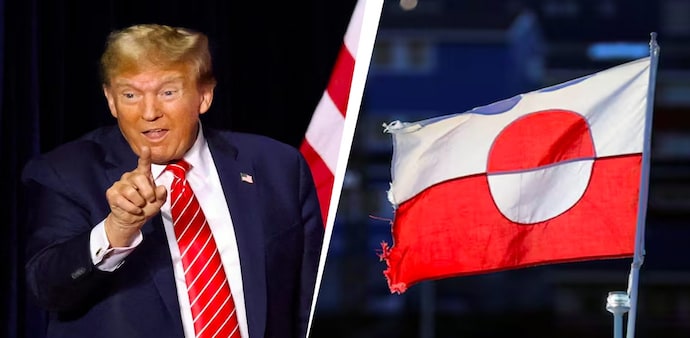
US President Donald Trump and his national security team are actively considering direct payments to residents of Greenland as part of a bid to persuade them to secede from Denmark and potentially join the United States. According to multiple sources familiar with the matter, White House aides have discussed figures between $10,000 and $100,000 per person.
The payments, if approved, could total nearly $6 billion, targeting Greenland’s population of approximately 57,000. The specifics of how such payments would be distributed remain unclear, but the discussions reflect renewed interest in the US attempt to acquire the territory.
The White House acknowledged the ongoing deliberations, with press secretary Karoline Leavitt stating that the administration is "looking at what a potential purchase would look like." Secretary of State Marco Rubio indicated plans to meet his Danish counterpart in Washington to further discuss the matter. Neither the Danish embassy nor Greenland’s representative office in Washington commented on the proposals.
Trump has repeatedly justified his push for Greenland by citing national security and resource concerns. He told reporters, "We need Greenland from the standpoint of national security, and Denmark isn't going to be able to do it. It's so strategic." Greenland is known for its mineral wealth, which the US says is essential for advanced military applications.
Sources suggest that the idea of direct payments is one among several strategies being discussed. Two sources noted that figures discussed range from $10,000 to $100,000 per person. The approach, however, risks being perceived as transactional or degrading by Greenland's population, many of whom are already cautious about independence due to economic uncertainties.
European leaders have strongly rejected the US approach, emphasising that the decision rests solely with Greenland and Denmark. In a joint statement, leaders from France, Germany, Italy, Poland, Spain, Britain, and Denmark declared, "only Greenland and Denmark can decide matters regarding their relations." These remarks come amid concerns about the implications for NATO partners and European unity.
Greenland’s Prime Minister Jens-Frederik Nielsen responded to the proposals, writing, "Enough is enough ... No more fantasies about annexation," on his Facebook page after Trump reiterated his desire to acquire the island.
Internal deliberations about lump sum payments to Greenlanders are not entirely new, but have become more serious following recent US operations abroad. One source said White House aides were eager to carry over the momentum from the Maduro operation toward accomplishing Trump's other long-standing geopolitical goals.
Among the options being considered by the Trump administration is a Compact of Free Association, similar to agreements the US has with island nations like Micronesia and Palau.
US President Donald Trump and his national security team are actively considering direct payments to residents of Greenland as part of a bid to persuade them to secede from Denmark and potentially join the United States. According to multiple sources familiar with the matter, White House aides have discussed figures between $10,000 and $100,000 per person.
The payments, if approved, could total nearly $6 billion, targeting Greenland’s population of approximately 57,000. The specifics of how such payments would be distributed remain unclear, but the discussions reflect renewed interest in the US attempt to acquire the territory.
The White House acknowledged the ongoing deliberations, with press secretary Karoline Leavitt stating that the administration is "looking at what a potential purchase would look like." Secretary of State Marco Rubio indicated plans to meet his Danish counterpart in Washington to further discuss the matter. Neither the Danish embassy nor Greenland’s representative office in Washington commented on the proposals.
Trump has repeatedly justified his push for Greenland by citing national security and resource concerns. He told reporters, "We need Greenland from the standpoint of national security, and Denmark isn't going to be able to do it. It's so strategic." Greenland is known for its mineral wealth, which the US says is essential for advanced military applications.
Sources suggest that the idea of direct payments is one among several strategies being discussed. Two sources noted that figures discussed range from $10,000 to $100,000 per person. The approach, however, risks being perceived as transactional or degrading by Greenland's population, many of whom are already cautious about independence due to economic uncertainties.
European leaders have strongly rejected the US approach, emphasising that the decision rests solely with Greenland and Denmark. In a joint statement, leaders from France, Germany, Italy, Poland, Spain, Britain, and Denmark declared, "only Greenland and Denmark can decide matters regarding their relations." These remarks come amid concerns about the implications for NATO partners and European unity.
Greenland’s Prime Minister Jens-Frederik Nielsen responded to the proposals, writing, "Enough is enough ... No more fantasies about annexation," on his Facebook page after Trump reiterated his desire to acquire the island.
Internal deliberations about lump sum payments to Greenlanders are not entirely new, but have become more serious following recent US operations abroad. One source said White House aides were eager to carry over the momentum from the Maduro operation toward accomplishing Trump's other long-standing geopolitical goals.
Among the options being considered by the Trump administration is a Compact of Free Association, similar to agreements the US has with island nations like Micronesia and Palau.