
Venezuela’s $17 trillion oil reserves: How US control could reshape global power map
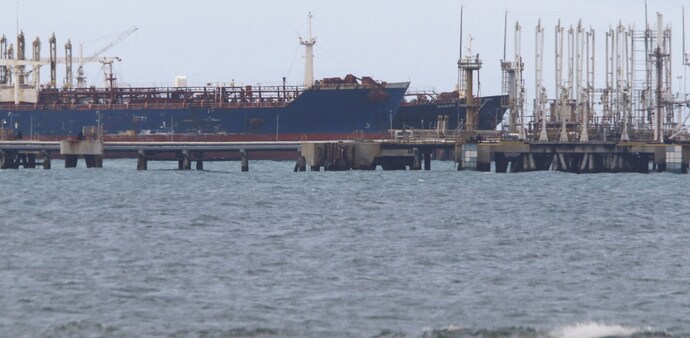
Speaking at a news conference on December 3, President Donald Trump said American oil majors would enter the country, invest billions of dollars to repair what he described as Venezuela’s “badly broken” oil infrastructure, and restart production at scale.
- Jan 4, 2026,
- Updated Jan 4, 2026 12:24 AM IST
In the span of a single night, the geopolitical and economic map of the world may have shifted in ways few had anticipated.
Venezuela, home to the world’s largest proven crude oil reserves — an estimated 303 billion barrels — has suddenly become the focal point of an unprecedented assertion of US power. Following the dramatic US-led operation that resulted in the capture of Venezuelan President Nicolás Maduro and his wife, Cilia Flores, President Donald Trump declared that Washington would be “very strongly involved” in the country’s oil industry, a statement that has sent shockwaves through global energy markets and diplomatic circles alike.
At current prices of roughly $57 per barrel, Venezuela’s oil reserves are valued at approximately $17.3 trillion. Even if sold at half the prevailing market rate, the reserves would still be worth nearly $8.7 trillion — a figure larger than the entire GDP of every country in the world except the United States and China, and nearly four times the size of Japan’s economy.
‘We’re in the oil business’
Speaking at a news conference on December 3, Trump framed the US role in Venezuela as both economic and administrative. He said American oil majors would enter the country, invest billions of dollars to repair what he described as Venezuela’s “badly broken” oil infrastructure, and restart production at scale.
“We’re going to have our very large US oil companies — the biggest anywhere in the world — go in, spend billions of dollars, fix the oil infrastructure, and start making money for the country,” Trump said. “We’re in the oil business. We’re going to sell it to them.”
According to the President, US oil companies would shoulder the upfront costs of rebuilding Venezuela’s oil facilities, with revenues from future oil sales used to reimburse American expenditures. “The money coming out of the ground is very substantial,” he said. “We’re going to get reimbursed for everything that we spend.”
Trump also disclosed that Washington had prepared a second, larger wave of military action if necessary, though he said it ultimately proved unnecessary. He did not rule out the deployment of US troops, stating bluntly: “We’re not afraid of boots on the ground. We’re going to make sure the country is run properly.”
Oil, power and precedent
Venezuela’s oil has long been both its greatest asset and its deepest vulnerability. Despite holding the largest reserves globally, years of sanctions, mismanagement, underinvestment and political turmoil left production at a fraction of its potential. Infrastructure decay and skilled labor flight crippled output, turning what should have been an energy superpower into an economic basket case.
Trump’s comments suggest a dramatic reversal of that trajectory — albeit under US stewardship. He indicated that Venezuela could be administered by the US and a “group” of partners for an extended period, with oil revenues funding governance and reconstruction.
The prospect has reignited debate over sovereignty, intervention and resource control in the 21st century. Critics warn that the move risks reviving memories of past US interventions in Latin America, while supporters argue it reflects a new era of energy geopolitics, where control over critical resources outweighs traditional diplomatic norms.
A new energy order?
If US companies succeed in restoring Venezuela’s oil output, the impact on global energy markets could be profound. An influx of Venezuelan crude could reshape OPEC dynamics, pressure prices, and alter the strategic calculus of major producers such as Saudi Arabia and Russia.
Beyond energy, the scale of the asset now in play is staggering. Trillions of dollars’ worth of oil reserves—greater than the annual economic output of nearly the entire world — have become central to US strategic planning overnight. As Trump put it, “We’re going to get the oil flowing.”
In the span of a single night, the geopolitical and economic map of the world may have shifted in ways few had anticipated.
Venezuela, home to the world’s largest proven crude oil reserves — an estimated 303 billion barrels — has suddenly become the focal point of an unprecedented assertion of US power. Following the dramatic US-led operation that resulted in the capture of Venezuelan President Nicolás Maduro and his wife, Cilia Flores, President Donald Trump declared that Washington would be “very strongly involved” in the country’s oil industry, a statement that has sent shockwaves through global energy markets and diplomatic circles alike.
At current prices of roughly $57 per barrel, Venezuela’s oil reserves are valued at approximately $17.3 trillion. Even if sold at half the prevailing market rate, the reserves would still be worth nearly $8.7 trillion — a figure larger than the entire GDP of every country in the world except the United States and China, and nearly four times the size of Japan’s economy.
‘We’re in the oil business’
Speaking at a news conference on December 3, Trump framed the US role in Venezuela as both economic and administrative. He said American oil majors would enter the country, invest billions of dollars to repair what he described as Venezuela’s “badly broken” oil infrastructure, and restart production at scale.
“We’re going to have our very large US oil companies — the biggest anywhere in the world — go in, spend billions of dollars, fix the oil infrastructure, and start making money for the country,” Trump said. “We’re in the oil business. We’re going to sell it to them.”
According to the President, US oil companies would shoulder the upfront costs of rebuilding Venezuela’s oil facilities, with revenues from future oil sales used to reimburse American expenditures. “The money coming out of the ground is very substantial,” he said. “We’re going to get reimbursed for everything that we spend.”
Trump also disclosed that Washington had prepared a second, larger wave of military action if necessary, though he said it ultimately proved unnecessary. He did not rule out the deployment of US troops, stating bluntly: “We’re not afraid of boots on the ground. We’re going to make sure the country is run properly.”
Oil, power and precedent
Venezuela’s oil has long been both its greatest asset and its deepest vulnerability. Despite holding the largest reserves globally, years of sanctions, mismanagement, underinvestment and political turmoil left production at a fraction of its potential. Infrastructure decay and skilled labor flight crippled output, turning what should have been an energy superpower into an economic basket case.
Trump’s comments suggest a dramatic reversal of that trajectory — albeit under US stewardship. He indicated that Venezuela could be administered by the US and a “group” of partners for an extended period, with oil revenues funding governance and reconstruction.
The prospect has reignited debate over sovereignty, intervention and resource control in the 21st century. Critics warn that the move risks reviving memories of past US interventions in Latin America, while supporters argue it reflects a new era of energy geopolitics, where control over critical resources outweighs traditional diplomatic norms.
A new energy order?
If US companies succeed in restoring Venezuela’s oil output, the impact on global energy markets could be profound. An influx of Venezuelan crude could reshape OPEC dynamics, pressure prices, and alter the strategic calculus of major producers such as Saudi Arabia and Russia.
Beyond energy, the scale of the asset now in play is staggering. Trillions of dollars’ worth of oil reserves—greater than the annual economic output of nearly the entire world — have become central to US strategic planning overnight. As Trump put it, “We’re going to get the oil flowing.”