
‘We owe them answers’: Marco Rubio thanks Pakistan for sending troops to Gaza
Speaking at an end-of-year news conference, Rubio said several political and logistical questions must be addressed before any final decision is taken.
- Dec 20, 2025,
- Updated Dec 20, 2025 8:59 AM IST
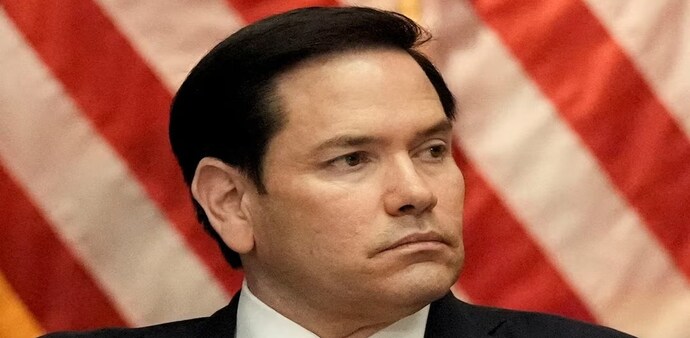
US Secretary of State Marco Rubio has thanked Pakistan for its willingness to consider contributing troops to a future international stabilisation force in Gaza, while cautioning that the plan is still at a preliminary stage.
Speaking at an end-of-year news conference, Rubio said several political and logistical questions must be addressed before any final decision is taken. The proposed force is part of wider international efforts aimed at ending the Israel-Hamas conflict and establishing a new governance framework for Gaza.
Responding to a question on Pakistan’s consent, Rubio said, “We're very grateful to Pakistan for their offer to be a part of it, or at least their offer to consider being a part of it.”
Rubio stressed that consultations with Islamabad and other potential partners are ongoing. Addressing the timeline for finalising troop contributions, he said, “I think we owe them a few more answers before we get there.”
The plan under discussion includes the formation of a governing “Board of Peace” and a Palestinian technocratic administration, which US officials see as prerequisites before finalising the composition and mandate of the stabilisation force.
According to Rubio, “that will allow us to firm up the stabilisation force, including how it's going to be paid for, what the rules of engagement are, what their role will be in demilitarisation,” as reported by the Associated Press.
Rubio also indicated that interest in the force extends beyond Pakistan. “We have a number of nation-states acceptable to all sides in this conflict who are willing to step forward and be a part of that stabilisation force,” he said.
His remarks come amid high-level meetings in Miami, where US officials have been reviewing the Gaza crisis alongside the ongoing Russia-Ukraine conflict, underscoring the breadth of Washington’s foreign policy challenges.
Meanwhile, a Reuters report said Pakistan’s army chief, Asim Munir, is facing pressure over Washington’s request for troop contributions. He is also expected to travel to Washington in the coming weeks for a possible meeting with Trump and the talks are expected to focus on the Gaza deployment.
If it materialises, this would be Munir's third engagement with Donald Trump in 6 months. However, Pakistan’s Foreign Minister Ishaq Dar has drawn a clear line, stating that disarming Hamas “is not our job.”
As per Reuters, several nations remain wary of participating in the stabilisation force, especially if the mandate includes disarming Hamas, as they fear it could draw them deeper into the Israel-Palestine conflict and trigger domestic backlash from pro-Palestinian and anti-Israeli groups.
As diplomatic talks continue, the proposed stabilisation force and the creation of the “Board of Peace” remain central to US plans for Gaza, even as significant political and operational hurdles remain.
US Secretary of State Marco Rubio has thanked Pakistan for its willingness to consider contributing troops to a future international stabilisation force in Gaza, while cautioning that the plan is still at a preliminary stage.
Speaking at an end-of-year news conference, Rubio said several political and logistical questions must be addressed before any final decision is taken. The proposed force is part of wider international efforts aimed at ending the Israel-Hamas conflict and establishing a new governance framework for Gaza.
Responding to a question on Pakistan’s consent, Rubio said, “We're very grateful to Pakistan for their offer to be a part of it, or at least their offer to consider being a part of it.”
Rubio stressed that consultations with Islamabad and other potential partners are ongoing. Addressing the timeline for finalising troop contributions, he said, “I think we owe them a few more answers before we get there.”
The plan under discussion includes the formation of a governing “Board of Peace” and a Palestinian technocratic administration, which US officials see as prerequisites before finalising the composition and mandate of the stabilisation force.
According to Rubio, “that will allow us to firm up the stabilisation force, including how it's going to be paid for, what the rules of engagement are, what their role will be in demilitarisation,” as reported by the Associated Press.
Rubio also indicated that interest in the force extends beyond Pakistan. “We have a number of nation-states acceptable to all sides in this conflict who are willing to step forward and be a part of that stabilisation force,” he said.
His remarks come amid high-level meetings in Miami, where US officials have been reviewing the Gaza crisis alongside the ongoing Russia-Ukraine conflict, underscoring the breadth of Washington’s foreign policy challenges.
Meanwhile, a Reuters report said Pakistan’s army chief, Asim Munir, is facing pressure over Washington’s request for troop contributions. He is also expected to travel to Washington in the coming weeks for a possible meeting with Trump and the talks are expected to focus on the Gaza deployment.
If it materialises, this would be Munir's third engagement with Donald Trump in 6 months. However, Pakistan’s Foreign Minister Ishaq Dar has drawn a clear line, stating that disarming Hamas “is not our job.”
As per Reuters, several nations remain wary of participating in the stabilisation force, especially if the mandate includes disarming Hamas, as they fear it could draw them deeper into the Israel-Palestine conflict and trigger domestic backlash from pro-Palestinian and anti-Israeli groups.
As diplomatic talks continue, the proposed stabilisation force and the creation of the “Board of Peace” remain central to US plans for Gaza, even as significant political and operational hurdles remain.