
White House sends team led by JD Vance to Pak for first round of peace talks with Iran on April 11
Press Secretary Karoline Leavitt confirmed the deployment, telling reporters the delegation would convene in Islamabad for what the White House is calling the opening round of formal negotiations
- Apr 9, 2026,
- Updated Apr 9, 2026 8:02 AM IST
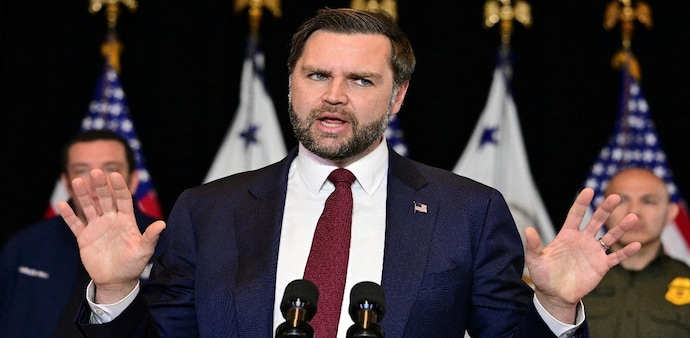
The White House is wasting no time turning a battlefield ceasefire into a diplomatic process. US President Donald Trump is sending a heavyweight negotiating team, led by Vice President JD Vance, to Pakistan this Saturday for the first round of face-to-face talks with Iran.
Press Secretary Karoline Leavitt confirmed the deployment, telling reporters the delegation would convene in Islamabad for what the White House is calling the opening round of formal negotiations.
Who's going and what they're walking into
Vance will be joined by senior Trump advisers Jared Kushner and Steve Witkoff. "The first round of those talks will take place on Saturday morning local time, and we know we look forward to those in-person meetings," Leavitt said.
The announcement marks a deliberate pivot, from military pressure to the negotiating table, even as the White House keeps its public posture firm. Leavitt said US and Israeli strikes that began on February 28 have significantly degraded Iran's ability to supply weapons to its proxy networks across the region. "Iran can no longer distribute weapons to its proxy groups," she said, framing the military campaign as having shifted the balance of power heading into talks.
Hormuz: No tolls, no restrictions
The White House was unambiguous about its opening demand. Leavitt said Trump wants the Strait of Hormuz, which handles roughly 20% of the world's seaborne oil and LNG, fully reopened to tankers and commercial vessels without conditions. "The immediate priority of the president is the reopening of the strait without any limitations, whether in the form of tolls or otherwise," she said.
She noted the US has already observed an increase in vessel movement through the waterway, though uncertainty over security and access persists. When pressed on who currently controls the strait, Leavitt declined to answer directly.
Iran's first proposal: Discarded. Its second: A possible opening
Leavitt did not hold back on Tehran's initial negotiating position. "The Iranians originally put forward a 10-point plan that was fundamentally unserious, unacceptable and completely discarded," she said, adding it was "literally thrown in the garbage by Trump."
A revised Iranian proposal submitted on Tuesday, however, has been received differently. Leavitt suggested the new framework could "align with our own, 15-point proposal" and form the basis for a broader agreement to end the conflict.
She also disclosed that Iran has signalled a potential willingness to hand over enriched uranium, a development that, if confirmed, would represent a significant concession on one of the longest-running sticking points in US-Iran negotiations.
A diplomatic sprint
The Islamabad talks follow a burst of high-level contact. Trump spoke with Israeli Prime Minister Benjamin Netanyahu on Tuesday, and US officials have also been engaging China at senior levels, a sign that Washington is working multiple tracks simultaneously as it pushes toward a durable settlement.
The White House is wasting no time turning a battlefield ceasefire into a diplomatic process. US President Donald Trump is sending a heavyweight negotiating team, led by Vice President JD Vance, to Pakistan this Saturday for the first round of face-to-face talks with Iran.
Press Secretary Karoline Leavitt confirmed the deployment, telling reporters the delegation would convene in Islamabad for what the White House is calling the opening round of formal negotiations.
Who's going and what they're walking into
Vance will be joined by senior Trump advisers Jared Kushner and Steve Witkoff. "The first round of those talks will take place on Saturday morning local time, and we know we look forward to those in-person meetings," Leavitt said.
The announcement marks a deliberate pivot, from military pressure to the negotiating table, even as the White House keeps its public posture firm. Leavitt said US and Israeli strikes that began on February 28 have significantly degraded Iran's ability to supply weapons to its proxy networks across the region. "Iran can no longer distribute weapons to its proxy groups," she said, framing the military campaign as having shifted the balance of power heading into talks.
Hormuz: No tolls, no restrictions
The White House was unambiguous about its opening demand. Leavitt said Trump wants the Strait of Hormuz, which handles roughly 20% of the world's seaborne oil and LNG, fully reopened to tankers and commercial vessels without conditions. "The immediate priority of the president is the reopening of the strait without any limitations, whether in the form of tolls or otherwise," she said.
She noted the US has already observed an increase in vessel movement through the waterway, though uncertainty over security and access persists. When pressed on who currently controls the strait, Leavitt declined to answer directly.
Iran's first proposal: Discarded. Its second: A possible opening
Leavitt did not hold back on Tehran's initial negotiating position. "The Iranians originally put forward a 10-point plan that was fundamentally unserious, unacceptable and completely discarded," she said, adding it was "literally thrown in the garbage by Trump."
A revised Iranian proposal submitted on Tuesday, however, has been received differently. Leavitt suggested the new framework could "align with our own, 15-point proposal" and form the basis for a broader agreement to end the conflict.
She also disclosed that Iran has signalled a potential willingness to hand over enriched uranium, a development that, if confirmed, would represent a significant concession on one of the longest-running sticking points in US-Iran negotiations.
A diplomatic sprint
The Islamabad talks follow a burst of high-level contact. Trump spoke with Israeli Prime Minister Benjamin Netanyahu on Tuesday, and US officials have also been engaging China at senior levels, a sign that Washington is working multiple tracks simultaneously as it pushes toward a durable settlement.