
‘13-16% cost disadvantage’: EV start-ups Ather Energy, Euler Motors slam Auto PLI scheme
New-age EV makers say Auto PLI scheme is creating an unintended imbalance that could sound a death knell for start-ups.
- Apr 30, 2026,
- Updated Apr 30, 2026 6:46 PM IST
Electric scooter maker Ather Energy and commercial electric vehicle manufacturer Euler Motors on Thursday lashed out at the government’s ₹25,938 crore Auto PLI (production-linked incentive) scheme for ignoring new-age players.
When the Auto PLI scheme was first introduced, it set a revenue threshold, allowing eligibility for automakers whose global group revenues exceeded ₹10,000 crore. This led to large corporations cornering most PLI benefits while new-age companies were left out.
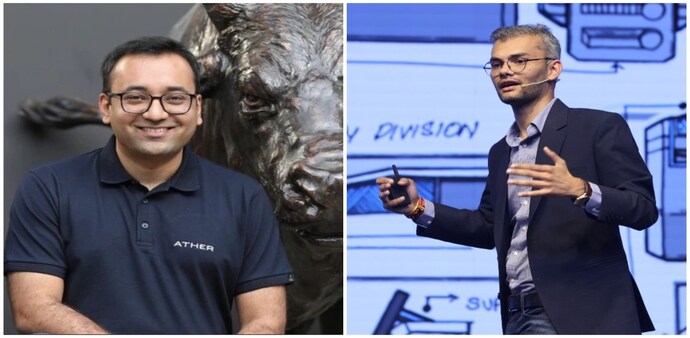
In a post on social media platform X, Ather Energy co-founder and CEO Tarun Mehta said the Auto PLI scheme places emerging EV manufacturers at a 13-16% cost disadvantage.
“An EV policy architecture that defines champions primarily through legacy scale, not even scale within the EV industry, can create an unintended imbalance,” warned Mehta, calling for a calibration of the Auto PLI scheme.
In a separate LinkedIn post, Saurav Kumar, Founder and CEO of Euler Motors, said the current PLI scheme is forcing startups to operate at a structural cost disadvantage of 13-16% compared to traditional OEMs in the same cities. “This 13-16% could mean life or death for a startup,” Kumar warned.
Both Ather Energy and Euler Motors are backed by Hero MotoCorp, India’s biggest two-wheeler maker by volume.
These comments come days after foreign brokerage Bernstein called for an end of the PLI Auto scheme, stating that cash-rich auto original equipment makers (OEMs) are purchasing battery packs and cells from China instead of investing in it.
Earlier in 2026, the Department-Related Parliamentary Standing Committee on Industry recommended the government to address eligibility thresholds bottlenecks that may exclude domestic startup from participating in the PLI Auto scheme.
“Many of these startups invested early in product, software, power electronics, and localisation, often without the cushion of legacy scale. In doing so, they have pushed the boundaries and pulled in the competition to together build a competitive but a very vibrant and dynamic EV market,” said Ather’s Mehta.
In many markets it is the new-age EV companies that are industry leaders in not just innovation and tech, but in absolute volumes and market shares, he added.
“In this train of EV industry if legacy businesses are the bogeys, startups and new-age companies are the engine. You cannot take the engine out of the equation and hope for the bogeys to move forward themselves,” explained Mehta.
Agreeing with Mehta, Kumar said, “If India's ambition is to build global EV champions, policy frameworks must recognise not just those who scaled the past, but also those actively building the future”, adding that the 13-16% cost disadvantage can distort competition in segments where startups are driving innovation and adoption.
As of December 2025, the cumulative investment under the PLI Auto scheme stands at Rs 39,081 crore against a five-year projection of Rs 42,500 crore, while incremental sales amount to only Rs 41,121 crore against a target of Rs 2,31,500 crore and employment generated is 61,241 persons against a projection of 1,48,147.
“While the Auto PLI scheme would have played an important role in catalysing investments, its current structure risks prioritising past scale over future capability,” said Kumar.
“This creates a gap where several electric-first companies, which are investing deeply in innovation, localisation, and new product categories, remain outside its ambit despite contributing meaningfully to the ecosystem,” he added.
Electric scooter maker Ather Energy and commercial electric vehicle manufacturer Euler Motors on Thursday lashed out at the government’s ₹25,938 crore Auto PLI (production-linked incentive) scheme for ignoring new-age players.
When the Auto PLI scheme was first introduced, it set a revenue threshold, allowing eligibility for automakers whose global group revenues exceeded ₹10,000 crore. This led to large corporations cornering most PLI benefits while new-age companies were left out.
In a post on social media platform X, Ather Energy co-founder and CEO Tarun Mehta said the Auto PLI scheme places emerging EV manufacturers at a 13-16% cost disadvantage.
“An EV policy architecture that defines champions primarily through legacy scale, not even scale within the EV industry, can create an unintended imbalance,” warned Mehta, calling for a calibration of the Auto PLI scheme.
In a separate LinkedIn post, Saurav Kumar, Founder and CEO of Euler Motors, said the current PLI scheme is forcing startups to operate at a structural cost disadvantage of 13-16% compared to traditional OEMs in the same cities. “This 13-16% could mean life or death for a startup,” Kumar warned.
Both Ather Energy and Euler Motors are backed by Hero MotoCorp, India’s biggest two-wheeler maker by volume.
These comments come days after foreign brokerage Bernstein called for an end of the PLI Auto scheme, stating that cash-rich auto original equipment makers (OEMs) are purchasing battery packs and cells from China instead of investing in it.
Earlier in 2026, the Department-Related Parliamentary Standing Committee on Industry recommended the government to address eligibility thresholds bottlenecks that may exclude domestic startup from participating in the PLI Auto scheme.
“Many of these startups invested early in product, software, power electronics, and localisation, often without the cushion of legacy scale. In doing so, they have pushed the boundaries and pulled in the competition to together build a competitive but a very vibrant and dynamic EV market,” said Ather’s Mehta.
In many markets it is the new-age EV companies that are industry leaders in not just innovation and tech, but in absolute volumes and market shares, he added.
“In this train of EV industry if legacy businesses are the bogeys, startups and new-age companies are the engine. You cannot take the engine out of the equation and hope for the bogeys to move forward themselves,” explained Mehta.
Agreeing with Mehta, Kumar said, “If India's ambition is to build global EV champions, policy frameworks must recognise not just those who scaled the past, but also those actively building the future”, adding that the 13-16% cost disadvantage can distort competition in segments where startups are driving innovation and adoption.
As of December 2025, the cumulative investment under the PLI Auto scheme stands at Rs 39,081 crore against a five-year projection of Rs 42,500 crore, while incremental sales amount to only Rs 41,121 crore against a target of Rs 2,31,500 crore and employment generated is 61,241 persons against a projection of 1,48,147.
“While the Auto PLI scheme would have played an important role in catalysing investments, its current structure risks prioritising past scale over future capability,” said Kumar.
“This creates a gap where several electric-first companies, which are investing deeply in innovation, localisation, and new product categories, remain outside its ambit despite contributing meaningfully to the ecosystem,” he added.