
Bentley’s first EV is coming to India: What we know about the Torcal’s 2027 launch
The British luxury carmaker sees growth potential in India but has ruled out local manufacturing or assembly, continuing with imports from Crewe.
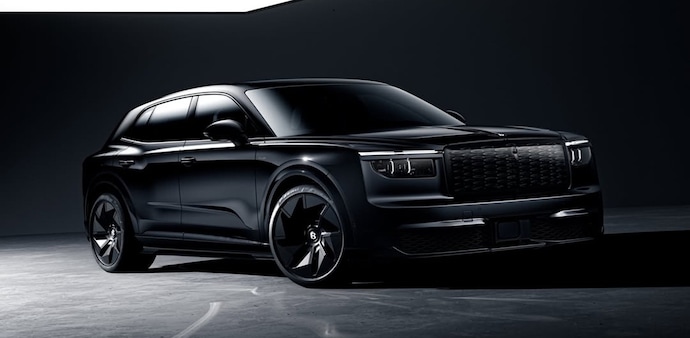
- Nov 25, 2026,
- Updated Nov 25, 2026 3:55 PM IST
British luxury carmaker Bentley Motors will introduce its first fully electric vehicle, the Torcal, in India during the second half of 2027, even as it has ruled out local manufacturing or assembly in the country. The company said all Bentley vehicles will continue to be imported from its headquarters in Crewe, England.
Bentley Chairman and Chief Executive Officer Frank-Steffen Walliser said India is expected to be among the company’s highest-growth markets, supported by the India-UK Free Trade Agreement (FTA), which he said offers greater predictability and growth opportunities.
“India will be among our highest-growth markets,” Walliser said in an interview with PTI. The company views the country as an increasingly important market as luxury-car buyers gradually move towards electrification.
The Torcal, Bentley’s first all-electric SUV, is expected to begin production in mid-2027, with initial supplies planned for markets including the UK, Europe and the United States before its India launch later that year.
MUST READ: Good news for Bentley buyers in India! Bentayga and Bentayga EWB to get cheaper with India-UK FTA
No local manufacturing plans
Despite India’s growing luxury vehicle market and the possibility of lower tariffs under the India-UK FTA, Bentley has decided against setting up a manufacturing or assembly facility in the country. Walliser said the company would not consider local production irrespective of the prevailing tariff structure.
“Bentley cars require complex engineering, craftsmanship and specialised skills, so manufacturing locally in India is not commercially viable for the company,” Walliser said. “Another reason is that customers want British-origin Bentley cars.”
The decision means Bentley will retain its fully imported, built-to-order model in India. All vehicles will continue to be shipped from Crewe, where the marque’s vehicles are handcrafted.
EV strategy for India
The launch of the Torcal will mark Bentley’s entry into India’s fully electric luxury segment. The company said the move aligns with its broader electrification plans and its effort to tap demand from affluent Indian customers seeking high-performance, low-emission vehicles.
While Bentley did not disclose the Torcal’s India specifications, pricing or delivery timeline, its planned second-half 2027 launch suggests the model will reach Indian showrooms within months of production beginning overseas.
DON'T MISS: Planning to buy a car? From hatchbacks to luxury cars prices may rise from December 1. Details here
What it means for buyers
For Indian customers, the Torcal is likely to be positioned as a premium electric SUV with Bentley’s signature luxury, craftsmanship and performance credentials. However, imported status could keep the vehicle’s on-road price high, given customs duties and luxury taxes on fully built imported cars.
Bentley’s decision also signals that the company sees sufficient demand in India to justify bringing its first EV to the market, but not enough scale—or commercial rationale—to localise production.
(With agency inputs)