
BMW X1 LWB review: More space, more comfort, but is it still a driver’s BMW?
BMW X1 LWB review: Priced at ₹49.90 lakh (ex-showroom), the BMW X1 LWB is actually ₹1 lakh cheaper than the standard-wheelbase X1 petrol.
Chetan Bhutani
- Aug 25, 2026,
- Updated Aug 25, 2026 12:51 PM IST
For years, the BMW X1 has been the obvious entry point into the BMW experience. It offered the badge, premium cabin, practical dimensions and enough versatility to work as an everyday family car, without making buyers stretch too far into luxury-car territory. The new X1 Long Wheelbase changes that formula in one important way: it gives the rear seat considerably more attention.
Advertisement
Priced at ₹49.90 lakh (ex-showroom), the BMW X1 LWB is actually ₹1 lakh cheaper than the standard-wheelbase X1 petrol. That makes the proposition rather interesting. You get a longer, more spacious SUV, a more powerful petrol engine and M Sport styling as standard, while retaining most of what has made the X1 popular in the first place.
The biggest change is, of course, the stretch. The X1 LWB is 116 mm longer overall, with 108mm added to the wheelbase. Most of that extra metal has been put to good use in the rear cabin. The longer rear doors and larger glass area do not make the SUV look awkward or stretched. In fact, from the side, the proportions look quite natural, with the additional length giving the X1 a slightly more substantial stance.
Advertisement
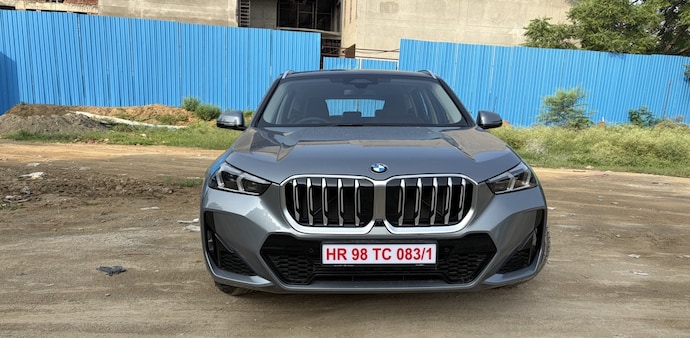
The rest of the exterior is familiar territory. The sculpted headlamps, kidney grille, C-shaped tail-lamps and 18-inch alloy wheels are carried over from the standard X1. Chrome window surrounds are the main visual differentiator, although buyers can opt for a shadow package if they prefer a darker look.
Inside, BMW has largely left a good thing alone. The X1's cabin continues to look modern without becoming unnecessarily complicated. The curved display combines a 10.25-inch digital instrument cluster with a 10.7-inch touchscreen, while the floating centre console and upright wireless charging pad add some character to what is otherwise a minimalist dashboard.
Advertisement
MUST READ | Ather’s ₹1 lakh gamble: Its cheapest scooter yet could shake up the EV market
The quality is generally good where it matters most, with nicely finished surfaces and a chunky, leather-wrapped M Sport steering wheel that feels particularly good in hand. But this is still an entry-level BMW, and some of the cost-cutting is visible. The lower portions of the cabin use harder plastics, the USB ports are not backlit and the ambient lighting lacks the richness seen in some rivals.
There are also a few surprising omissions. The X1 LWB does not get ventilated front seats, a head-up display or rear window blinds. The rear gets only one USB-C port, while even the iX1 offers two. None of these omissions is catastrophic, but together they make the equipment list feel slightly less generous than you would expect at nearly ₹50 lakh.
Then you get into the back seat, and the whole point of the X1 LWB becomes obvious.
BMW claims 109 mm of additional knee room, and this is not one of those numbers that needs a tape measure to appreciate. The difference is immediately noticeable. Even with the front seats pushed well back, rear passengers have plenty of room to stretch out. The seat itself has been redesigned with softer cushioning and a 15 mm longer seat base, giving better thigh support. The backrest can also recline slightly.
Advertisement
DON'T MISS | From ₹8.49 lakh: India’s hottest 7-seaters reveal what family buyers really want
For two passengers, the rear seat is genuinely comfortable. The wide-opening doors make access easier and the huge fixed panoramic glass roof adds to the sense of space. The centre seat, however, remains compromised by the floor hump and limited legroom. So while this is a very good four-seater, it is not quite a limousine-style five-seater.
The practicality story is strong elsewhere too. The powered tailgate opens to a 540-litre boot, while the 40:20:40 split rear seat is more useful than the conventional 60:40 arrangement. With the seats folded, capacity increases to 1,700 litres, and BMW has sensibly retained a space-saver spare wheel.
The technology package is largely impressive. BMW's latest OS 9 makes the touchscreen smoother and more responsive, although the sheer number of functions and the integration of climate controls into the screen can make the interface feel busy while driving. The 360-degree camera is sharp and the Reversing Assistant is genuinely useful. It remembers the last 50 metres of your route and can retrace that path automatically, which sounds gimmicky until you find yourself trying to get out of a particularly tight parking space.
Advertisement
The 12-speaker Harman Kardon system is another highlight. It produces clean vocals, controlled bass and a convincing soundstage. The speaker grilles themselves, though, do not quite look as premium as the rest of the package.
MUST READ | Forget petrol bikes: Honda’s futuristic Outlier EV hints at a radical two-wheeler future
Under the bonnet is a 1.5-litre petrol engine producing 156hp and 230Nm, up from 136 hp in the standard-wheelbase petrol X1. Power goes exclusively to the front wheels through a seven-speed dual-clutch gearbox.
And this is where the X1 LWB feels less convincing. There is enough performance for city driving and relaxed cruising, but the additional power does not turn the car into the sporty BMW you might expect from the badge. Push harder and there is a noticeable pause before the engine responds, followed by a fairly uninspiring engine note. Overtaking at higher speeds requires a little more planning than you would expect from a luxury SUV.
That is not necessarily a deal-breaker, because the X1 LWB is clearly designed around its rear-seat experience. For owners who will spend most of their time being driven, the relatively subdued engine character may actually be a positive. At an easy pace, the engine is reasonably well contained and the cabin remains comfortable.
Advertisement
The ride quality is similarly tuned more towards comfort than outright driver involvement. On good roads, the X1 feels planted and composed. On broken surfaces and sharper potholes, however, the suspension's tautness becomes more apparent and there is a degree of harshness.
That positioning also makes the X1 LWB an interesting rival to the Mercedes-Benz GLA and Audi Q3. Both have been around for some time without significant updates, while BMW now offers an unusually broad X1 family with standard-wheelbase, long-wheelbase and electric versions. The LWB format also plays directly into what Indian luxury-car buyers increasingly seem to want: more space and comfort in the back without moving into a much larger and more expensive vehicle.
So, is the BMW X1 LWB worth choosing over the standard X1?
If driving enjoyment is your primary concern, the answer is less straightforward. The standard X1 retains more of the compact, driver-focused character that traditionally defined the nameplate. But if the car is going to double as a family SUV, chauffeur-driven car and daily luxury vehicle, the LWB makes a much stronger case.
The extra wheelbase is not a marketing exercise. You can feel it every time you sit in the back. Add the improved rear seat, panoramic roof, strong equipment list, practical boot and slightly more powerful engine, and the X1 LWB becomes a very well-rounded package.
It may not be the most exciting BMW to drive, but that is arguably missing the point. The X1 LWB is about making the entry-level BMW experience more comfortable and more relevant to Indian buyers. And on that count, BMW has got the formula largely right.
For years, the BMW X1 has been the obvious entry point into the BMW experience. It offered the badge, premium cabin, practical dimensions and enough versatility to work as an everyday family car, without making buyers stretch too far into luxury-car territory. The new X1 Long Wheelbase changes that formula in one important way: it gives the rear seat considerably more attention.
Advertisement
Priced at ₹49.90 lakh (ex-showroom), the BMW X1 LWB is actually ₹1 lakh cheaper than the standard-wheelbase X1 petrol. That makes the proposition rather interesting. You get a longer, more spacious SUV, a more powerful petrol engine and M Sport styling as standard, while retaining most of what has made the X1 popular in the first place.
The biggest change is, of course, the stretch. The X1 LWB is 116 mm longer overall, with 108mm added to the wheelbase. Most of that extra metal has been put to good use in the rear cabin. The longer rear doors and larger glass area do not make the SUV look awkward or stretched. In fact, from the side, the proportions look quite natural, with the additional length giving the X1 a slightly more substantial stance.
Advertisement
The rest of the exterior is familiar territory. The sculpted headlamps, kidney grille, C-shaped tail-lamps and 18-inch alloy wheels are carried over from the standard X1. Chrome window surrounds are the main visual differentiator, although buyers can opt for a shadow package if they prefer a darker look.
Inside, BMW has largely left a good thing alone. The X1's cabin continues to look modern without becoming unnecessarily complicated. The curved display combines a 10.25-inch digital instrument cluster with a 10.7-inch touchscreen, while the floating centre console and upright wireless charging pad add some character to what is otherwise a minimalist dashboard.
Advertisement
MUST READ | Ather’s ₹1 lakh gamble: Its cheapest scooter yet could shake up the EV market
The quality is generally good where it matters most, with nicely finished surfaces and a chunky, leather-wrapped M Sport steering wheel that feels particularly good in hand. But this is still an entry-level BMW, and some of the cost-cutting is visible. The lower portions of the cabin use harder plastics, the USB ports are not backlit and the ambient lighting lacks the richness seen in some rivals.
There are also a few surprising omissions. The X1 LWB does not get ventilated front seats, a head-up display or rear window blinds. The rear gets only one USB-C port, while even the iX1 offers two. None of these omissions is catastrophic, but together they make the equipment list feel slightly less generous than you would expect at nearly ₹50 lakh.
Then you get into the back seat, and the whole point of the X1 LWB becomes obvious.
BMW claims 109 mm of additional knee room, and this is not one of those numbers that needs a tape measure to appreciate. The difference is immediately noticeable. Even with the front seats pushed well back, rear passengers have plenty of room to stretch out. The seat itself has been redesigned with softer cushioning and a 15 mm longer seat base, giving better thigh support. The backrest can also recline slightly.
Advertisement
DON'T MISS | From ₹8.49 lakh: India’s hottest 7-seaters reveal what family buyers really want
For two passengers, the rear seat is genuinely comfortable. The wide-opening doors make access easier and the huge fixed panoramic glass roof adds to the sense of space. The centre seat, however, remains compromised by the floor hump and limited legroom. So while this is a very good four-seater, it is not quite a limousine-style five-seater.
The practicality story is strong elsewhere too. The powered tailgate opens to a 540-litre boot, while the 40:20:40 split rear seat is more useful than the conventional 60:40 arrangement. With the seats folded, capacity increases to 1,700 litres, and BMW has sensibly retained a space-saver spare wheel.
The technology package is largely impressive. BMW's latest OS 9 makes the touchscreen smoother and more responsive, although the sheer number of functions and the integration of climate controls into the screen can make the interface feel busy while driving. The 360-degree camera is sharp and the Reversing Assistant is genuinely useful. It remembers the last 50 metres of your route and can retrace that path automatically, which sounds gimmicky until you find yourself trying to get out of a particularly tight parking space.
Advertisement
The 12-speaker Harman Kardon system is another highlight. It produces clean vocals, controlled bass and a convincing soundstage. The speaker grilles themselves, though, do not quite look as premium as the rest of the package.
MUST READ | Forget petrol bikes: Honda’s futuristic Outlier EV hints at a radical two-wheeler future
Under the bonnet is a 1.5-litre petrol engine producing 156hp and 230Nm, up from 136 hp in the standard-wheelbase petrol X1. Power goes exclusively to the front wheels through a seven-speed dual-clutch gearbox.
And this is where the X1 LWB feels less convincing. There is enough performance for city driving and relaxed cruising, but the additional power does not turn the car into the sporty BMW you might expect from the badge. Push harder and there is a noticeable pause before the engine responds, followed by a fairly uninspiring engine note. Overtaking at higher speeds requires a little more planning than you would expect from a luxury SUV.
That is not necessarily a deal-breaker, because the X1 LWB is clearly designed around its rear-seat experience. For owners who will spend most of their time being driven, the relatively subdued engine character may actually be a positive. At an easy pace, the engine is reasonably well contained and the cabin remains comfortable.
Advertisement
The ride quality is similarly tuned more towards comfort than outright driver involvement. On good roads, the X1 feels planted and composed. On broken surfaces and sharper potholes, however, the suspension's tautness becomes more apparent and there is a degree of harshness.
That positioning also makes the X1 LWB an interesting rival to the Mercedes-Benz GLA and Audi Q3. Both have been around for some time without significant updates, while BMW now offers an unusually broad X1 family with standard-wheelbase, long-wheelbase and electric versions. The LWB format also plays directly into what Indian luxury-car buyers increasingly seem to want: more space and comfort in the back without moving into a much larger and more expensive vehicle.
So, is the BMW X1 LWB worth choosing over the standard X1?
If driving enjoyment is your primary concern, the answer is less straightforward. The standard X1 retains more of the compact, driver-focused character that traditionally defined the nameplate. But if the car is going to double as a family SUV, chauffeur-driven car and daily luxury vehicle, the LWB makes a much stronger case.
The extra wheelbase is not a marketing exercise. You can feel it every time you sit in the back. Add the improved rear seat, panoramic roof, strong equipment list, practical boot and slightly more powerful engine, and the X1 LWB becomes a very well-rounded package.
It may not be the most exciting BMW to drive, but that is arguably missing the point. The X1 LWB is about making the entry-level BMW experience more comfortable and more relevant to Indian buyers. And on that count, BMW has got the formula largely right.
Read more!