
BT BIG STORY: Why there are few takers for ‘game-changing’ CNG motorcycles
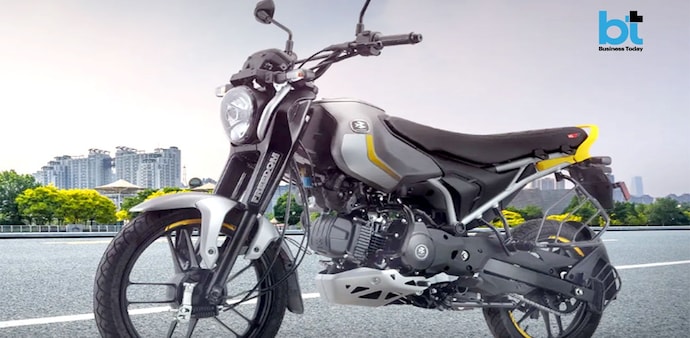
Sales of Bajaj Auto’s Freedom 125, the only commercially available CNG motorcycle in India, have plunged amid limited fuel savings, refuelling hassles and inadequate infrastructure. The challenges raise questions about the future of CNG as an alternative fuel for two-wheelers.
Karan Dhar
- Nov 27, 2026,
- Updated Nov 27, 2026 6:00 AM IST
When Bajaj Auto launched the world’s first CNG motorcycle ‘Freedom 125’ in July 2024, the company’s managing director Rajiv Bajaj called it a “game-changing product”. The Pune-based automaker was already the market leader in CNG-powered autorickshaws. After seeing its rapid adoption in passenger vehicles, where every fourth car sold is powered by CNG, Bajaj wanted to replicate the success of its CNG three-wheelers in the two-wheeler category.
Advertisement
“We are at the right place at the right time with the right product,” Bajaj said at the launch, deriding electric vehicles for surviving on “paradoxically unsustainable subsidies”.
But customers in the world’s biggest two-wheeler market weren’t ready to wait in long queues just to fill a CNG tank.
Bajaj Auto's CNG motorcycle sales declined 61.9% year-on-year to 14,435 units in January-October 2026, compared with 37,873 units in the corresponding period last year, according to VAHAN vehicle registration data. Sales declined every month of 2026 compared with the corresponding month last year. October recorded the steepest decline, at 69.3% (see graphic). As a result, the penetration of CNG-powered two-wheelers fell from 0.12% in October 2025 to 0.05% in October 2026.
Advertisement
One of the biggest reasons for the failure of the CNG powertrain in two-wheelers has been the lack of a cost advantage, say experts. The base model of Bajaj Freedom 125 costs roughly Rs 1.04 lakh (ex-showroom Delhi) and goes up to Rs 1.19 lakh for the top trim.
“The cost arbitrage is not really compelling for people to switch to CNG. If you look at entry-level petrol motorcycles (Hero Splendor, which costs roughly Rs 75,000 ex-showroom), they also give very good mileage,” says Hemal Thakkar, Director, Crisil Intelligence. The difference in acquisition cost is not lucrative enough for buyers to switch to CNG for better cost economics, he adds.
In two-wheelers, the CNG tank is much smaller with a capacity of 2 kilograms. “It doesn’t make sense for two-wheeler customers to stand in a queue at a CNG station for such a small tank,” says Puneet Gupta, Director, India & ASEAN Automotive Market, Mobility Global.
Advertisement
Rising CNG prices have also dissuaded potential customers from opting for CNG-powered motorbikes.
MUST READ: Buying the new Toyota Innova HyCross Hybrid? Watch out for the 80-kmph cap
A kilogram of CNG costs roughly Rs 87 in Delhi as against Rs 102.12 per litre for petrol.
“The pricing of CNG is not cheap. There is not much difference. If the CNG price had stayed around Rs 60 per kg, this could have worked. But unfortunately, CNG prices have gone up to nearly Rs 90 per kg,” Gupta says.
Despite the growing adoption of CNG-powered cars in India, replicating the same success in the two-wheeler segment has proven challenging, given the limitations around fuel savings, vehicle utility and refuelling infrastructure.
For motorcycles, the relatively high fuel efficiency offered by petrol-powered models leaves little room for CNG to make a compelling economic case. “The mileage from petrol is so compelling in motorcycles that the differential CNG mileage is very minuscule,” says Crisil’s Thakkar, adding, “The delta will not sway the customer to move to CNG”.
Scooters, on the other hand, could have presented a stronger case for CNG adoption, given their relatively lower mileage compared with motorcycles. However, packaging a CNG cylinder could come at the cost of under-seat storage space, which is an important utility feature for scooter buyers. The segment also faces competition from electric scooters, which offer a more favourable total cost of ownership (TCO).
Advertisement
“In case of scooters, there could have been merit because the mileage is relatively lower as compared to motorcycles, but I see two challenges: electrification TCO is far better and in case of CNG in scooters, the boot space will be completely compromised. From that perspective, it is not very lucrative for a customer to move to CNG,” he explains.
The inconvenience associated with refuelling could pose another hurdle. Unlike petrol pumps, where two-wheelers often have dedicated dispensing points, CNG stations typically cater to two-wheelers, passenger cars and commercial vehicles through the same infrastructure. This can result in longer waiting times for two-wheeler users.
ALSO READ: Maruti Ignis returns as an EV: 26kWh battery, 90 bhp motor and a surprise for Indian buyers
The growing penetration of CNG-powered cars has further added to the pressure on the existing infrastructure, making refuelling an increasingly time-consuming experience.
“When you go to a fuel station and see someone filling petrol in a two-wheeler, it is very quick. There are at least two or three separate bunkers for two-wheelers. In the case of CNG, there are no separate bunkers for two-wheelers. It is same for two-wheelers, cars and commercial vehicles. That is also a big challenge. When you go to a fuel station, there is a lot of line for CNG, and now with the high penetration in cars, it has become even more painful,” explains Thakkar.
Advertisement
For scooters, the challenge is also rooted in their intended usage. Typically used for shorter commutes and utility-oriented purposes, scooters derive much of their appeal from convenience and storage capacity, making buyers potentially less willing to compromise on boot space.
“Scooters are generally used for shorter drives and for utility. From that perspective, the customer may not be keen on compromising boot space,” he adds.
Moreover, mileage conscious customers are shifting to electric vehicles. The penetration of EVs in two-wheelers rose from 5% in October 2025 to 10% in October 2026. However, most of it has been driven by scooters. About 60% of India’s two-wheeler sales came from motorcycles in FY26, 37% from scooters and the rest from mopeds.
Other than Bajaj Auto, no two-wheeler maker has launched a CNG-powered vehicle. TVS Motor Company had showcased its CNG-powered scooter, the TVS Jupiter CNG, at the Bharat Mobility Global Expo 2025.
But Gupta of Mobility Global is sceptical of any new launches.
“Companies have invested in this technology because CNG in cars has been doing good. That doesn’t mean it is a good solution for two-wheelers,” says Gupta. “There is no tax benefit when a customer buys a CNG vehicle compared with EVs which attract only 5% tax along with registration fee waiver in several states,” he adds.
Advertisement
ALSO READ: Maruti Ignis returns as an EV: 26kWh battery, 90 bhp motor and a surprise for Indian buyers
The introduction of E85 fuel could further limit availability of additional CNG bunkers for two-wheelers at fuel pumps.
E85, a fuel blend containing 85% ethanol and 15% petrol, is currently available at select fuel stations in Delhi at around Rs 82 per litre. The petroleum ministry is targeting E85 fuel availability at 500 pumps by December 2026, and at 5,000 outlets across major ciies by the end of next year.
India’s largest two-wheeler manufacturer by volume, Hero MotoCorp, clocked sales of over 6,000 flex-fuel motorcycles in the first 24 days of November, according to VAHAN. The Gurugram-based automaker had launched HF Deluxe Flex Fuel and Splendor Plus Flex Fuel, capable of running on E85 fuel, in June 2026.
Bajaj Auto chief financial officer Dinesh Thapar had earlier told Business Today that the company has no plans to pull the plug on Freedom 125. "Some of these new innovative disruptions take time to land... We are very much going to stay the course on it," he said in November last year. A query sent to Bajaj Auto remained unanswered at the time of publishing.
But Crisil’s Thakkar says it is too early to talk about the success of flex-fuel vehicles.
“When CNG motorcycle (Freedom) was launched in 2024, monthly volumes were good initially. Then we saw that going down,” says Thakkar.
DON'T MISS: Six airbags from ₹3.70 lakh: India's most affordable picks
Read more!