
BT Explainer: What India can learn from Brazil’s successful flex-fuel car market
About 90% of all new cars sold in Brazil, one of the world’s earliest adopters of ethanol, are flex-fuel vehicles.
- Jun 18, 2026,
- Updated Jun 18, 2026 6:12 PM IST
Indian policymakers often cite the example of Brazil to back the country’s ambitious ethanol blending programme to become “self-reliant” in energy, reduce emissions, and boost farmers’ incomes.
Over the years, Brazilian car buyers have lapped up flex-fuel vehicles. About 90% of all new cars sold in Brazil, one of the world’s earliest and most successful adopters of ethanol, are flex-fuel vehicles.
But this did not happen immediately.
Brazil’s ethanol blending programme began in 1976. The breakthrough came in the early 2000s when flex-fuel vehicles became widely available.
While Brazil’s ethanol fuel mandate evolved over the past five decades, India has taken rapid strides in ethanol blending over the past couple of years. The ethanol content in petrol went up from 1.5% in ethanol supply year 2013-14 (November to October) to 5% by 2019-20, according to the ministry of petroleum and natural gas. By 2025, the ethanol percentage in petrol increased to 20%, five years ahead of the earlier target of 2030.
In India, the primary concern is that there is a large legacy fleet of over 30 crore vehicles which are engineered for lower ethanol blends like E10 and E5.
The only way India can address concerns around higher ethanol blends is by increasing the adoption of flex-fuel vehicles.
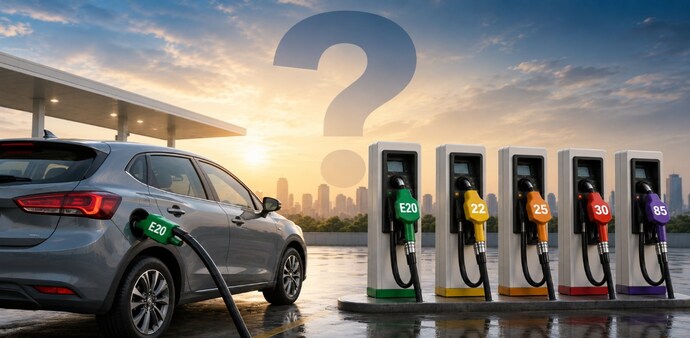
While the government is mulling to further increase the ethanol blending from 20% to as much as 30%, flex-fuel vehicles, which can run on up to 100% ethanol, could be the answer car buyers are looking for.
India is set to see a bevy of new car and two-wheeler launches that can run on up to 100% ethanol. After the launch of India’s first flex-fuel car, the Maruti Suzuki WagonR Bioflex, carmakers such as Tata Motors Passenger Vehicles and Hyundai Motor India are also eyeing the roll out of flex-fuel versions of the popular Punch hatchback and the Creta SUV, respectively.
A prototype of Toyota’s flex-fuel hybrid Innova Hycross became the car to get E85 fuel in India on June 5, 2026.
“With the introduction of flex-fuel vehicles, the government may not have to increase the base ethanol blending rate,” Vikram Gulati, Country Head & EVP, Corporate Affairs & Governance, Toyota Kirloskar Motor, told Business Today. “In Brazil, while the base blend remains E27, the average national blend has risen to as much as 50% with FFVs,” Gulati added.
For flex-fuel vehicles to become mainstream, policy enablers like low-cost fuel and comparable upfront vehicle prices are needed.
Sample this: Maruti Suzuki's recently unveiled flex-fuel WagonR Bioflex carries an ex-showroom price tag of Rs 7.24 lakh, about Rs 85,000 higher than an equivalent petrol-powered version. The premium, however, is far less pronounced in the two-wheeler segment. Hero MotoCorp's flex-fuel motorcycles are priced only around 4% above comparable petrol-powered models.
The price difference between E20 and E85 is roughly about 20%, making E85 less attractive for flex-fuel vehicle buyers. E85, which was introduced at select fuel pumps in Delhi, costs Rs 82 per litre compared with Rs 102.12 per litre for E20 petrol.
According to industry experts, E85 would need to be priced at least 30% below regular petrol to be financially attractive for consumers, given that ethanol delivers roughly one-third less energy per litre than gasoline. A similar view was expressed by the Society of Indian Automobile Manufacturers (SIAM), which, in recommendations submitted to the government five years ago, noted that E100 would be viable only if it were available at a discount of around 30% to petrol.
“In Brazil, the ethanol offtake after the introduction of FFVs was a J curve, as enablers were put in place. Consumers found economic rationale to use ethanol instead of their base blend,” said Toyota’s Gulati.
“With FFVs, concerns around corrosion and mileage loss get resolved. It’s a no-brainer solution for our country. It’s the best for all stakeholders: consumers, oil marketing companies, government, ethanol producers and automakers.”
One reason Brazilian consumers embraced flex-fuel vehicles is that ethanol is easy to find. Brazil is the world's second-largest producer of ethanol after the United States, accounting for 27% of the world’s ethanol output.
India, too, has emerged as the third-largest ethanol producer globally, driven by E20, a fuel blend comprising 20% ethanol and 80% petrol. India’s ethanol production currently relies mainly on maize (nearly 50%) and sugarcane (30%), with the rest coming from damaged foodgrain such as broken rice and other sources like paddy straw.
Indian policymakers often cite the example of Brazil to back the country’s ambitious ethanol blending programme to become “self-reliant” in energy, reduce emissions, and boost farmers’ incomes.
Over the years, Brazilian car buyers have lapped up flex-fuel vehicles. About 90% of all new cars sold in Brazil, one of the world’s earliest and most successful adopters of ethanol, are flex-fuel vehicles.
But this did not happen immediately.
Brazil’s ethanol blending programme began in 1976. The breakthrough came in the early 2000s when flex-fuel vehicles became widely available.
While Brazil’s ethanol fuel mandate evolved over the past five decades, India has taken rapid strides in ethanol blending over the past couple of years. The ethanol content in petrol went up from 1.5% in ethanol supply year 2013-14 (November to October) to 5% by 2019-20, according to the ministry of petroleum and natural gas. By 2025, the ethanol percentage in petrol increased to 20%, five years ahead of the earlier target of 2030.
In India, the primary concern is that there is a large legacy fleet of over 30 crore vehicles which are engineered for lower ethanol blends like E10 and E5.
The only way India can address concerns around higher ethanol blends is by increasing the adoption of flex-fuel vehicles.
While the government is mulling to further increase the ethanol blending from 20% to as much as 30%, flex-fuel vehicles, which can run on up to 100% ethanol, could be the answer car buyers are looking for.
India is set to see a bevy of new car and two-wheeler launches that can run on up to 100% ethanol. After the launch of India’s first flex-fuel car, the Maruti Suzuki WagonR Bioflex, carmakers such as Tata Motors Passenger Vehicles and Hyundai Motor India are also eyeing the roll out of flex-fuel versions of the popular Punch hatchback and the Creta SUV, respectively.
A prototype of Toyota’s flex-fuel hybrid Innova Hycross became the car to get E85 fuel in India on June 5, 2026.
“With the introduction of flex-fuel vehicles, the government may not have to increase the base ethanol blending rate,” Vikram Gulati, Country Head & EVP, Corporate Affairs & Governance, Toyota Kirloskar Motor, told Business Today. “In Brazil, while the base blend remains E27, the average national blend has risen to as much as 50% with FFVs,” Gulati added.
For flex-fuel vehicles to become mainstream, policy enablers like low-cost fuel and comparable upfront vehicle prices are needed.
Sample this: Maruti Suzuki's recently unveiled flex-fuel WagonR Bioflex carries an ex-showroom price tag of Rs 7.24 lakh, about Rs 85,000 higher than an equivalent petrol-powered version. The premium, however, is far less pronounced in the two-wheeler segment. Hero MotoCorp's flex-fuel motorcycles are priced only around 4% above comparable petrol-powered models.
The price difference between E20 and E85 is roughly about 20%, making E85 less attractive for flex-fuel vehicle buyers. E85, which was introduced at select fuel pumps in Delhi, costs Rs 82 per litre compared with Rs 102.12 per litre for E20 petrol.
According to industry experts, E85 would need to be priced at least 30% below regular petrol to be financially attractive for consumers, given that ethanol delivers roughly one-third less energy per litre than gasoline. A similar view was expressed by the Society of Indian Automobile Manufacturers (SIAM), which, in recommendations submitted to the government five years ago, noted that E100 would be viable only if it were available at a discount of around 30% to petrol.
“In Brazil, the ethanol offtake after the introduction of FFVs was a J curve, as enablers were put in place. Consumers found economic rationale to use ethanol instead of their base blend,” said Toyota’s Gulati.
“With FFVs, concerns around corrosion and mileage loss get resolved. It’s a no-brainer solution for our country. It’s the best for all stakeholders: consumers, oil marketing companies, government, ethanol producers and automakers.”
One reason Brazilian consumers embraced flex-fuel vehicles is that ethanol is easy to find. Brazil is the world's second-largest producer of ethanol after the United States, accounting for 27% of the world’s ethanol output.
India, too, has emerged as the third-largest ethanol producer globally, driven by E20, a fuel blend comprising 20% ethanol and 80% petrol. India’s ethanol production currently relies mainly on maize (nearly 50%) and sugarcane (30%), with the rest coming from damaged foodgrain such as broken rice and other sources like paddy straw.